Representative Paul Cutler presented a funding request to replace Utah’s aging campaign-finance and lobbyist-reporting software with an off-the-shelf, mobile-friendly system selected via an RFP; staff said the lieutenant governor's office completed the RFP and the vendor (Maplite) was selected, and only funding remains.
The House Rules Standing Committee considered HR 4, a non‑punitive recommendation asking sponsors to disclose when legislation was materially requested by an executive branch official. After debate over definitions and confidentiality, the motion to favorably recommend failed 1–6.
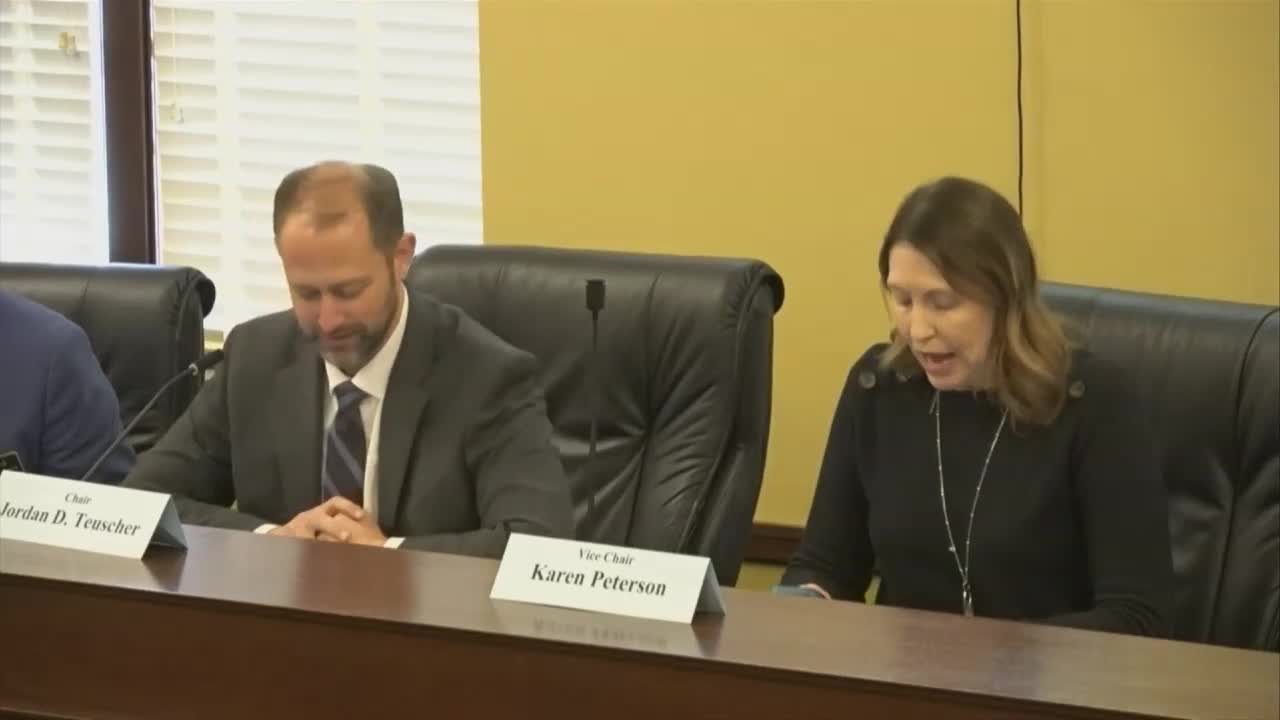
The committee unanimously recommended HJR10 on Jan. 28, 2026. Sponsor Representative Thurston said the resolution would allow, but not require, sponsors to post a short, clearly labeled sponsor statement or handout on a bill's public page when a bill is numbered.
The committee voted unanimously to recommend a committee bill that would require common naming conventions for payroll/compensation data posted to Transparent Utah and clarify that financial distributions to third‑party contractors are not reportable as employee compensation.
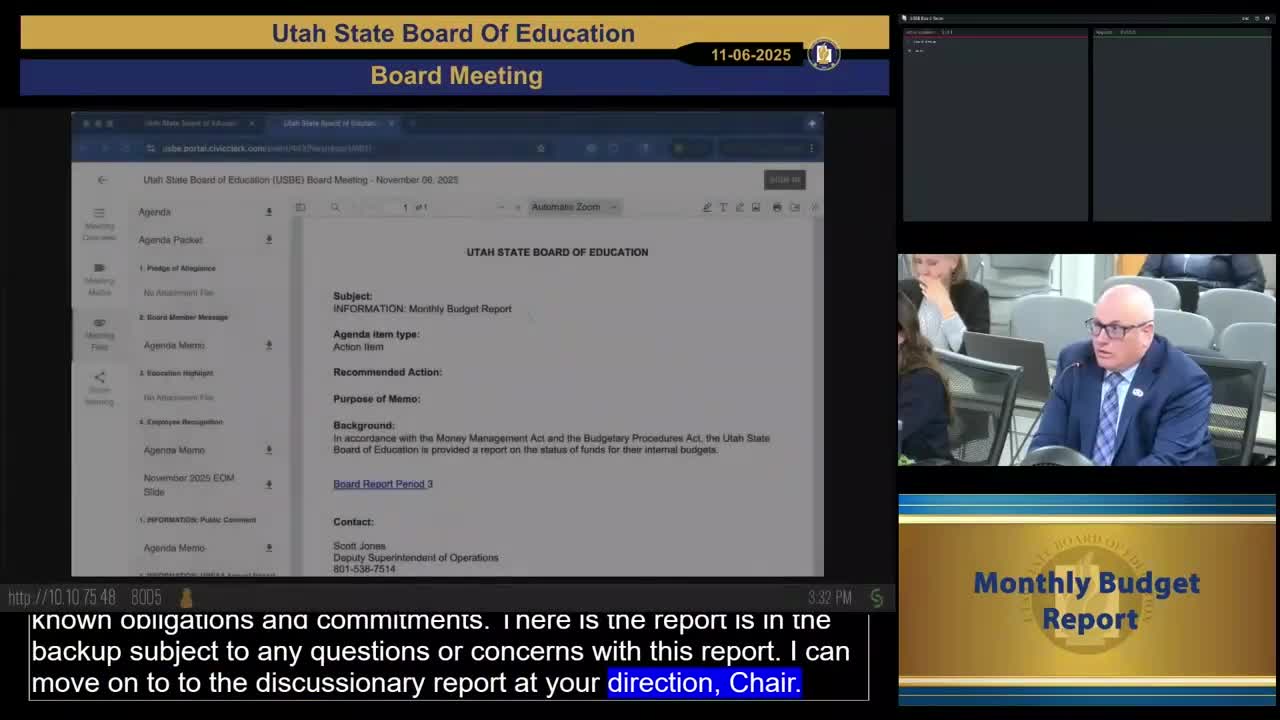
Deputy Superintendent Scott Jones said staff amended the discretionary‑fund backup to include requester names and updated remaining balances by fund source; some board members asked that the document be kept as a perpetual backup to ease future searches.
A senator and state court leaders proposed a five‑year pilot, hosted by Utah Education Network, to livestream public court proceedings with an initial one‑time appropriation of about $450,000 to build infrastructure and hosting.
A proposed rule to allow sponsors to post a 500‑word “sponsor statement” on bill files was held after committee members raised concerns it could be treated as intent language or appear too official; the motion to hold passed 4–3.
The Utah Attorney General's GRAMA coordinator described how the Government Records Access and Management Act presumes records are public but creates private, controlled and protected classes; he explained processing steps, common exemptions (including ongoing investigations and attorney work product), and practical tips for requesters.
Second‑substitute HB 36 passed the House 49–22. Sponsor Representative Dunnigan said the bill clarifies the definition of a public meeting and adds an 'evasive action' prohibition—including some electronic coordination—after a Southern Utah county audit prompted legislative review.
Sponsors told the House that SB29 and SB28 aim to create a registry for local government and limited‑purpose entities after audits showed many are not registered; SB28 would require registration with the Lieutenant Governor and authorize the state auditor to withhold funds for noncompliance.
Senate passes transparency‑in‑government finance bill after debate over thresholds Second substitute SB 38, which creates statutory guidance for a transparency board and phased public reporting of con
House approves transparency rules for municipal enterprise fund transfers First substitute HB 164 requires cities to hold independent enterprise‑fund hearings, directly notify ratepayers, provide foll
Committee advances bill requiring transparency when state agencies capture administrative fees on passed‑through grants House Bill 223 was favorably recommended out of committee. The bill requires tra
House approves water‑transparency bill requiring data disclosure for extrajurisdictional distributions First substitute HB 124 (Water Holdings Accountability and Transparency Amendments) passed the Ho
Senate pushes transparency inventory for municipal activities that compete with private businesses First substitute Senate Bill 45 would require larger cities and counties to list functions that compe