Get Full Government Meeting Transcripts, Videos, & Alerts Forever!
Get email alerts on the Land Use topic
No spam. Unsubscribe anytime.
D.C. BZA delays decision on Hillview Market conversion after hours of split public comment
Summary
The District of Columbia Board of Zoning Adjustment on May 14 continued a decision to June 4 on application 21151, in which owners Dinesh and Nidhi Tandon asked to convert the long‑running Hillview Market at 2324 North Capitol St. NW into a restaurant (proposed as “Indigo 2”). The hearing featured more than a dozen neighbors and community leaders testifying both for and against the use variance and special‑exception relief the applicant seeks.
The District of Columbia Board of Zoning Adjustment on May 14 continued a decision to June 4 on application 21151, in which owners Dinesh and Nidhi Tandon asked to convert the long‑running Hillview Market at 2324 North Capitol St. NW into a restaurant (proposed as “Indigo 2”). The hearing featured more than a dozen neighbors and community leaders testifying both for and against the use variance and special‑exception relief the applicant seeks.
Why it matters: the application would change a nonconforming retail convenience use to a full service restaurant in an RF‑1 residential zone. That change requires the board to find that no other lawful use is feasible and that the requested variance will not cause substantial adverse impacts to the surrounding neighborhood — a high legal bar under the zoning rules.
The Office of Planning (OP) recommended denial. Ron Baron, OP’s development review specialist, told the board that despite additional submissions from the applicant the office could not change its initial recommendation: "OP is not able to change our initial recommendation," he said. OP’s written report said the applicant had not shown the high level of justification required for the intensity of the restaurant/bar, outdoor seating and pickup/delivery activity proposed.
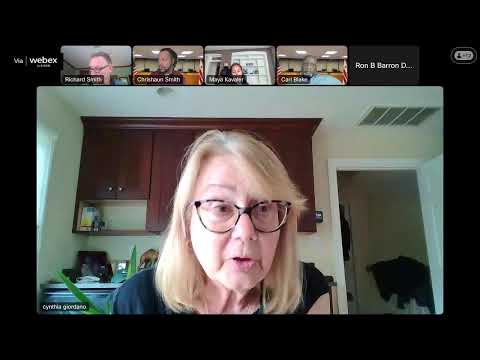
Applicant case and proposed operations: counsel Cynthia Giordano said the applicants bought the building in 2022, and presented Indigo 2 — a restaurant and performance‑oriented dining concept the owners operate elsewhere — as the best commercially viable reuse for the small, historic storefront. The design team described plans for an interior occupant load of roughly 73 people (breakdown presented in the record) and a sidewalk café of about 23 seats. The proposal envisions the First Floor for dining and bar service and the cellar/basement for kitchen and support functions. In filings and in the hearing the applicant said trash would be enclosed at the rear and picked up 5–6 times per week; deliveries would be limited where feasible and some service could be coordinated through the applicants’ other restaurant location.
Neighbors opposed on noise, parking, trash and character: neighbors with party status said the change to a full restaurant would be materially different from the predecessor convenience store. Maya Cavalier, a nearby resident who organized several of the opposition witnesses, told the board: "The proposed change in use would create adverse external effects." Opponents pointed to increased noise from outdoor seating and interior doors, more delivery traffic (including motorcycles), loading in the narrow alley behind the building, more frequent commercial trash pickup and a rise in rodent complaints. Multiple witnesses said the narrow, one‑lane Bridal Street and the short rear alley are unsuitable for frequent commercial deliveries and that nearby residents — some directly abutting the alley — would bear most of the impacts.
Supporters focused on reuse, neighborhood vitality: a coalition of neighbors, several ANC commissioners and neighborhood residents supported the restaurant as a better long‑term outcome for the building than continued vacancy or a marginal corner store. Huma Imtiaz, ANC 5E04, testified in favor and said the community wants reuse: "We’re really hoping that this building... could be put to better use," she said. Supporters argued the property has been vacant at times, that a new supermarket is planned at the McMillan/Reservoir District and that conventional corner‑store models face economic challenges.
Public process and institutional input: ANC 5E took no overall position after a split vote; the Bloomingdale Civic Association voted to oppose the relief; the Office of Planning recommended denial. The applicant previously sought alcoholic beverage authority relief, which was denied, and said that history informed the current proposal. Several residents pointed out that ABCA/ABRA licensing conditions govern hours for alcohol service and outdoor activity; the applicant cited ABRA‑related hours included in its record (interior hours to midnight; outdoor seating limited earlier in the evening) as operational commitments.
Board action: after roughly four hours of testimony and questions the board closed the hearing and set the case for a decision meeting on June 4. Chairman Fred Hill said the panel will consider the record in full and deliberate on whether the applicant met the standards for a use variance and special exception.
Looking ahead: the BZA’s decision will turn on whether the board finds that other permitted neighborhood commercial options are infeasible at this site and whether the proposal’s mitigation measures (trash frequency, delivery controls, hours, sound engineering) are adequate to prevent substantial adverse effects to the adjacent RF‑1 properties. The board’s scheduled June 4 decision meeting will be the next public opportunity for a ruling.