Get Full Government Meeting Transcripts, Videos, & Alerts Forever!
Get email alerts on the Energy And Infrastructure topic
No spam. Unsubscribe anytime.
House subcommittee presses for faster permitting, grid upgrades to meet AI data center demand
Summary
At a House Oversight subcommittee hearing, witnesses and members said current permitting, grid interconnection, and supply-chain timelines risk slowing data center expansion needed for AI and urged Congress to streamline energy rules and support domestic manufacturing and workforce training.
At a hearing of the House Oversight and Reform subcommittee on economic growth, energy policy, and regulatory affairs in the Rayburn House Office Building, witnesses and members warned that U.S. energy permitting and grid interconnection timelines threaten expansion of the data centers that power artificial intelligence and urged congressional action.
The concerns centered on three choke points: lengthy permitting and litigation that delay power generation and transmission, a shortage of electrical equipment and transformers, and a workforce and manufacturing base that many witnesses said must expand rapidly to meet estimated demand for AI workloads.
Neil Chilson, head of AI policy at the Abundance Institute, told the panel that software rules and energy rules must both be fixed to sustain U.S. AI leadership and described the problems as a “launchpad” that Congress must clear. “To boost our energy infrastructure, Congress should streamline permitting processes and constrain counterproductive litigation, and it should direct federal agencies to accelerate grid interconnection,” Chilson said in his prepared remarks.
Josh Levy, president of the Data Center Coalition, testified that the industry is making “multibillion dollar investments” but that energy permitting is the “pacing issue” for data center deployment. Levy said data centers can be built from groundbreaking to commissioning in about 18 months to two years, while transmission permitting and construction can take five to seven years. “We believe Congress should look at ways to speed up the permitting process for electric transmission and generation to ensure the nation has sufficient energy capacity to power America’s growing economy,” he said.
Mark Mills, executive director of the National Center for Energy Analytics, emphasized the scale of the need. He said credible forecasts show new data centers will require tens of gigawatts of additional power in the coming years and argued most additions will come from natural-gas combustion turbines in the near term. Mills urged Congress to identify and remove regulatory impediments that slow private capital deploying generation and interconnection capacity.
Tyson Slocum, energy program director at Public Citizen, urged restraint and said policymakers should prioritize demand-management and efficiency before building new generation. “Before we start committing to building a lot of new, power generation assets and associated infrastructure, we should instead be asking one of the most profitable industries on Earth: are you doing all you can to manage that energy load responsibly in concert with local communities?” Slocum said, citing demand-response programs and on-site storage as options.
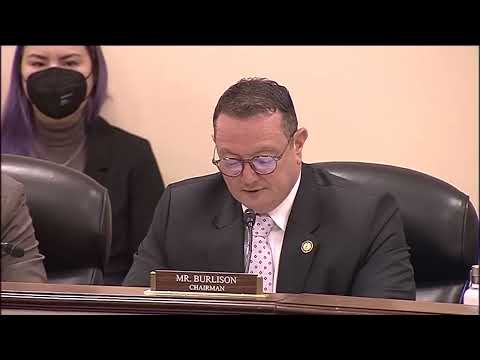
Members pressed witnesses on specific policy levers. Representative Burleson, the chair, asked witnesses what was “really holding us back” and drew attention to differences in interconnection approaches across states. Ranking Member Frost and other members pressed for safeguards to ensure that permitting reforms do not undercut environmental or consumer protections.
Witnesses and members also flagged supply-chain limits for electrical equipment such as transformers and switchgear, and workforce shortages in both construction and data-center operations. Levy recommended supporting national technology hubs, expanding community-college programs, and training veterans for data center jobs.
Several witnesses urged creation of federal “regulatory sandboxes” for AI software and cooperative experimentation to avoid a patchwork of conflicting state rules while simultaneously speeding energy siting and interconnection. Chilson cited Utah’s AI Act as an example of a state approach that extends consumer protections while encouraging innovation.
The hearing produced no formal votes. Members reserved five legislative days to submit additional materials and written questions for the witnesses.
Ending: The subcommittee asked witnesses for additional materials and signaled plans for follow-up work on permitting, grid interconnection, supply chains, and workforce training. The subcommittee adjourned after members were given five legislative days to submit materials.