Get AI Briefings, Transcripts & Alerts on Local & National Government Meetings — Forever.
West Palm Beach mayor outlines $3 billion in projects and pushes inclusive housing goals
Loading...
Summary
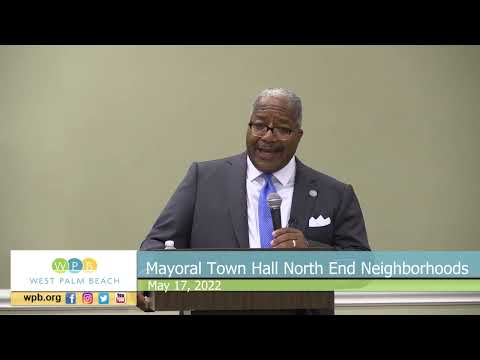
Mayor Keith James told a North End neighborhood meeting that the city has nearly $3 billion in development in the pipeline and reiterated a goal to expand workforce housing while warning officials must guard against displacement.
Mayor Keith James told a neighborhood meeting in West Palm Beach that the city is seeing rapid private and institutional investment and said his administration is working to make that growth “inclusive.” “My vision for the city of West Palm Beach is to create a community of opportunity for all,” James said. The mayor said the city helped relocate or expand 12 companies last year that together brought about 1,300 jobs, and that the city has “nearly $3,000,000,000 in projects in the pipeline.” He listed multiple downtown and North End projects, including Grand, Flagler Station NE, Watermark, 1 West Palm, 1 Flagler and the Nora District, and said several projects are under construction or in permit review. Why it matters: Rapid market-rate development in downtown West Palm Beach has residents concerned about displacement and affordability in long-standing neighborhoods. Mayor James said the city is using incentives and zoning tools to require or encourage workforce and below-market-rate units as part of development approvals, and described a sequence of housing goals the administration has announced since 2019. Most important details: James described an earlier “303” initiative intended to create 300 workforce units in three years and said the city exceeded that target; he said the goal was later expanded and, in his remarks, he cited a figure of “603” units and said the city was “about 94% of the way there.” He stressed that those totals are incremental steps, saying “that’s only a drop in the bucket” toward the city’s broader housing needs. He also described development incentives tied to additional building height in exchange for workforce or affordable units. City actions and near-term items named by the mayor include an announced University of Florida urban campus for downtown focused on fintech, AI, data analytics and cybersecurity; a Florida A&M community meeting scheduled for June 11 to describe their planned programs; and the City Commission’s approval of the Nora District on Feb. 7 with a first phase that the mayor said will include restaurants, retail, office space and future family housing below 100 percent of area median income. Voices at the meeting included residents who warned that long-term African American residents are being priced out. One attendee identified as Miss Nelson said she will “be a gatekeeper of this neighborhood” and that she does not “intend to see the black people … put out this place because they cannot afford to live here anymore.” The mayor responded that he is “anti-gentrification” and that BMUD (Broadway Mixed Use District) zoning revisions and CRA acquisition strategies are being used to protect legacy residents. What was not decided: The mayor described incentives, zoning revisions and the CRA’s interest in acquiring property along Broadway, but no formal new ordinance, code change or funding appropriation for specific affordable housing projects was proposed or voted on at the meeting. Several project timelines and unit-count targets were described as goals rather than completed actions. Looking ahead: The mayor said the administration will continue negotiating with developers, use zoning and incentive tools to pursue workforce housing, and add a grants specialist to pursue federal infrastructure and other funding opportunities the city is pursuing.