Lifetime Citizen Portal Access — AI Briefings, Alerts & Unlimited Follows
CenturyLink, PRPA tussle over relocated fiber paths after 2013 fixes and 2024 fire leaves 9-1-1 diversity questions
Loading...
Summary
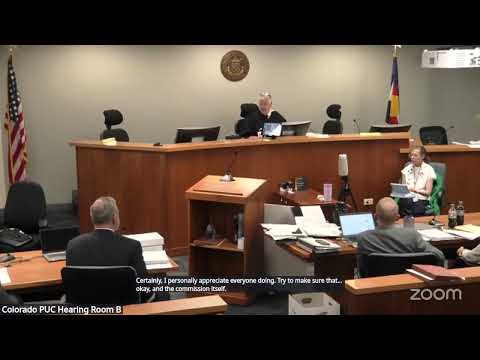
CenturyLink and the Platte River Power Authority (PRPA) clashed at a regulatory hearing over whether a 2023 maintenance move and July 2024 wildfire response reduced geographic diversity for 9‑1‑1 circuits to Estes Park.
CenturyLink and the Platte River Power Authority (PRPA) clashed at a hearings session over whether a 2023 maintenance move and subsequent field work during the July 2024 Alexander Mountain fire reduced the geographic diversity of 9‑1‑1 transport serving Estes Park.
The hearing record shows that on Feb. 27, 2023 PRPA requested a maintenance move that CenturyLink technicians executed in a Loveland/Estes Park central office jumper panel. CenturyLink witness Timothy Kunkleman, identified in the record as Regional Director, Government Affairs and Public Policy for Lumen Technologies (CenturyLink), testified that the company treated the original notification as a routine change-management maintenance ticket and that, in his view, the company “did not eliminate diversity.” Kunkleman also said the company’s lease with PRPA provided a long‑term path and that CenturyLink monitored circuits and alarming systems to detect failures.
But other witnesses told a different story. CenturyLink operations witness Christine Rangel, Manager, Region Operations, testified she received contemporaneous Teams messages and on‑site photographs indicating that some jumper work had moved traffic onto a PRPA route and that the internal “Word doc” inventory did not match field conditions. Rangel told hearing participants that at one point she “had forgotten we built another path,” and during the July 2024 fire she warned colleagues that she “can’t be sure 9‑1‑1 is diverse” until the network status was confirmed.
PRPA’s notice language, materials and internal terms also appear in the record. PRPA’s representative Jeff Grant told CenturyLink by e‑mail that the work was to “avoid a long term outage while WAPA rebuilds their transmission line.” Kunkleman and other CenturyLink witnesses testified that the PRPA lease remained in effect through 2024 while the parties renegotiated terms.
Key technical points in the record
- The two long‑haul routes at issue are referred to in the hearing record as the Highway 34 (sometimes called the “green” or 34/43 path) route and the Pole Hill (sometimes called the “purple”) route. Both routes include segments of leased PRPA fiber as well as CenturyLink‑owned facilities. Testimony and internal maps used during the hearing show those two full end‑to‑end routes between Loveland and the Estes Park central office.
- CenturyLink’s internal change management/GCR process handled the Feb. 27, 2023 work. The notice that PRPA circulated referred to moving fiber jumpers in the Loveland and Estes Park central offices to avoid a “long‑term outage” during WAPA’s rebuild; PRPA’s messages also said the alternate path had been used previously.
- CenturyLink field technicians (central office technician Chad Peppler) documented jumper changes and took photos from equipment panels; portions of the corporate “Word doc” inventory did not immediately reflect the temporary moves. Christine Rangel and others testified that field changes sometimes are not immediately reconciled in the inventory for temporary moves.
- During the July 29–31, 2024 fire response, operations staff and the 9‑1‑1 NOC worked to verify which circuits were alive. The transcript shows internal Teams exchanges and GCR notes in which the NOC (9‑1‑1 reviewers) reported circuit status; CenturyLink engineers reported that alarms did not show a loss of the redundant circuits at several times during the incident.
- As a contingency during the fire, CenturyLink and local partners stood up an Adams Tunnel path on Aug. 3, 2024 that was used, in a limited fashion, to carry 9‑1‑1 voice traffic as an additional route.
What witnesses disagreed about
Witnesses disagreed on two related issues: (1) whether the Feb. 27, 2023 maintenance and subsequent PRPA‑directed work resulted in an endpoint‑to‑endpoint loss of geographic diversity, and (2) whether CenturyLink (or PRPA) had a duty to escalate notification of that change to carrier‑relations, contracts or the 9‑1‑1 customer (the record uses the abbreviation “LITA” for the local PSAP/911 stakeholder) when the maintenance was first planned.
- Kunkleman’s testimony emphasized that CenturyLink considered the work a maintenance change ticket and that the company monitored whether circuits were operational. He testified: “We follow all the rules and laws related to providing that service in the state of Colorado,” and said the tariff language and the commission regulation speak in terms of feasibility and that the tariff set a reasonable goal rather than an absolute floor.
- Rangel’s testimony emphasized the practical operational view: change management and central office technicians executed a jumper move, but the central office maintenance path did not itself identify the longer‑haul route that traffic would take. She said she escalated the issue within operations and the NOC when 9‑1‑1‑affecting maintenance was flagged and coordinated field technicians to verify equipment and panel connections.
What the record shows about notice and contract language
- The PRPA notice that started the Feb. 27, 2023 work explicitly said jumpers would be moved “off the WAPA OPGW cable and onto the PRPA long‑haul 34 cable” and referred to avoiding a long‑term outage while WAPA rebuilt transmission lines. The notice was routed into CenturyLink change‑management distribution lists and maintenance queues.
- CenturyLink witnesses described the company’s change‑management routing: routine maintenance tickets usually go to the maintenance/change group; if 9‑1‑1 could be affected the NOC and 9‑1‑1 reviewers are referenced as recipients. Several CenturyLink witnesses said the change‑management path used for the PRPA notification did not go to a separate carrier‑relations or contracts intake group that would typically handle contract/lease implications.
- The record includes references to a settlement agreement, the commission’s Rule 21‑43 on diversity for basic emergency service providers, and CenturyLink tariff language that discusses diversity "where feasible" and allows customers to request additional diversity subject to tariff charges and regulatory rules. Kunkleman testified that CenturyLink believed its lease with PRPA and its operational monitoring met the company’s regulatory and tariff obligations, but acknowledged there is debate over endpoint‑to‑endpoint geographic diversity versus physical or logical diversity.
Why it matters
The core issue in the hearing is whether the maintenance and PRPA‑conducted work reduced 9‑1‑1 circuit geographic diversity in a way that violated the state rule or CenturyLink’s tariff/settlement commitments and, separately, whether CenturyLink’s internal processes and communications were sufficient to identify, document and notify customers and regulators about such a change. The outcome could affect how regulated providers must document leased facilities that carry emergency traffic and which parts of an organization must receive critical notices about leased‑fiber moves.
What happened operationally after the fire
By Aug. 3, CenturyLink and partners had stood up an additional temporary Adams Tunnel route that was used for 9‑1‑1 voice redundancy. CenturyLink’s on‑call NOC reported no known loss of 9‑1‑1 calls that required service restoration during the July 29–31 incident, and some witnesses pointed to monitoring logs and technician photographs as evidence that circuits were lit during key intervals.
Remaining questions in the record
The hearing transcript leaves open several factual points that Lita’s complaint and CenturyLink’s defense both hinge on: whether a particular midsegment (Drake–Glen Haven) ran in the same physical sheath for a sustained period; precisely when various corporate units were informed and whether any required contract notices were triggered; and whether the tariff/regulatory language requires a stricter, continuous endpoint‑to‑endpoint geographic diversity obligation beyond what the company argued was a "where feasible" standard.
Ending
The hearing record shows multiple operational and legal perspectives: CenturyLink described routine maintenance, alarm monitoring and tariff/regulatory nuance; Rangel and NOC personnel described field evidence and real‑time operational uncertainty; PRPA’s notices described construction and alternative routing. The commission and parties will need to resolve which view satisfies the legal standard and what process or documentation changes are required going forward.
Speakers quoted in this article: Timothy Kunkleman (Regional director, government affairs & public policy, Lumen/CenturyLink); Christine Rangel (Manager, Region Operations, Lumen/CenturyLink); Colleen Bingman (9‑1‑1 NOC reviewer); Jeff Grant (Platte River Power Authority); Chad Peppler (CenturyLink central office technician).