Get Full Government Meeting Transcripts, Videos, & Alerts Forever!
Get email alerts on the Peace Accord Implementation Colombia topic
No spam. Unsubscribe anytime.
Experts at Tom Lantos briefing: Colombia’s 2016 peace accord implementation is lagging as violence and aid cuts rise
Summary
At a Tom Lantos Human Rights Commission briefing on Colombia, U.S. lawmakers and an expert panel said implementation of the 2016 peace agreement remains incomplete and that recent spikes in violence, forced displacement and reductions in U.S. assistance threaten gains on reconciliation and rural development.
At a Tom Lantos Human Rights Commission briefing on Colombia, U.S. lawmakers and an expert panel said implementation of the 2016 peace agreement remains incomplete and that recent spikes in violence, forced displacement and reductions in U.S. assistance threaten gains on reconciliation and rural development.
The panelists — Claire Silke of the Congressional Research Service; Ángela Ramírez of the Kroc Institute’s Barometer Initiative; Monsignor Héctor Fabio Einar of the Episcopal Conference delegate for Church–State relations and director of FICOMPAS; Ximena Sánchez of the Washington Office on Latin America (WOLA); and Marino Córdoba of the National Association of Displaced Afro-Colombians (AfroRES) — outlined data and field observations showing uneven implementation, increasing activity by armed groups and specific recommendations for U.S. and international engagement.
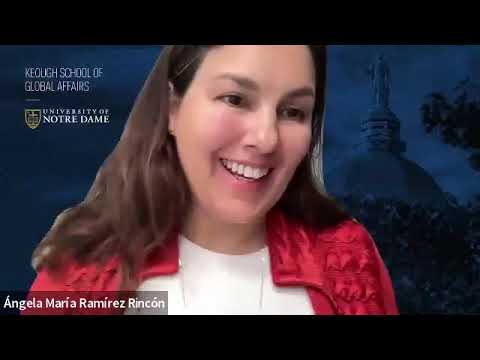
“The Peace Accords offer a clear roadmap for advancing peace, stability, and opportunity in Colombia,” Ángela Ramírez said, summarizing the Barometer Initiative’s monitoring work. Ramírez said her team tracks 578 commitments from the 2016 accord: 34 commitments had been fully implemented as of May, about 20% were at an intermediate stage, 37% were at a minimum level of implementation and 9% had not started. She said those figures meant “nearly half of the commitments … are facing serious challenges in reaching full implementation within the 15‑year timeline.”
Panelists described where implementation has stalled. Ramírez and others said rural reform, political participation measures and drug policy provisions have lagged. Ramírez also said about 9,500 accredited former FARC combatants remain engaged in reintegration processes while roughly 2,500 have left those processes.
Panelists tied implementation gaps to recent security trends. Claire Silke said that after several years of lower violence, combat and criminal activity have risen over the last two to three years, especially in rural territories formerly controlled by the FARC. Ximena Sánchez said analysts report a sharp increase in violent incidents: she cited a Pares figure of 603 violent incidents across 17 regions for a recent period and a 45% increase year‑over‑year for the same span. Sánchez also cited United Nations Office for the Coordination of Humanitarian Affairs (OCHA) reporting that between January and April a recent year more than 953,000 people were affected and that violence on average impacted “7,900 people each day.”
Panelists described consequences for civilians. The briefing included multiple references to forced displacement and killings of social leaders: the chair recounted that last year “more than 58,000 people were forcibly displaced from their homes by the violence, nearly half of whom were indigenous and Afro‑Colombian.” Ximena Sánchez cited reporting that in a recent year Indepaz recorded 88 social leaders and 28 former combatants murdered.
Speakers attributed the worsening security to fragmentation and proliferation of illegal armed groups fighting to control illicit economies — including drug trafficking and illegal mining. Monsignor Héctor Fabio Einar said local and regional peace councils are essential to strengthen democracy and community resilience in those territories and to give vulnerable groups a voice in local solutions.
A frequent theme was the role of U.S. assistance. Several speakers said USAID programs and other U.S. support were instrumental in rural development, community economies and political participation for Afro‑Colombian and indigenous communities. Marino Córdoba described a USAID‑supported project that worked with 15 community councils, 24 indigenous reservations, 18 organizations, five women’s organizations and 10 youth collectives; he said those efforts supported land restitution, local economic development and community autonomy. Ximena Sánchez and others warned that abrupt cuts to U.S. aid — including the end of some USAID funding streams — risked eroding trust between communities and implementing organizations and could undermine alternatives to illicit economies.
Panelists identified near‑term priorities for U.S. and international engagement. Ángela Ramírez suggested three areas for continued support: targeted funding for key commitments (especially rural reform and drug policy), diplomatic engagement and technical cooperation to build state capacity, and support for independent monitoring and transparency mechanisms. Ximena Sánchez urged that dialogues under President Petro’s “total peace” initiative be evaluated for feasibility and that humanitarian pacts be prioritized to protect civilians in negotiation zones. Monsignor Einar emphasized strengthening local and regional peace councils to rebuild trust and improve local implementation of development and protection programs.
Speakers also urged support for transitional justice and political participation mechanisms created by the agreement. Ramírez described the integrated system the accord established — including the truth commission, the unit to search for disappeared persons and the Special Jurisdiction for Peace (JEP) — noting that each has faced challenges that slowed progress.
Panelists were specific about some quantitative indicators mentioned at the briefing: a cited rise in cocaine production (Ramírez noted a 53% increase in 2023), about 31,000 conflict victims living outside Colombia (roughly 6,000 in the United States), and that Colombia had demobilized some 13,000 former FARC combatants under the accord. Marino Córdoba said that under the current government’s land restitution efforts, “nearly 94,000 hectares of land have been handed over to Afro‑Colombian and indigenous communities.”
No formal U.S. policy decisions were announced at the briefing. Panelists concluded by urging Congress and other donors to maintain or reorient funding toward non‑security programs — including rural development, protection for human rights defenders and support for multilateral and civil‑society monitoring — to sustain the accord’s remaining implementation timeline and reduce displacement.
The briefing underscored a recurring message: panelists said security assistance alone had not resolved deep structural causes of conflict in the past, and that combined political, financial and civil‑society support is necessary to consolidate gains and protect civilians.
The Tom Lantos Human Rights Commission panel left lawmakers with concrete monitoring data and program recommendations and urged continued U.S. engagement to sustain Colombia’s fragile and incomplete transition away from decades of conflict.