Lifetime Citizen Portal Access — AI Briefings, Alerts & Unlimited Follows
University City council discusses creating standalone Architectural Review Board
Loading...
Summary
City staff proposed replacing the unused Infill Review Board with a five-member Architectural Review Board (ARB) to advise on new construction and larger additions; council members raised questions about scope, notice, staffing and impacts on private subdivisions and nonprofits.
John Wagner, Director of Planning and Development, and Noah Chapin, City Planner, presented a proposal to establish a standalone Architectural Review Board for University City and to create associated zoning code language to govern when and how projects would be reviewed.
The proposal would replace the unused Infill Review Board with an ARB that would be advisory in nature, review new principal structures and accessory additions greater than 200 square feet, and use new design guidelines housed in the zoning code. Wagner said the ARB would be "a standalone board" that would "act solely in an advisory capacity." Chapin said the draft code would require that "no building permit shall be issued for relevant types of buildings without the architectural review" process as provided in the proposed language.
The nut graf: The council spent most of the session focused on details that would determine how the ARB affects homeowners, builders and private subdivision trustees — including who the board would review, what kinds of projects would trigger review, how neighbors would be notified, and how the city would ensure design expertise is available for reviews. Those details will shape whether the ARB adds regulatory delay or helps maintain neighborhood character.
Highlights of the proposal and council questions
- Scope and threshold: Staff proposed starting small: review of new principal structures and accessory additions larger than 200 square feet. Chapin said the "200 number" was a starting point and open for discussion. Council members suggested the city could change the language to apply to additions over 200 square feet regardless of street visibility.
- Board composition and staffing: Wagner said the recommended board size is five members with at least one member who is an architect or design professional and that up to two members could co‑serve on the Planning Commission. Several council members expressed concern about filling niche professional seats. Wagner offered that the city could "contract with an architect who would not be on the board, but would certainly be able to advise staff and the board" if a qualified volunteer could not be found.
- Advisory role and timing: Staff described the ARB as advisory rather than binding. The draft also ties approvals to a one‑year period of validity with an option to extend up to 12 months; Chapin noted applicants must begin construction within a year. Council members raised that, in practice, a time limit tied to permits could effectively block construction if the city does not coordinate building‑permit timelines with ARB review.
- Private subdivisions and trustees: The draft would not require ARB review for projects in private subdivisions until trustees sign off, to avoid immediate conflicts with existing trustee processes. Council members debated whether the ARB should override subdivision trustees if the ARB becomes a zoning requirement; staff said a zoning ordinance requirement could apply citywide and thus supersede private review if written that way.
- Notification and community input: Council members asked about neighbor notice. Staff said the city currently sends public‑hearing notices to properties within 300 feet (though 180 feet is required by law) and suggested adding a parallel notice for ARB meetings. Council members discussed using mail and e‑mail to reduce delays caused by postal service timing.
- Design guidelines and implementation: Wagner said design professionals would prepare the architectural design guidelines and that the ARB likely should be established before the guidelines are finalized so the board can help create them. Staff also plans a comprehensive zoning ordinance rewrite, which could incorporate the ARB language.
- Meetings and exceptions: Council members suggested monthly meeting frequency with flexibility for special or emergency meetings. Members asked about exemptions for organizations such as Habitat for Humanity; staff said typical practice is to grandfather already‑permitted projects and that nonprofit projects would generally be subject to the same review unless an exemption is specified.
Next steps and lack of formal action
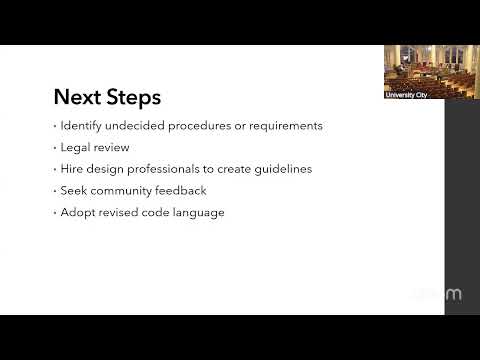
Staff outlined next steps: refine procedures and code language, have the city attorney review the draft, hire design professionals to write guidelines, seek community input, and then adopt the revised zoning language. There were no formal votes recorded on establishing the ARB during the study session. Mr. Rose recommended pulling bill "95 66" from the regular agenda to allow additional outreach; he said the intent was to "ensure that adequate outreach has occurred before that bill is introduced to all of the neighbors." Wagner and Chapin said they would return with revised language and that the item on the agenda with an ill presenter would be moved to March.
Ending: The council did not take formal action; staff was directed to continue drafting code language, arrange legal review, and plan community engagement before bringing final language back for adoption.