Lifetime Citizen Portal Access — AI Briefings, Alerts & Unlimited Follows
Council oversight hearing highlights Mayor’s Office on Latino Affairs, immigrant and senior services, and summer youth programs
Loading...
Summary
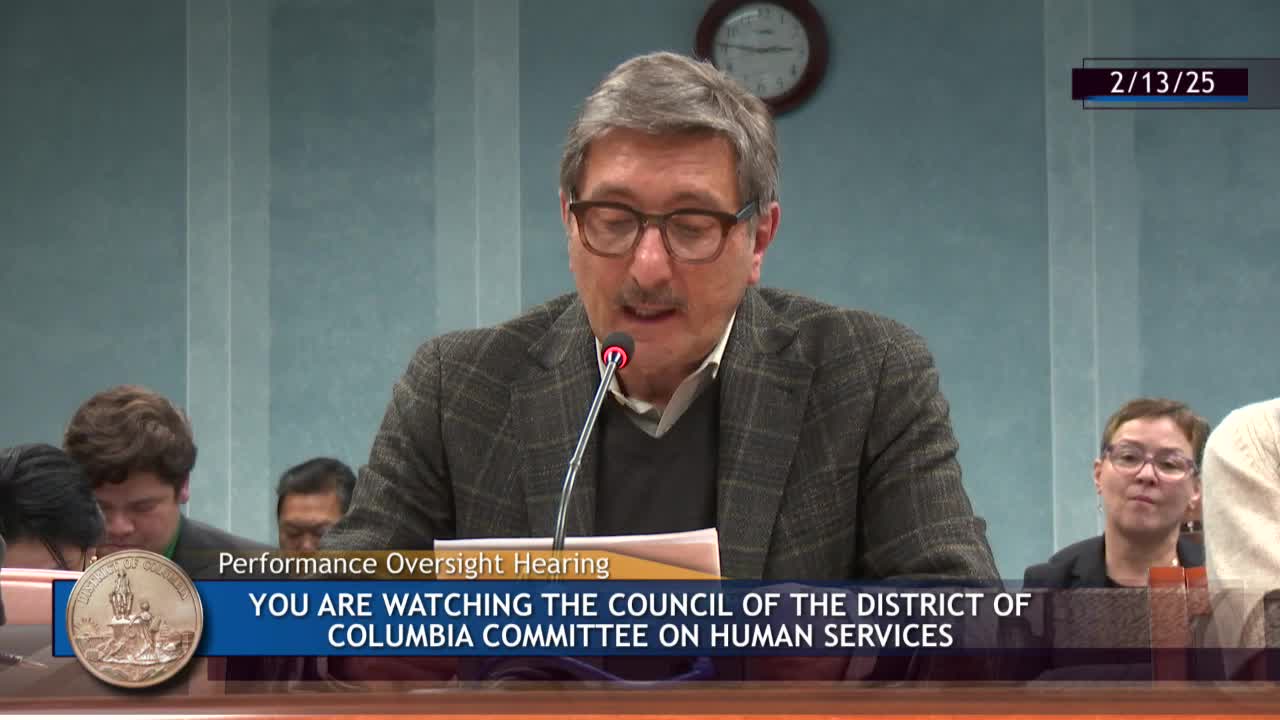
Councilmember Matt Fruman, chair of the Committee of Human Service, convened a performance oversight hearing Feb. 13 on the Mayor’s Office on Latino Affairs (MOLA) and the Mayor’s Office on Asian and Pacific Islander Affairs (MOAPIA) in Room 1203 of the John A. Wilson Building and by Zoom.
Councilmember Matt Fruman, chair of the Committee of Human Service, convened a performance oversight hearing Feb. 13 on the Mayor’s Office on Latino Affairs (MOLA) and the Mayor’s Office on Asian and Pacific Islander Affairs (MOAPIA) in Room 1203 of the John A. Wilson Building and by Zoom.
The hearing brought dozens of community witnesses and agency testimony focused on grants, immigrant legal services, senior and health programs, and youth employment programs. Eduardo Perdomo, director of the Mayor’s Office on Latino Affairs, and Ben de Guzman, executive director of MOAPIA, described their offices’ work and fielded questions about grant management, vacancies and community outreach.
MOLA and MOAPIA provide small grants and direct program support to community organizations that serve limited-English populations, immigrant survivors of domestic violence, seniors and young people. “We have been able to reach over, and to provide over 1,000,000 direct services to DC residents through our community partners,” Director Eduardo Perdomo said, summarizing a decade of activities under the current administration. MOAPIA distributed $271,000 in community grants in fiscal year 2024 to support AAPI organizations and language-access work, Ben de Guzman said.
Witnesses — many of them current or recent MOLA grantees — described a mix of direct legal assistance, health outreach, education and workforce programs. Gbenga Ojunjimi, executive director of the Nigerian Center, said his organization serves more than 200 clients directly and cited MOLA’s Immigrant Justice Legal Services funding as the seed for a year-round walk-in clinic in Anacostia. Joanna Abreu Enriquez, housing coordinator at DC Safe, described bilingual crisis services and said the agency’s Spanish-language Accion Line received 672 calls last year. Robin Griffin of Legal Counsel for the Elderly said MOLA funding helped a client gain $1,228 per month in Social Security disability benefits after staff assisted with records and filings.
Several grantees supplied program counts and service tallies in testimony: the CDECDC legal clinic reported reaching 830 residents through food-distribution outreach and 3,319 by tabling at 24 events in the previous 12 months and providing pro bono legal services to 58 Spanish-speaking residents; VIDA / Pilar Senior Centers said MOLA-funded mental-health capacity funds supported about 1,800 direct mental-health contacts and distributed roughly 2,004 food packages in 2024; and DC SCORES and community sports programs described partnerships that combine language-access programming with youth development and summer employment.
Perdomo answered detailed committee questions about two core MOLA programs. The summer youth employment partnership with the Department of Employment Services provides roughly 100–150 slots each year for ages 14–24, he said, with stipends that vary by age group. The Latino Community Development Grant program totaled about $1.5 million in the prior fiscal year and funds a wide set of community organizations that provide legal services, youth programs, senior services and small-business support. MOLA’s grants team reviews applications, coordinates external reviewers, and distributes awards with quarterly reporting and site visits; Perdomo said site visits are scheduled February–August and include programmatic and fiscal monitoring.
Committee members asked about operational details including vacancies, language access spending and p-card transactions. Perdomo confirmed vacancies for outreach and other positions and said the agency is actively recruiting; he also said some vacancy savings have been repurposed to cover language-service needs driven by recent immigration flows. Both agencies said they work with other city departments to secure reimbursement or partner funding for specific initiatives (for example, unemployment-navigation assistance during the pandemic). On procurement, Perdomo said p-card purchases follow city rules, waivers are sought when needed, and the office will provide an annotated list of p-card transactions and applicable policies to the committee upon request.
MOAPIA described a multilingual workload tied to DC’s Language Access Act. Ben de Guzman said MoAPIA translates documents into Chinese, Vietnamese and Korean, conducts outreach and inspects other agencies’ compliance with language-access requirements; he reported 674 staff-handled cases and 312 AAPI business visits in FY 2024. Both directors highlighted the offices’ partnerships with the Department of Small and Local Business Development, Department of Employment Services and neighborhood organizations.
The hearing included extended testimony about Chinatown. Advocates asked for stronger, sustained investments in small-business incubation, language-access communications, AAPI artists and arts organizations, and for more working-class resident representation in planning task forces. “Instead of monthly outreach…we believe MOAPIA should be able to establish official communication channels to work with advocates who have the closest and longest term relationships with residents,” said Shani Shi of the Save Chinatown Solidarity Network.
Committee members requested follow-up materials: annotated p-card transactions, grant accounting and procurement waivers where applicable, a schedule of upcoming MOLA and MOAPIA events for the city calendar, and documentation of vacant positions. Perdomo and de Guzman said they would provide requested records and described ongoing recruitment and planning work.
The Committee of Human Service accepted written testimony through Feb. 20 for the hearing record. The session closed after roughly three and a half hours of public testimony and agency presentations.