Lifetime Citizen Portal Access — AI Briefings, Alerts & Unlimited Follows
Energy tax credits draw split views: preserve IRA incentives or rework for grid reliability
Loading...
Summary
Lawmakers and witnesses debated whether to preserve Inflation Reduction Act energy tax credits that have spurred investment, or to scale back and reform incentives to protect grid reliability and limit federal spending. Renewable expansion, carbon-capture credits, biofuel incentives and nuclear production credits were all discussed.
Members and witnesses presented two competing frames about energy tax incentives during the Ways and Means member-day hearing. Several lawmakers and witnesses defended credits enacted or expanded in the Inflation Reduction Act (IRA) as critical to spurring domestic energy manufacturing and supply-chain resilience. Other members warned that some incentives — especially those that accelerate intermittent renewable generation — are producing grid reliability risks and higher consumer costs if not paired with dispatchable capacity.
Support for credits: Representatives and witnesses from biofuels states asked to preserve and make permanent incentives such as the 45Z clean fuel production tax credit and the 45X advanced manufacturing production credit, arguing these support domestic biofuel and manufacturing jobs. Representative Brad Finstad and Representative Ashley Henson urged preserving 45Z to provide long-term certainty for ethanol and biodiesel producers, and Representative Scholten asked to extend investment tax credit eligibility for qualified biogas properties.
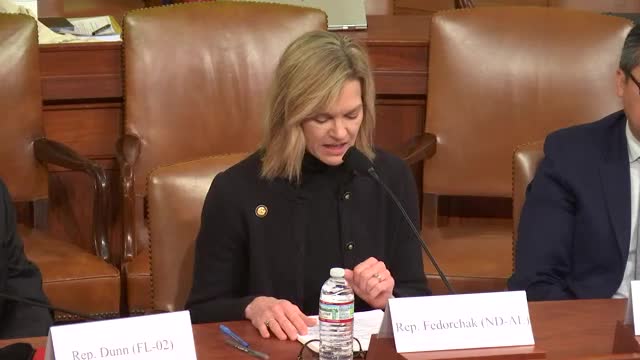
Grid-reliability concerns: Representative Julie Fedorchak (testifying as a Member from North Dakota) warned that the clean electricity production tax credit has helped renewables scale much faster than the grid can safely absorb in parts of the country. "We are in danger of building a weather dependent electricity grid," she told the committee, and urged reforms to align incentives with reliability. Representative Marjorie Taylor Greene and others likewise urged a scalpel-not-sledgehammer approach to IRA credits: preserve those that support domestic production while reworking those that undermine grid reliability.
Other energy proposals: Members supported continuing incentives for 45Q (carbon sequestration) and 45U (nuclear production tax credit) to support carbon capture and base-load generation. Representative Hunt proposed a narrowly targeted generator tax credit for disaster-affected households (the POWER Act), and Representative Ryan McKenzie and others highlighted support for biofuel and domestic energy tax items that boost rural economies.
Why it matters: Energy tax credits shape private capital decisions and supply-chain development; abrupt repeal could strand investments already made, while unconstrained incentives can change generation mixes with implications for reliability and costs.
Next steps: Members asked Ways and Means staff to evaluate targeted reforms, to preserve investments already made and to produce scoring on options that balance industrial policy, grid reliability and budget impact.