Lifetime Citizen Portal Access — AI Briefings, Alerts & Unlimited Follows
Lawmakers press DES over $122 million DDD supplemental as parents-as-paid-caregivers program drives costs
Loading...
Summary
Legislators pressed state officials Jan. 29 over a large funding shortfall in the Department of Economic Security’s Division of Developmental Disabilities, with DES warning it may run out of cash “sometime within May” unless the Legislature provides a supplemental appropriation.
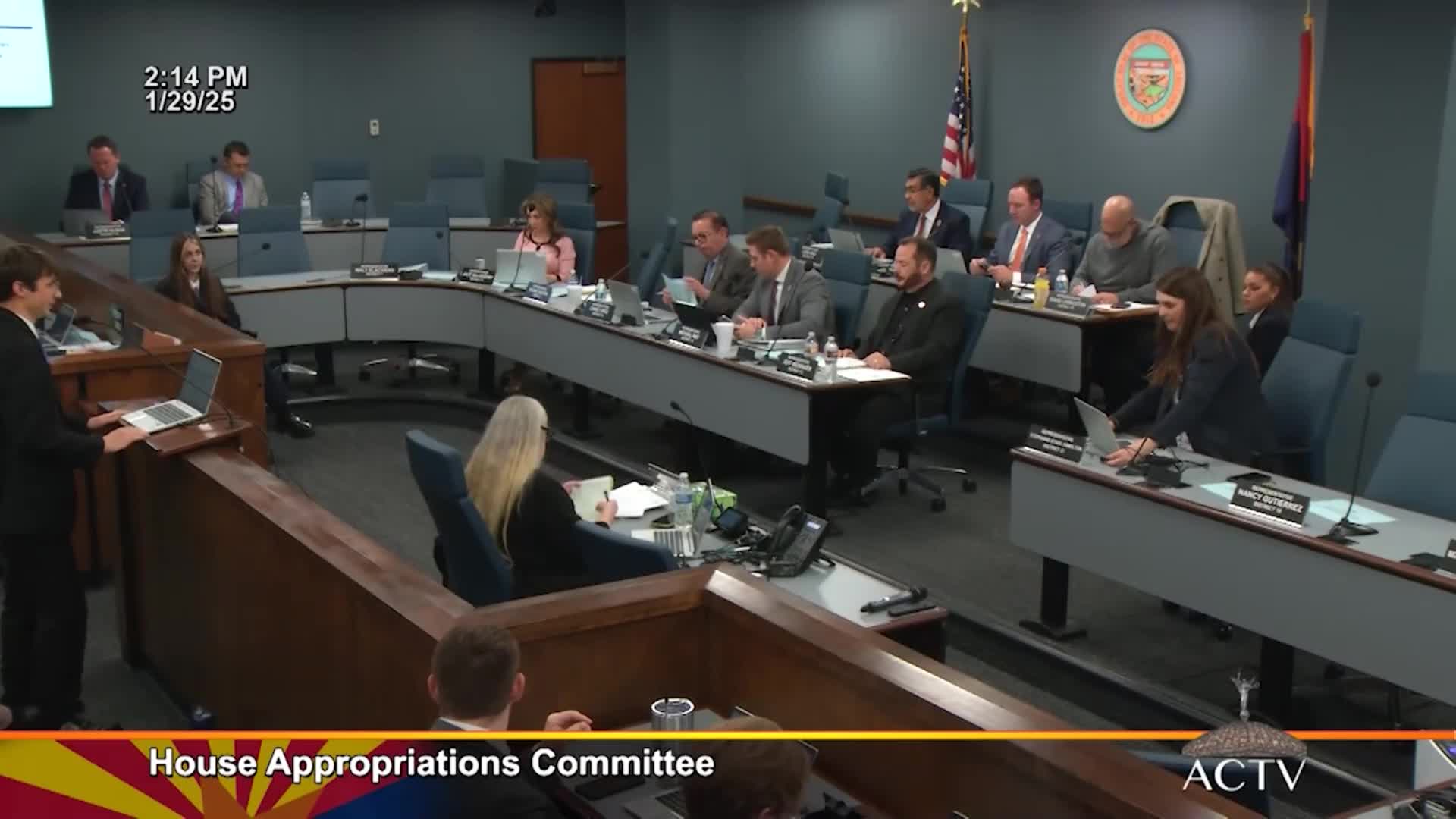
The House Appropriations Committee on Jan. 29 spent extended time on funding shortfalls in the Department of Economic Security’s Division of Developmental Disabilities (DDD), with officials warning the division will run short of cash in the spring unless the Legislature provides supplemental funding.
JLBC staff and DES officials told members the executive branch’s FY2026 proposal includes roughly $356 million in ongoing additions for DDD and a $122 million supplemental for FY2025. Chandler Koiner of the Joint Legislative Budget Committee (JLBC) said a recent capitation-rate increase began the federal fiscal year and that JLBC estimates about $76 million of the FY2025 supplemental relates to above‑budget capitation growth; Koiner identified the Parents as Paid Caregivers (PPCG) program as a major driver.
Wes Fletcher, deputy director of operations for DES, said the $122 million supplemental package includes multiple components and that, based on current trends, the department expects to “run out of cash sometime within May” and “will not be able to make the June capitation payment” absent additional appropriation. Fletcher told the committee the department is examining encounter data and cashflow to narrow the date but asked legislators to treat the funding request as urgent.
Molly McCarthy, DES deputy director for programs, confirmed that PPCG—originally funded with 100% federal pandemic-era funds and subsequently extended—was approved by federal Centers for Medicare & Medicaid Services to be permanent after a waiver process. McCarthy said the shift from 100% federal funding to the regular Medicaid match means the state now bears a significant portion of the program costs.
Members sharply questioned why DES implemented the rate increases that the Legislature had not appropriated and whether the governor’s office and Access (Arizona’s Medicaid agency) coordinated with the Legislature before PPCG became permanent. Several legislators pressed for specific timelines and for DES to return with proposals to reduce program growth if the state cannot fund the full executive request.
Committee members asked for written materials, regular cash-status reports and options to reduce DDD spending if the supplemental is not approved. DES officials said some program reductions—such as changing the waiver or limiting parental provider eligibility—would require changes to Access contracts and federal approvals and could take months to implement.