Lifetime Citizen Portal Access — AI Briefings, Alerts & Unlimited Follows
Nebraska committee hears bill to make standard time permanent; supporters cite health benefits, golf industry and youth sports raise concerns
Loading...
Summary
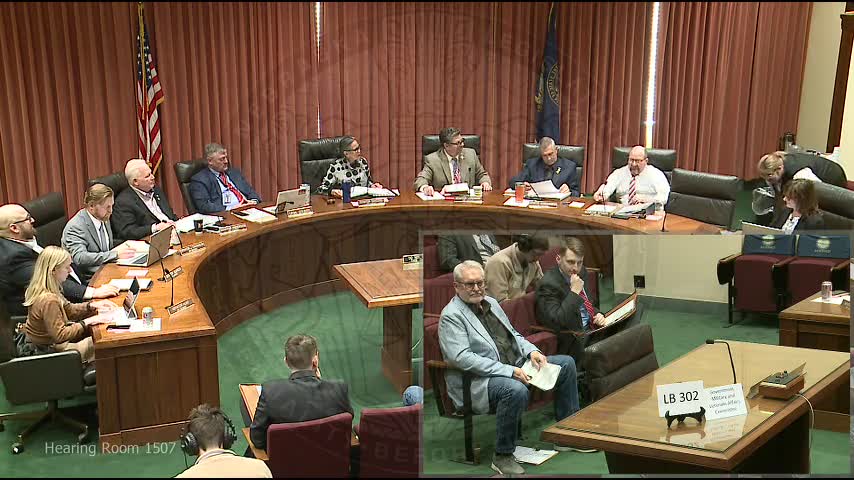
The Government, Military and Veterans Affairs Committee of the Nebraska Legislature heard testimony on LB302 on a proposal to end the twice‑yearly clock change by making standard time permanent in the state.
The Government, Military and Veterans Affairs Committee of the Nebraska Legislature heard testimony on LB302 on a proposal to end the twice-yearly clock change by making standard time permanent in the state.
Senator Dave Murman (District 38), the bill's introducer, told the committee that daylight saving time ‘‘was first adopted … as a way to conserve energy’’ but that research calls its benefits into question. He said ending clock switching ‘‘has the potential for improved outcomes for public health, safety, and the economy’’ and cited statements by medical groups and academic studies linking the spring time change to increased cardiovascular events and a short-term rise in motor vehicle crashes.
Supporters who testified included representatives of public-health coalitions and individual Nebraskans. JP (first name not provided), president of the nonprofit Safe Standard Time and co‑chair of the Coalition for Permanent Standard Time, told the panel that "standard time is the real honest to God sundial time" and argued morning sunlight is especially important for farmers, construction workers and other early‑morning workers. Patrick Greenwood of Omaha, who spoke in favor, summarized research saying the time change reduces daily sleep on average and urged the committee to end clock switching. Grace Jacobson, who testified in support, described personal difficulties with medication schedules and cited the broader evidence of increased heart attacks and strokes after time changes.
Opposition testimony came from industry and community representatives. Joseph Kohout, registered lobbyist for the Nebraska Golf Alliance, said over 300 Nebraska golf courses could lose critical evening revenue under year‑round standard time, and he provided figures collected by courses estimating more than 500 golfers over a summer season produced roughly $700,000 in revenue for municipal courses and that leagues after 4 p.m. accounted for 35–40% of annual revenue at some courses. Jason Jackson, speaking as a parent and youth‑sports participant, said moving daylight away from evening hours could reduce opportunities for after‑school athletics in communities without field lighting. Justin Brady, on behalf of the Nebraska Broadcasters Association, said his group was monitoring the bills and asked the committee to consider regional uniformity if Nebraska acts.
Committee discussion touched on technical drafting questions and the bill’s contingency language. Murman said the bill as amended would allow Nebraska to adopt permanent standard time immediately (unlike permanent daylight time, which under federal law requires Congressional action or multi‑state alignment). He noted neighboring states were also considering similar measures and closed by describing his agricultural background and support for permanent standard time.
For the hearing record the committee counted 31 proponents, 17 opponents and 1 neutral position. The committee did not take a vote during the hearing.
Looking ahead, proponents urged the committee to consider health and safety studies and the immediate feasibility of opting out of clock changes; opponents urged caution because of local economic impacts such as golf revenue and youth‑sports scheduling.