Get Full Government Meeting Transcripts, Videos, & Alerts Forever!
Get email alerts on the Fusion Energy topic
No spam. Unsubscribe anytime.
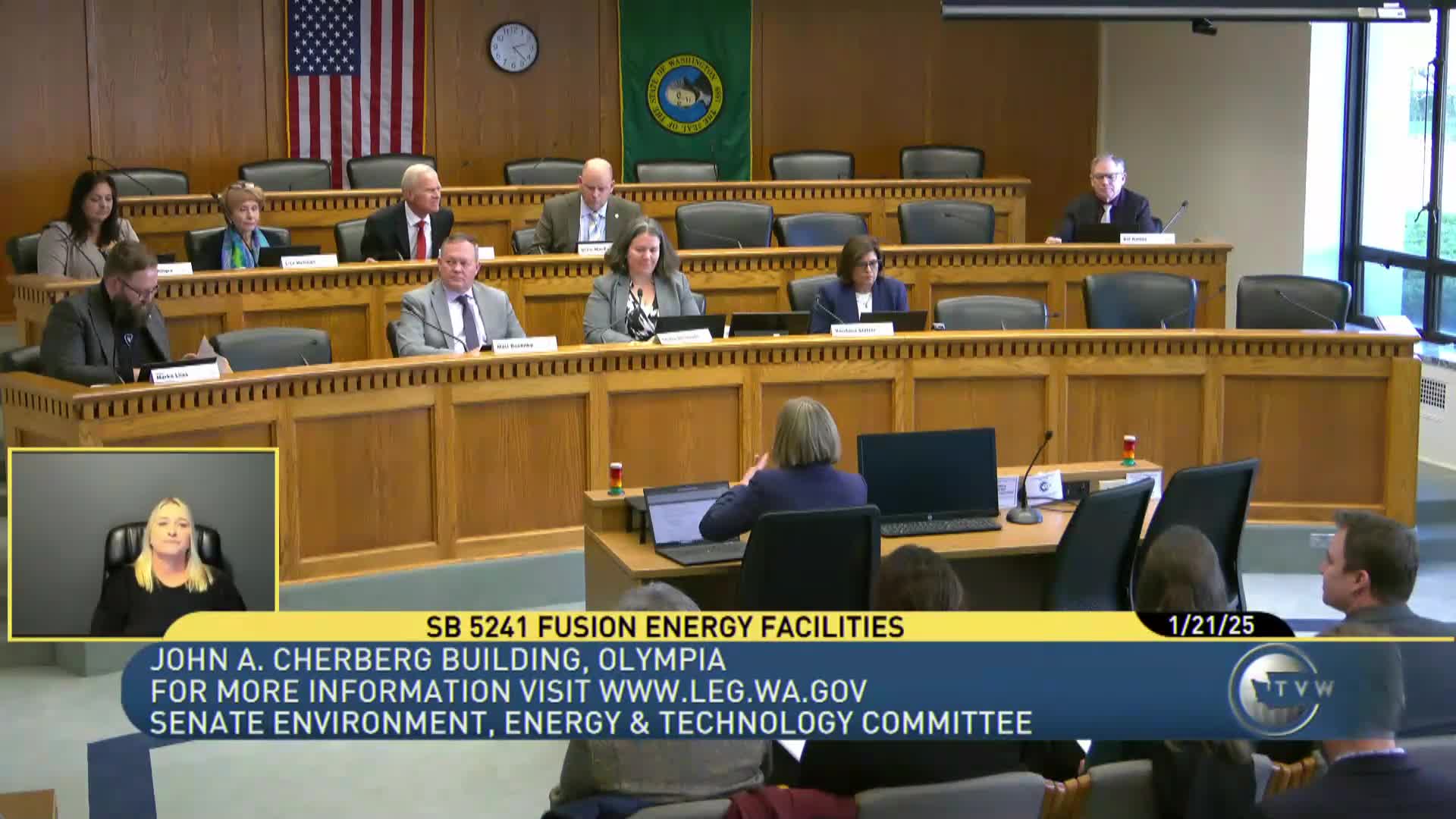
Committee hears bill to allow fusion projects to opt into EFSEC; health licensing still required
Summary
Staff and agency witnesses told the Senate committee that Senate Bill 5241 would allow fusion energy facilities to opt into the EFSEC site certification pathway while preserving required radiation licensing and registration with the Department of Health; witnesses and industry speakers testified in support.
Kim Cushing, committee staff, briefed senators on Senate Bill 5241, which would add fusion energy to facilities that may obtain site certification under the Energy Facility Site Evaluation Council statutes. Cushing said the bill clarifies statute by distinguishing fusion and fission and allows fusion facilities to choose EFSEC, Ecology’s coordinated permit process, or the local permitting pathway; any fusion facility that obtains EFSEC certification would still need required radiation licenses and registrations from state or federal agencies.
Senator Elias, the bill’s prime sponsor, told the committee the measure stems from last year’s interagency study and the legislature’s interest in distinguishing fusion and fission in statute. Elias described the technical difference to the committee and said fusion produces different waste and fuel‑supply considerations than fission: “We split the atom… fusion is much happier. We are marrying 2 atoms,” he said.
Sonya Bumpus, EFSEC director, said the bill implements recommendations from the interagency fusion work group and is intended to provide regulatory flexibility so emerging fusion developers can choose the permitting pathway that best suits their technology. Bumpus emphasized that fusion may present lower safety and environmental risks than fission but that federal licensing work remains ongoing.
Jill Wood, director of the Department of Health’s Office of Radiation Protection, described the bill as “a technical adjustment aimed at clarifying the regulatory pathway for the fusion industry” and said Department of Health would continue to administer licensing and registration for radiation control purposes.
Industry witnesses spoke in support. Isaac Kastema of Clean and Prosperous Washington and Tom Bugart of Helion Energy urged the committee to approve the bill to avoid statutory obstacles for an emerging local cluster of companies. Bugart said Helion, based in Everett, expects to build a 50‑megawatt demonstration plant and called the bill “a way to advance Washington’s clean energy goals and reinforce us as a global hub.”
Staff noted a preliminary fiscal note indicating no fiscal impact. Multiple witnesses said they would continue to coordinate with state agencies to ensure appropriate licensing, oversight and public review.
Ending: The public hearing closed after proponents testified; committee members and agencies said they would follow up with technical details as the bill moves through the process.