Lifetime Citizen Portal Access — AI Briefings, Alerts & Unlimited Follows
Baltimore council committee hears progress on home-repair programs for older adults; asks administration for plan to clear backlog
Loading...
Summary
City housing officials described staffing, process and technology changes and a new ‘‘no-heat’’ triage lane as they reported on a backlog of older-adult home-repair requests. Council leaders asked the administration and external hubs for a short plan showing what it would take to clear the backlog.
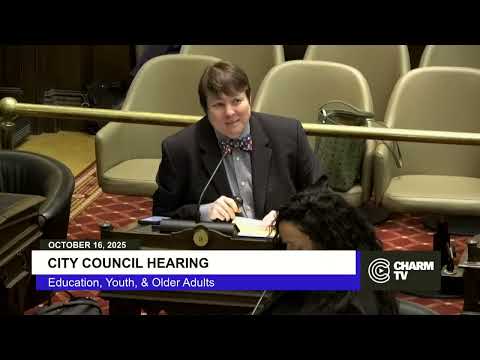
Baltimore City Council members on the Education, Youth and Older Adults Committee heard agency updates on home-repair assistance for older adults and asked the city and its community ‘‘hubs’’ partners to produce a 1–3 page analysis of what it would take to clear the current backlog.
The committee received a detailed briefing from the Department of Housing and Community Development (DHCD) and Office of Rehabilitation Services (ORS), which described reorganizations of client intake, new subgranting of Affordable Housing Trust Fund dollars to hubs partners, and a formalized ‘‘no-heat’’ emergency triage that will let contractors replace HVAC units on a faster timeline when grant funds allow.
The work matters to thousands of Baltimore homeowners and to neighborhood vacancy-prevention strategies, committee members said. Council President Z. Cohen told staff, “This should be 1 of them,” when asked which budget priorities the council should consider. Council leaders asked DHCD and the hubs partners to return with a short analysis of staff and capital needs to close the backlog.
DHCD officials outlined changes intended to reduce delays in the pipeline that leads from initial requests to completed repairs. Alice Kennedy, Housing Commissioner, said the department is “executing the Affordable Housing Trust Fund older adult repair funding in a different manner,” by issuing subgrants directly to hub leaders so those organizations don’t need to wait for reimbursement through the city.
Deputy Commissioner Nicole Hart described an internal reorganization that created an Office of Integrated Client Services and a Light intake and assessment unit (referred to in testimony by the shorthand “Light”). Hart said Light is not a repair program but an intake and assessment function that helps route older adults to the appropriate repair funding and services. Hart said DHCD is increasing staff hiring for social-service coordinators and office support roles, upgrading its phone system and working with the city’s Innovation team to clean duplicated pre-applications in the portal.
ORS staff reported recent output and current caseloads. Assistant Commissioner Brock Paluzzi said ORS activated 60 cases and completed 47 projects in the past three months, and paid $711,567 in invoices during that period. Paluzzi said the department committed about $1.4 million to 46 projects during that quarter. On a snapshot pulled Oct. 10, ORS reported 361 active clients in its system overall, including 95 clients on ORS’s internal wait list, 135 projects in scope and development, 32 actively receiving bids, 104 under construction or payment, and 17 completed and awaiting final inspections or invoices. Paluzzi said the current average project cost is roughly $37,000.
Paluzzi described a ‘‘no-heat’’ emergency triage to run during the city’s no-heat season (typically cited as November–March). Eligible clients with failed heating systems may move to a fast lane for HVAC replacement paid from non-federal grant dollars; contractors will be given a not-to-exceed amount and must be able to complete work quickly, within roughly a week if possible. ‘‘We are bypassing assigning the rehabilitation technician and contacting the homeowner,’’ Paluzzi said of the triage lane, which still requires permits, inspections and contractor compliance with ORS rules.
DHCD also said it is drafting four subgrants from the Affordable Housing Trust Fund totaling $1.4 million to the hubs leadership team: Green & Healthy Homes Initiative, CivicWorks, Rebuilding Together Baltimore and Neighborhood Housing Services of Baltimore. The subgrants are intended to allow hubs partners to pay contractors directly and include a 10% allocation for operating costs; DHCD officials said the agreements are in legal review and they hope to finalize them by year’s end.
Committee members and agency staff repeatedly returned to the backlog and customer communications as central issues. Deputy Commissioner Hart described a multi-step Light process—pre-application, assessment, document collection and certification—and DHCD said it will implement automated notifications and work with 311 to route no-heat and repair requests to the integrated client services intake. Hart said the department aims to return phone messages within 48 hours and is piloting additional human-service worker support in one community center to address the pre-application backlog.
Public testimony underscored the urgency. Peggy Scarlett, a homeowner who identified her address in testimony, told the committee, “I need help for repair of my house,” and described mobility challenges from knee replacements that make a high front step a safety problem. Renoy Coleman said, “I haven't had a furnace in 5 years.” Committee members and staff agreed to follow up directly with both residents after the hearing.
Council President Cohen asked the administration for a short analysis to quantify the staff and capital resources needed to clear the backlog; Council Member Odette Ramos amended the request to ask for the same analysis from the external hubs partners. The committee chair accepted the request as a committee follow-up assignment and left the item open for further work.
Several council members pressed DHCD on outreach and barriers to access. DHCD said it will perform targeted mailings, door-to-door outreach on priority blocks identified in the city’s vacancy-reduction work, and community-based application assistance at senior centers and other locations. DHCD staff said printed materials—infographics, handbooks and brochures in English and Spanish—are in circulation or draft form.
Officials cautioned that completing more intake applications shifts demand to ORS, which has finite capital and staff capacity: “The more applications we complete, they're going to sit in another space, in another wait list,” Deputy Commissioner Hart said. ORS staff echoed that capacity and funding constraints mean faster intake does not always translate immediately into faster completions without additional capital or more rehabilitation technicians.
Next steps identified at the hearing: DHCD and the Mayor’s Office were asked to produce a 1–3 page analysis, to include the administration’s estimate of additional staff and capital needed to close the backlog and accelerate repairs; the committee requested that hubs partners provide a comparable analysis. DHCD will continue to finalize the Affordable Housing Trust Fund subgrants, implement phone and portal improvements, pilot human-service worker assistance with the Mayor’s Office of Children and Family Success, and stand up the no-heat fast lane for eligible HVAC replacements when funding permits.
The committee concluded the hearing and asked staff to follow up with the two public-testimony speakers. No formal vote on ordinances or resolutions took place during the discussion.