Lifetime Citizen Portal Access — AI Briefings, Alerts & Unlimited Follows
Portsmouth zoning board denies side-yard variance for garage with ADU after boundary dispute
Loading...
Summary
The Portsmouth Zoning Board of Review denied a request for a 4.9-foot side-yard dimensional variance for a proposed four-bay garage with an accessory dwelling unit at 2635 East Main Road, citing a reasonable alternative and unresolved property-line disputes.
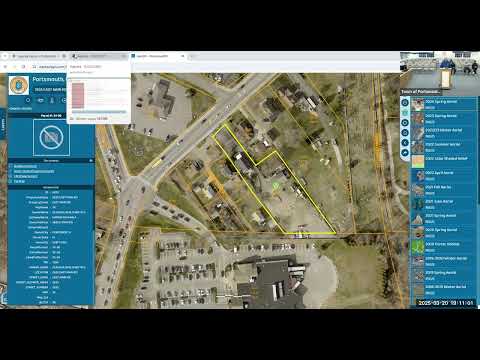
PORTSMOUTH — The Portsmouth Zoning Board of Review voted to deny a requested 4.9-foot side-yard dimensional variance for a proposed addition and accessory dwelling unit (ADU) at 2635 East Main Road.
The applicant, Richard O'Loughlin, sought the variance to expand an existing two-bay garage to four bays and add an ADU on the second floor for a family member. O'Loughlin told the board the project would reduce the side setback to roughly 10 feet from the 15-foot side-yard requirement for the town-center zoning district and that the stair entry to the ADU must be on the side in question because of the septic designer's layout. "I would like to add 2 more bays to this and put a ADU apartment for my son on the Second Floor," O'Loughlin said, and described the placement and septic constraints he said informed the design.
The hearing drew several neighbors who raised concerns about the property's legal boundaries. John Maderas, a nearby property owner, told the board he had researched deeds and claimed the lot lines in question had not changed for decades and that the applicant's plans appeared to rely on a different boundary than his deed. "I have all this in lengths and chains," Maderas said, describing his review of historical deeds and his view that the property line has been stable for generations.
Other neighbors gave mixed statements. Scott DeCastro, who lives adjacent to the rear of the lot, said he had no objection to the proposed building: "I have no problem with that," he told the board.
Board members debated whether the boundary dispute was within the zoning board's purview. Several members noted that property-line disagreements are civil matters that a court or a licensed surveyor should resolve, while also saying the board must act on the application as presented. The town planner confirmed the application materials matched the town's records "to the best of [his] knowledge," and the board discussed whether to delay its decision to require a stamped survey.
At the vote, the board denied the variance. Members who opposed the variance said a reasonable design alternative existed — specifically, placing the exterior stairs on the opposite side of the building — that would avoid the need for a variance. One board member summarized that position, saying a reasonable alternative removes the justification for the requested relief: "There is a reasonable alternative to have the exterior steps on the opposite side of the building, eliminating the need for this variance." The motion failed and the petition was denied.
The meeting included a brief earlier item on 513 Bristol Road (Map 12, Lot 59), for which a 3.2-foot front/rear yard dimensional variance to construct a deck off a garage was presented with no written objections; the board approved that petition as uncontested.
Why it matters: The denied variance at 2635 East Main Road illustrates how unresolved property-boundary questions can complicate zoning relief even when applicants and some abutters have reached an understanding. Board members emphasized that zoning decisions rely on the factual record presented and that civil disputes over deeds or lines are typically resolved outside the zoning hearing process.
What happens next: The applicant may revise the design (for example, by relocating exterior stairs) and reapply, or seek to resolve boundary questions through a licensed surveyor or civil action and return to the board if needed. Any decision by the board is appealable to the superior court.