Lifetime Citizen Portal Access — AI Briefings, Alerts & Unlimited Follows
Health department outlines plan to spend roughly $45 million in opioid settlement funds
Loading...
Summary
Health department officials briefed the committee on an opioid abatement task force plan that will prioritize prevention, harm reduction, treatment access and recovery supports and outlined $45 million expected for Prince George's County from state distribution of opioid settlement payments.
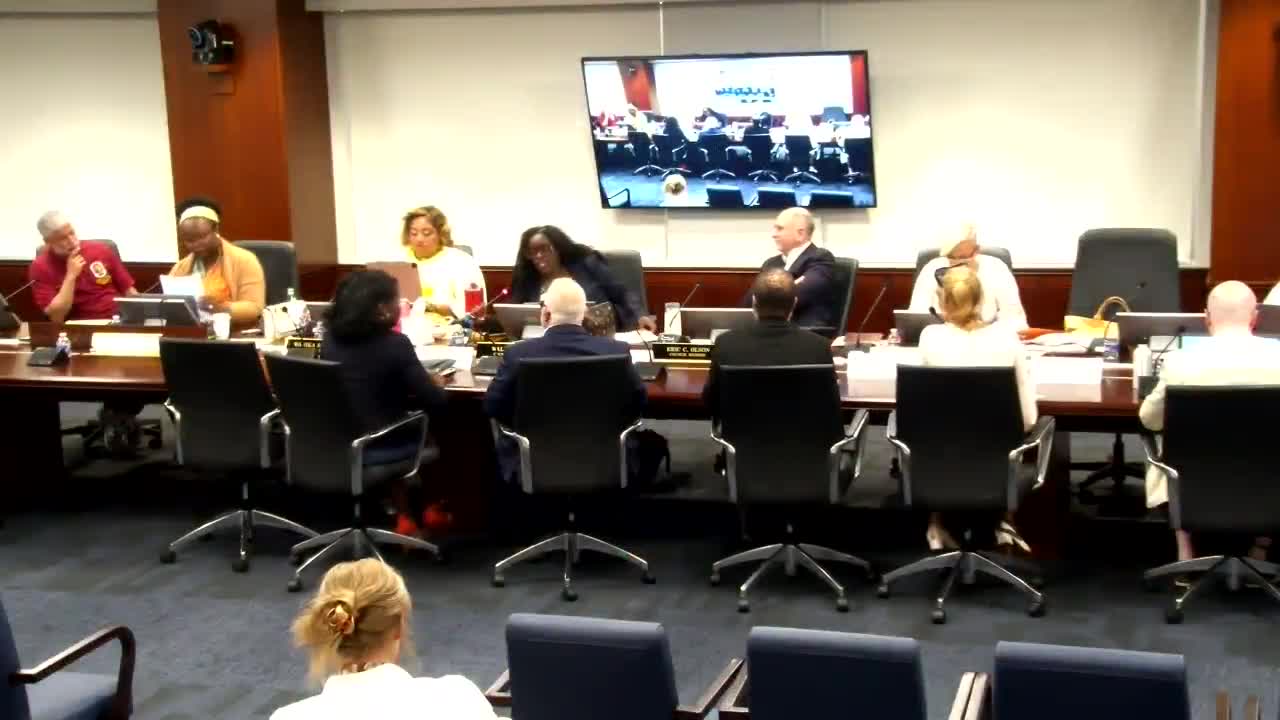
Prince George's County health officials presented a briefing on June 5 detailing plans for opioid settlement funds and an associated county task force. Samantha Karen, program manager overseeing the county’s opioid abatement work, told the Health, Human Services and Public Safety Committee the county expects to receive about $45,000,000 from statewide opioid settlements and that those funds must be invested principally in opioid remediation.
“—This includes $650,000,000 in opioid settlement payments coming into the state of Maryland of which 45,000,000 is going to Prince George's County,” Karen said, describing federal‑ and state‑level settlements and the county’s anticipated share. Karen said opioid settlement funding will be distributed to counties largely through the state and that Prince George’s County will receive funds on a noncompetitive formula basis; she added that the funds are a special revenue source with reporting requirements and a state dashboard planned for FY26 that will show all expenditures.
Dr. Jacqueline Somerville, associate director for the behavioral health division, said the county created an opioid abatement task force in June 2024 and has engaged roughly 100 professionals across government, health care, public safety, education and community organizations. “We have harnessed the expertise of over a hundred professionals from various different public, public and private institutions across the county to develop a plan outlining how these funds can be made the most significant impact in our county,” Somerville said.
Karen and task‑force members described a year‑long, multidisciplinary process organized into working groups on prevention, harm reduction, treatment and recovery and public safety. Each working group solicited input from community members, young people, people in recovery and outreach teams; officials said the groups would soon rank priorities and produce a recommended short list of about 15 strategies for funding. Early priorities identified by working groups included youth mental‑health treatment, expanded geographic harm reduction and naloxone distribution (task force members cited a program based in Suitland that needs more reach), a mobile methadone program to improve access in central and southern parts of the county, earlier involvement of certified peer recovery specialists, and overdose prevention for people exiting jail or prison.
Officials said Maryland requires recipients to invest a specified portion of settlement funds in future opioid remediation (Karen cited a 70% requirement for future remediation) and that the county must report every expenditure to the state. Karen described “Exhibit E,” a list of roughly 100 eligible opioid abatement strategies that range from school‑based prevention to street outreach and treatment modalities. The health department expects to finish its internal prioritization in June, present recommendations to the incoming county executive, and shift to administering grants, contracts and interagency agreements for implementation.
Committee members sought local‑level detail. Officials said zip codes along the Washington, D.C., border, and Hyattsville in particular, have had higher overdose rates, and that Black adults, particularly ages roughly 35–55 and men more than women, were disproportionately affected. Karen noted state data showing about 12,000 overdose deaths in Maryland over four years and that last year’s state total fell to about 1,700 (a 38% decrease from an earlier peak), which she described as evidence that some interventions are working.
Dr. Somerville and Karen said the county is finalizing outreach to people who use drugs, including a planned first‑of‑its‑kind survey, and will coordinate with municipalities inside the county that are also receiving settlement funds. Officials also said the county is completing a community health assessment with extensive data and will align that report with the interactive PGC Health Zone website so council members can review area‑level health metrics.
No formal council action was taken on June 5; the briefing was informational and staff said they would return with recommended priorities and implementation plans for council review.