Get Full Government Meeting Transcripts, Videos, & Alerts Forever!
Get email alerts on the Labor Relations topic
No spam. Unsubscribe anytime.
Office of Labor Relations briefs committee on FY26 budget, hiring freeze effects and labor economist post
Summary
The Office of Labor Relations and Collective Bargaining told the committee its FY26 proposal preserves FTEs, shifts some nonpersonnel funding as a labor economist role moves from contractor to in‑house, and that a hiring freeze and mayoral orders delay arbitration and implementation of negotiated pay until Oct. 1, 2025.
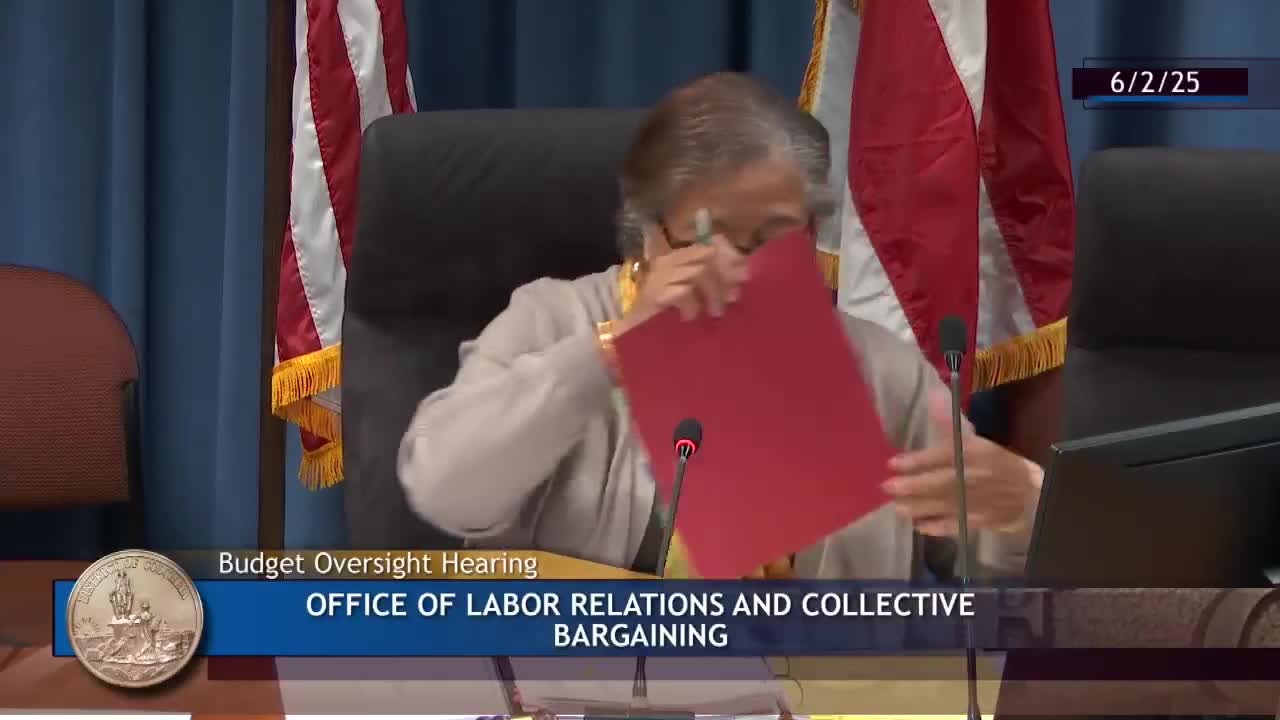
E. Lindsey Maxwell II, director of the Office of Labor Relations and Collective Bargaining, told the Committee on Executive Administration and Labor on June 2 that the office’s proposed FY26 budget preserves staff levels while reducing nonpersonnel funds and that recent mayoral and congressional actions have constrained labor activity.
Maxwell said OLRCB’s FY26 operating proposal is approximately $3.4 million with 20 FTEs; the proposal decreases nonpersonnel services by about $192,000 but increases personnel funding slightly to reflect fringe rate changes. He told the committee the office gained three FTEs in FY25 and added attorneys to reduce outside litigation costs, and he said the office values expanded training for agency labor liaisons.
Maxwell and staff told Councilmembers that Mayor’s Order 2025‑53 and an earlier citywide continuing resolution effect forced the district to revert to FY24 spending levels, producing a roughly $1.1 billion reduction to locally approved FY25 authority and a district‑wide hiring freeze. Maxwell said the hiring freeze and mayoral direction mean the district cannot implement arbitration awards or negotiated compensation increases until Oct. 1, 2025, and that most compensation negotiations are paused. “We cannot arbitrate cases until 10/01/2025,” Maxwell said.
Contractual funding reductions include a drop in outside labor economist contractor spending (PFM) because OLRCB expects to fill an in‑house labor economist position. Councilmember questions focused on timing for recruitment, whether negotiated contracts already in place have funding in the four‑year plan (OLRCB answered yes for previously negotiated CBAs), and on whether the wage freeze precludes retroactive pay for new CBAs.
Why this matters: OLRCB negotiates and defends collective bargaining agreements covering about 75% of district employees; changes to arbitration timing, implementation of CBAs and hiring authorities affect agency labor relationships and potential personnel costs.
What the committee recorded: Councilmembers pressed OLRCB on the timeline to recruit the labor economist (staff said active recruitment via DCHR; hiring freeze adds steps but expected fill within 30–60 days once paperwork clears and waivers are approved). Maxwell said funds for already‑negotiated CBAs have been accounted for in the district’s planning and that interest arbitration or currently‑earmarked payouts would not be affected by the wage freeze.
Ending: The director asked the committee to preserve training investments and staffing that reduce litigation risk; OLRCB said it will continue coordinating training through PeopleSoft and DCHR and will work with the committee on any supplemental needs.