Lifetime Citizen Portal Access — AI Briefings, Alerts & Unlimited Follows
Committee hears how rent delinquencies and arrears are stressing DC housing market
Loading...
Summary
Witnesses and agency directors told the Committee on Housing that elevated rent nonpayment is stressing small owners, threatening preservation projects and reducing investor interest in DC multifamily markets; they urged a mix of stabilization funding, protections for tenants and reforms to speed deals.
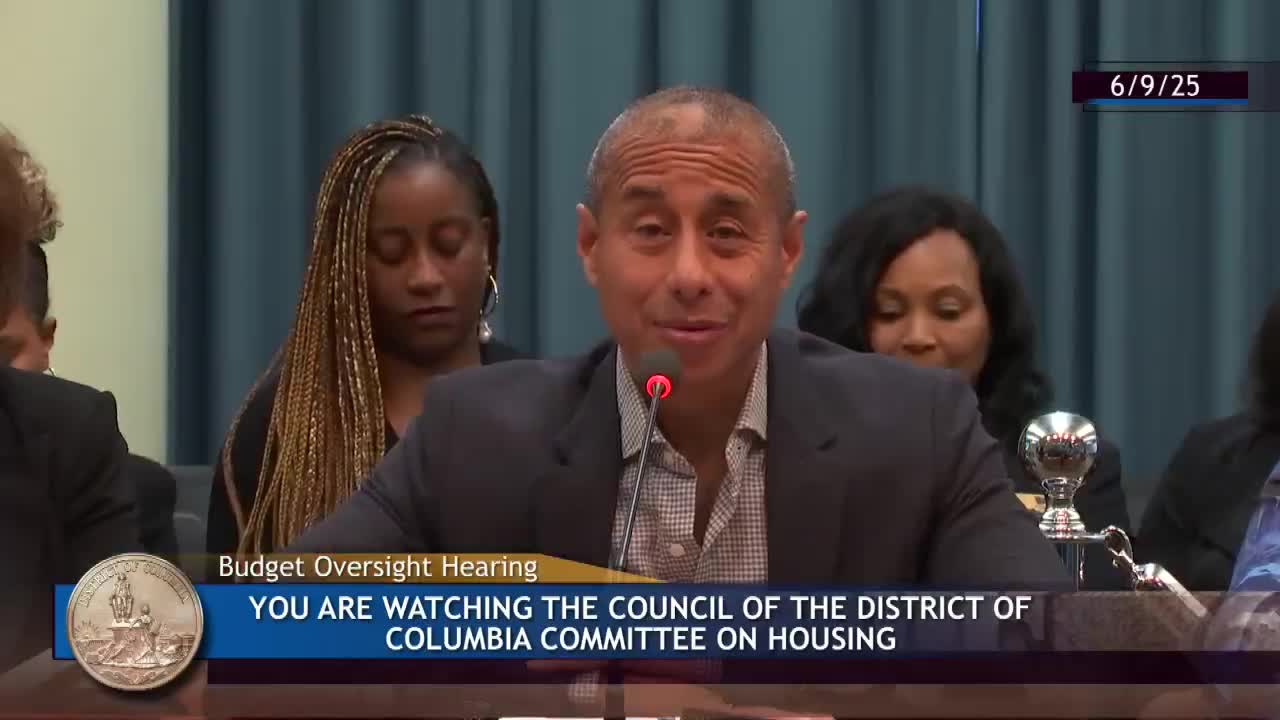
Multiple witnesses told the Committee on Housing on June 9 that elevated rent arrears and a lengthy post‑pandemic slump in multifamily transactions are producing a “cascade” of problems across the District's housing system.
Developers, small owners and members of the Apartment and Office Building Association said long‑running nonpayment compressed landlords’ operating capital and made preservation work harder. Dean Hunter of the Small Multifamily and Rental Owners Association said small landlords — many minority‑owned — had “lost more than $600,000,000 in unpaid rent” in 2024 and urged relief programs targeted to small owners, including a proposed $20 million small building repair fund to help owners with 10 units or fewer make work necessary to re‑let units.
Mission‑driven owners and non‑profit housing providers described a different but related strain. Jeff Blackwell of Victory Housing and Eris Scales of the National Coalition of 100 Black Women said mission providers faced delinquencies in portfolios and needed short‑term stabilization financing and technical help to keep properties operating and to prevent covenants from being lost in forced sales.
DCHFA (Housing Finance Agency) and DHCD (Department of Housing and Community Development) described steps taken this year. DCHFA said it had issued a one‑time $10 million portfolio stabilization grant and made other bridge loans available, while DHCD redirected some HPTF and other funds this year toward buildings facing immediate distress.
Both agency witnesses and non‑profit advocates emphasized that emergency landlord aid absent tenant protections or paired with no forgiveness often fails to stabilize households or prevent eviction. Friendship Place and other providers urged that stabilization funds be paired with rent debt forgiveness or focused on building rehabilitation to prevent displacement.
Ending: Committee members asked agencies for more precise data on arrears, the number of properties at risk and the scale of needed stabilization funding. Several council members said they would push for targeted programs for small owners alongside tenant protections and rental assistance.