Lifetime Citizen Portal Access — AI Briefings, Alerts & Unlimited Follows
Hearing highlights rent‑arrears crisis and contested eviction reforms in Rental Act
Loading...
Summary
At the Committee on Housing hearing, nonprofit providers, mission developers and property owners described high rent arrears and long eviction backlogs. Advocates urged caution about expanding expedited public‑safety evictions; industry groups pushed for restored eviction timelines and other court changes to stabilize operations.
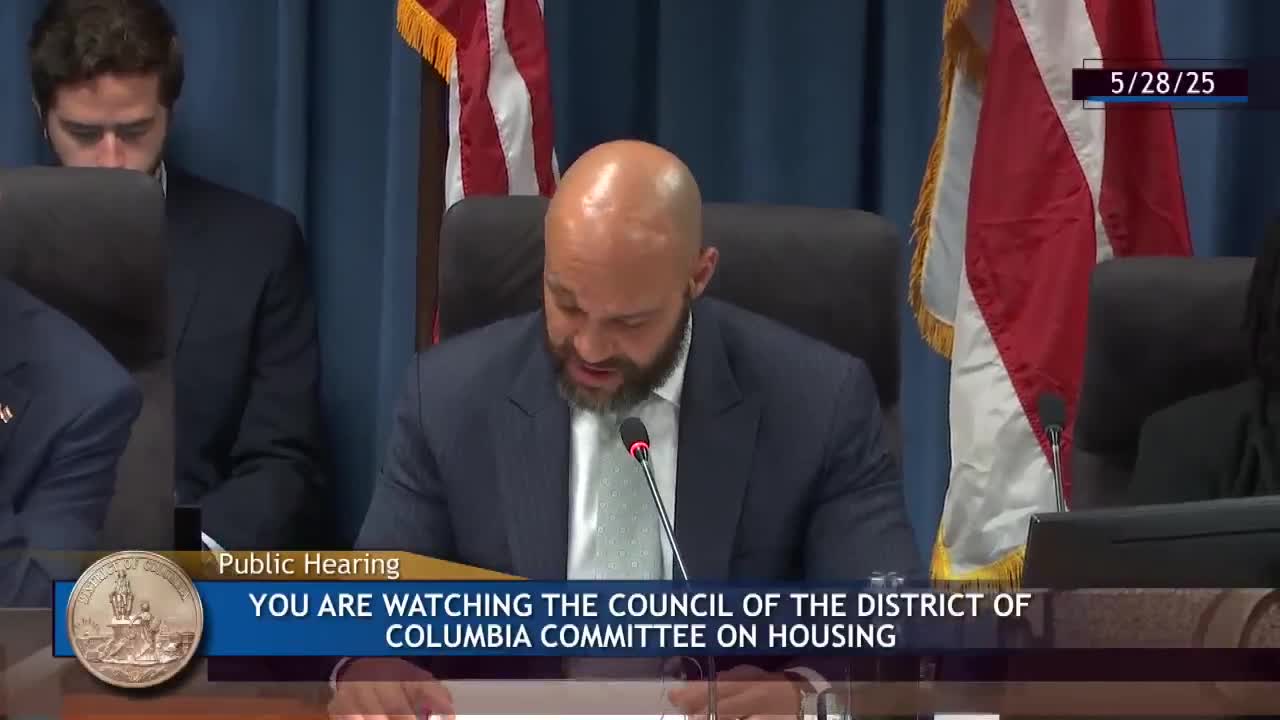
Washington — Affordable housing providers, mission developers and property managers described a rent‑arrears crisis at a May 28 Committee on Housing hearing and urged council action on several fronts, even as advocates cautioned against eviction law changes that could harm tenants.
Magnitude and operational impact: Multiple witnesses said delinquency and unpaid rents surged during and after the pandemic and have strained providers. Pamela Lee of the NHP Foundation said NHP’s rent collection in D.C. fell from 95% pre‑pandemic to 82% last year and the organization has written off more than $16 million in uncollectible rent since 2020. Michael Huke (CIH Properties) estimated the city‑wide shortfall could be on the order of hundreds of millions, saying provider reserves and equity are being exhausted.
Industry and nonprofit proposals
- Faster court processing and clarified rules: Providers and industry groups asked the council to restore quicker eviction timelines and to give judges more discretion to proceed despite technical filing defects. Michael Huke said cases that used to resolve in months now take years, and that lengthy timelines exacerbate providers’ losses.
- Targeted revenue and stabilization funds: Several nonprofit providers backed proposals to expand Housing Production Trust Fund allocations and to fund a housing stabilization program to resolve tenant debt. Pamela Lee and Enterprise Community Partners urged a dual track of stabilization for legacy deals and funding for new construction.
- Public‑safety eviction provisions: The Rental Act and the Eviction Reform Amendment Act would add grounds and procedural changes for expedited removal in some public‑safety cases. Aoba (Apartment and Office Building Association) and other housing providers urged faster removal options for violent or threatening tenants; however, Children's Law Center urged caution and said the proposed language could be overly broad and asked for more stakeholder input.
Court and procedural fixes proposed
Witnesses urged several technical changes the committee could adopt to ease transactional friction or speed enforcement:
- Shorten administrative TOPA notices and redundant waiting periods that prolong closings.
- Increase coordination and resources for the Superior Court to move nonpayment cases more swiftly, including greater capacity for mediation, judicial discretion and targeted eviction tracks for criminal activity.
- Create shared burden models for arrears resolution. Michael Huke proposed a model where D.C. covers 50% of tenant arrears, housing providers absorb 20% and tenants repay about 30% over time; other witnesses proposed rent‑assistance or targeted vouchers as alternatives.
Advocates’ caution
Children’s Law Center and other tenant advocates asked the council not to adopt permanent changes to the eviction code without extensive stakeholder input, citing the severe consequences eviction can impose on children and families. McKenna Osborne (Children's Law Center) explicitly opposed adding a broad new public‑safety ground for eviction and urged a narrower approach or fixes to existing law and implementation gaps.
No formal votes were taken. Council members asked for more data on arrears, eviction processing times and the effects of pandemic‑era emergency measures before finalizing legislation.