Lifetime Citizen Portal Access — AI Briefings, Alerts & Unlimited Follows
House legal committee hears opposition to Senate Project 297 on abortion protocol for girls 15 and under
Loading...
Summary
The House legal committee heard testimony May 13 opposing Senate Project 297, a bill to create a protocol for abortions for minors 15 and younger in Puerto Rico.
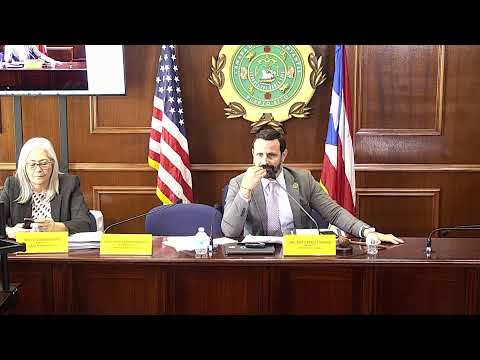
SAN JUAN, Puerto Rico — The House of Representatives’ Comisión de lo Jurídico on May 13 heard hours of testimony opposing Senate Project 297, a proposed law that would establish a protocol governing abortions for girls 15 years old or younger.
At the hearing, attorneys, clinic representatives and advocacy organizations told legislators the measure is unnecessary because the Department of Health already adopted regulations addressing clinical protocols and that the bill could have harmful legal and practical effects for minors who are survivors of sexual violence.
“No hablamos de un tema nuevo: el Departamento de Salud ya aprobó y entraron en vigor unas enmiendas al reglamento de las clínicas de terminación de embarazo,” said Noeli Pérez de la Torre, an attorney representing the Colegio de Abogados y Abogadas de Puerto Rico. Pérez de la Torre argued the department’s regulatory amendments (submitted under the Uniform Administrative Procedure process) already implement many of the changes the bill would order the department to make.
Cristina Parés Alicea, executive director of Proyecto Matria, told the committee the bill “impone cargas innecesarias a las menores que desean interrumpir un embarazo” and criticized its focus on administrative requirements rather than on prevention and supports for young people.
Representatives from clinical providers said the bill would single out a narrow segment of care and could create delays and barriers. Enid Marie Pérez Rodríguez, executive director of Asociación Puertorriqueña Pro Bienestar de las Familias (Pro Familias), said “en Puerto Rico solo existen 4 clínicas de terminaciones de embarazo” and that only one clinic currently provides services to minors under 15; the others currently limit care to older age groups. She described internal protocols at her organization that route suspected sexual‑violence cases to hospitals for forensic evidence collection and to specialized victim‑assistance centers.
Speakers raised several legal objections. The Colegio’s written remarks noted potential conflicts with the Puerto Rico Penal Code and the territorial constitution, including claims that the bill would improperly combine topics (regulation and criminalization) in a single measure and that existing provisions — including Article 100 (abortion by force or violence) and Article 130(a) (assault against victims under certain ages) — already address criminal conduct raised by the bill's sponsors. Witnesses also cited Pueblo v. Duarte, a Puerto Rico Supreme Court decision, as governing how medical judgment and the concept of “health” are applied in abortion cases on the island.
Opponents from faith‑based and pro‑life groups also testified. Carmen Ugarte, spokesperson for Católicos Provida, said the bill “presenta una contradicción fundamental con el ordenamiento jurídico vigente en Puerto Rico” and argued the proposal could be read to normalize abortion for minors in ways that conflict with the Penal Code.
Multiple presenters urged the committee to prioritize prevention, education and comprehensive supports rather than additional clinic regulation. Proyecto Matria and Pro Familias pointed to international public‑health guidance that emphasizes primary prevention, access to contraception, and trauma‑informed services; they also criticized parental‑consent requirements as likely to endanger minors who are abused or coerced by family members or partners.
On procedural and operational points, clinical witnesses described their intake and safety practices: when a person under 15 seeks services, Pro Familias said, staff route the young person to case management, notify appropriate agencies when required, and — in suspected sexual‑violence cases — refer to a hospital for forensic evidence collection and to the Centro de Ayuda a Víctimas de Violación (CAF) or SIMBA/PITI centers for specialized interviews and care.
Witnesses disagreed about the factual basis the bill uses. The Colegio and others said publicly available clinic data show few or no abortions performed on girls under 15 in recent years; the Colegio cited 2023 clinic age‑group counts showing no abortions for under‑15s and higher counts in age groups 20–24 (1,615) and 25–29 (1,539). Pro Familias said its clinic saw five patients under 15 in the prior year whose partners were not more than four years older (a statutory age‑difference threshold relevant to certain criminal definitions). Police statistics cited by one witness recorded 1,209 sexual‑violence reports in a stated year, but witnesses said those reports do not indicate clinics are the locus of the problem.
Several witnesses described practical problems the bill would create: mandatory parental consent without a clear exception for suspected parental perpetration, a requirement for licensed counselors to perform forensic interviews in settings that are not designed for forensic evidence collection, and mandatory referrals to the Department of the Family that witnesses said can be re‑victimizing and for which capacity is inconsistent across the island.
No formal vote or final action on Project 297 was recorded in the hearing. Committee members questioned witnesses on clinical procedures, statutory definitions and constitutional concerns, and asked agency partners to submit regulatory and statistical materials to the record.
The committee chair recessed the hearing after more than two hours of testimony and said materials submitted by presenters and agencies would be reviewed as part of the committee’s record. The measure remained at the committee discussion stage at the close of the hearing.