Get Full Government Meeting Transcripts, Videos, & Alerts Forever!
Get email alerts on the Immigrant Health Minnesota Care topic
No spam. Unsubscribe anytime.
Posse Caucus, advocates urge lawmakers to protect earned sick time and MinnesotaCare expansion for undocumented residents
Summary
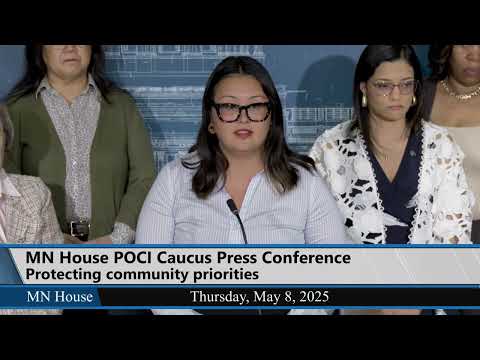
Representative Cedrick Frazier, co-chair of the Posse Caucus, and community advocates called on Minnesota lawmakers to preserve policies enacted since 2023, saying recent proposals in a divided government would roll back benefits for workers, students and immigrant communities.
Representative Cedrick Frazier, co-chair of the Posse Caucus, and community advocates called on Minnesota lawmakers to preserve policies enacted since 2023, saying recent proposals in a divided government would roll back benefits for workers, students and immigrant communities.
The advocates focused on two central items: earned sick and safe time (ESST), passed in 2023 and currently used by workers across the state, and the 2023 MinnesotaCare provision that extended coverage to some undocumented residents. They said Republican proposals in the Senate to create employer-size carve-outs and repeal the MinnesotaCare expansion would remove benefits from tens of thousands of Minnesotans and worsen uncompensated emergency care costs.
"Sick is sick. It doesn't matter if you work in a small business in the metro or as a farm worker in Greater Minnesota," Amanda Otero, co-executive director of TakeAction Minnesota, said. Otero said Senate proposals would "take away earned sick and safe time from over a hundred thousand workers who have been earning and using it for 16 months now." She urged House members and Gov. Tim Walz to reject carve-outs she described as loopholes that undermine workers' dignity.
Why it matters: advocates argued that removing access to preventive and scheduled care will shift costs to hospitals and emergency departments and harm public health. Emilia Gonzalez Avalos, executive director of Unidos Minnesota, described how essential workers sustained the state during the COVID-19 pandemic and said many undocumented residents who enrolled in MinnesotaCare have used fewer services than projected. "We know that undocumented residents pay taxes," Gonzalez Avalos said, and she urged lawmakers to preserve the program so people can get preventive care rather than relying on emergency care.
Speakers also warned about broader budget fights in a split legislature. Representative Esther Agbaje, who said she authored the MinnesotaCare provision in 2023, called proposals to repeal the coverage "troubling" and described repeal as an effort to "divide Minnesotans." She and other Posse Caucus members said any cuts being negotiated should not single out vulnerable groups.
Minneapolis City Council Member Jason Chavez gave a personal example: his father was able to enroll in MinnesotaCare and receive treatment for cancer after the expansion. "Stripping that away is stripping health care away from your neighbors," Chavez said.
Policy context and evidence: Maria Isa Perez-Vega, a state representative for St. Paul, cited an estimate she said shows undocumented residents contribute roughly $222,000,000 a year in state taxes and said early enrollment in MinnesotaCare by undocumented enrollees has been higher than expected while the average cost per enrollee has been lower than earlier projections. She explained that participation by undocumented enrollees is being administered under a fee-for-service model through the Department of Human Services (DHS), not the managed-care model used in other state programs, and that the difference affects per-enrollee cost assumptions. A separate speaker noted the state's hospitals are legally required to treat life-threatening conditions, which increases uncompensated care when people lack preventive coverage.
Speakers urged members of the broader DFL caucus and the governor's office to prioritize keeping these programs intact during negotiations in the remaining days of the session. Several legislators at the event described the stakes as high in a divided government and said they would resist proposals that single out specific communities for cuts rather than adopting revenue options that spread reductions more evenly across taxpayers.
No formal legislative action was taken at the event. The gathering was a public statement and a plea to negotiators to maintain laws enacted in the last biennium.
Looking ahead: advocates said they will continue to organize, submit testimony and deliver constituent contact to lawmakers as the session proceeds. They described outreach efforts — including more than 1,000 emails and hundreds of constituent written cards — aimed at persuading colleagues to defend the 2023 changes.