Lifetime Citizen Portal Access — AI Briefings, Alerts & Unlimited Follows
New Rochelle ZBA pauses review of Cadillac Drive lot variance after residents raise rock‑removal, radon and drainage concerns
Loading...
Summary
The Zoning Board of Appeals continued and closed public comment on a proposed lot‑area variance for 11 Cadillac Drive after hours of testimony from neighbors worried about rock removal, radon, flooding and construction impacts; the item will return to the board next month with no additional public comment.
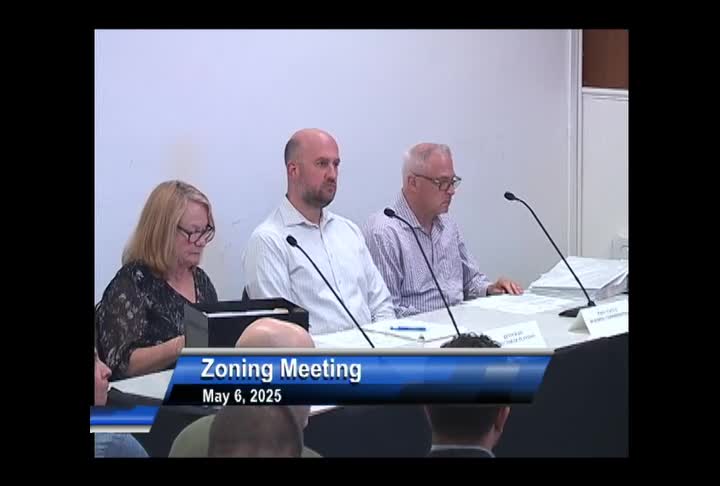
The New Rochelle Zoning Board of Appeals on Wednesday deferred action and closed public comment on a request to allow construction on a substandard lot on Cadillac Drive after extended public testimony raising health, drainage and structural concerns.
The applicant, represented by architect John Woodruff, requested a lot‑area variance for a vacant parcel shown on the city survey as about 12,061 square feet where 15,000 square feet is required. Woodruff said the lot was part of a 1968 subdivision and that the proposed build would disturb only a small portion of a rock outcrop by the front porch area. He described a proposed two‑car garage, driveway and a roughly 3,500‑square‑foot house as an illustrative design and said two neighboring houses already sit partly on the same rock formation.
Neighbors and nearby homeowners told the board they opposed the variance. Speakers cited sustained jackhammering and rock‑chipping, possible vibration damage to 50‑year‑old foundations and utilities, airborne dust and radon release, and altered surface water flows that could increase flooding to lower‑lying yards. Several residents pressed the board to require geotechnical and environmental reviews before granting any variance; an engineer called for a geotechnical engineer’s review and suggested the board consider a State Environmental Quality Review (SEQR) if impacts could not be ruled out.
Woodruff and the applicant supplied a single boring report during the meeting. James DeAngelis, president of Soil Testing Inc., said a bore in the rock area identified material consistent with Manhattan schist and described the rock as “moderately fractured” with weathered zones rather than an unbroken mass. Woodruff said the development team planned to push the proposed house footprint away from the rock and argued the disturbance would be limited to a small front area. He said the city assessor maintains the parcel as a separate building lot and that the planning board issued a referral on the variance prior to the meeting.
Board members and staff repeatedly noted a lack of definitive evidence in the record either proving the work would cause harm or proving it would not. Chair Erica Aisner and other members said they wanted more specific technical information (rock‑removal plans, an estimate of how much rock would be excavated, and a contractor’s method statement) to assess environmental and safety risks. The applicant said additional testing and design detail could be provided if the item returned to the calendar.
After hearing roughly a dozen neighbors and technical testimony, the board voted to adjourn the matter to next month’s agenda and simultaneously closed the public hearing, stating there would be no further public comment at the next appearance. No final variance was approved or denied at the meeting.
Clarifying details made public at the hearing: the lot’s area was reported as 12,061 square feet (the city requirement is 15,000), a shortfall of about 2,939 square feet; the rock face on the parcel was described by the applicant as between 8 and 10 feet in visible height in locations shown on the survey; the applicant’s probe/boring found rock described by the testing firm as consistent with Manhattan schist and “moderately fractured”; Woodruff described planned driveway and floor elevations during the presentation (driveway at elevation ~196, garage entrance ~200 and first floor elevation ~205) and estimated minimal rock removal of “about 3 to 4 feet” at the porch area if the proposed plan is followed.
Residents who testified included adjacent homeowners who said they had lived on Cadillac Drive and nearby streets for decades and cited prior neighborhood incidents (including a past gas leak) when arguing for caution. Public commenters asked who would bear the cost of remediation or repair if neighboring houses were damaged; whether radon testing and mitigation would be required if excavation disturbed bedrock; and whether erosion controls and sediment containment would protect an adjacent brook that feeds the local drainage near Victory Boulevard.
Next steps: the board instructed the applicant to consider providing more detailed geotechnical and rock‑removal plans and said staff would confirm which technical materials are needed for the board’s review. The board placed the item on next month’s agenda but closed the public hearing “given that this matter has been on the calendar now twice,” and announced there will be no public comment at that future session.
The board’s deferral means no legal decision has been made on the variance; the public hearing record for this calendar date is closed by the board’s announcement but the application remains pending, to return for further consideration with supplemental technical documentation.