Lifetime Citizen Portal Access — AI Briefings, Alerts & Unlimited Follows
U.N. envoy says political inclusion, sanctions relief and talks with Kurdish forces are key to Syrian progress
Loading...
Summary
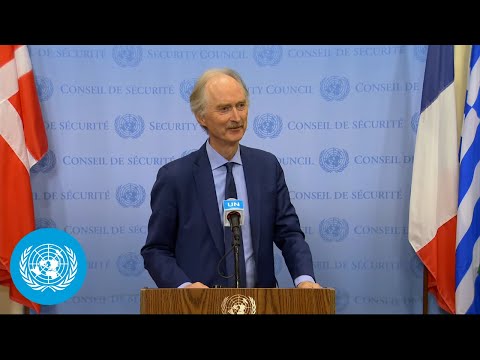
U.N. Special Envoy for Syria Geir O. Pedersen told a United Nations Security Council briefing in New York that political inclusiveness, coordinated international humanitarian assistance and progress in talks with the Syrian Democratic Forces in the northeast are the three priorities that would signal meaningful progress in Syria.
U.N. Special Envoy for Syria Geir O. Pedersen told a United Nations Security Council briefing in New York that political inclusiveness, changes to sanctions that hinder recovery and progress in talks with the Syrian Democratic Forces (SDF) in the northeast are the three main areas that would send a powerful message to Syrians and the international community.
"We need to see more inclusiveness on behalf of the government," Pedersen said, and he urged the international community to improve coordination on sanctions and humanitarian assistance.
Why it matters: Pedersen framed those three priorities as the immediate and practical steps that could create space for broader political progress in Syria and relieve humanitarian pressure. He said those advances would first signal hope to the Syrian people and then to neighboring states and international partners.
In his responses to reporters' questions, Pedersen stressed increased U.N. engagement with multiple Syrian interlocutors. In reply to a question about contacts with Kurdish authorities in northeast Syria, he said the U.N. has been "increasing our contacts and our engagement on these files," and described follow-up after what he called a March 10 agreement between two Syrian figures referenced in his briefing. He added that on the Kurdish side there have not yet been unified negotiating committees but that the U.N. hopes to support a Syrian-led process.
On sanctions, Pedersen said U.S. measures — including secondary sanctions — are a key challenge for the broader normalization of relations and for economic recovery. He described a lack of contact between the new Syrian government and the U.S. administration and said that progress on that front could lead to positive developments on sanctions and economic engagement.
Reporters also asked about allegations of population relocations and media speculation. Pedersen dismissed a specific claim that U.S. recognition of a government had been linked to relocating "several hundred thousand" people as "fake news." He said speculation about proposed tent cities by the Turkish border was an example of unfounded reporting.
Asked about Israeli strikes and alleged violations of Syrian sovereignty, Pedersen said he has repeatedly appealed to Israel to respect Syria's independence, territorial integrity and unity, and that he raises the issue in the Security Council. He recommended interlocutors speak directly with the states involved on mediation efforts reported by some participants.
On allegations of violence in Latakia and Tartus, Pedersen said the U.N. team "has had a very good dialogue with the authorities" and that his office and a committee conducting an investigation have met; he said the U.N. stands ready to provide assistance if requested and that results may be expected in a few months.
What was not decided: The briefing and question-and-answer session did not produce any formal U.N. decisions or votes. Pedersen described ongoing engagement and offers of assistance but did not announce new mandates, specific sanctions changes, or firm timelines beyond the investigation committee's work continuing in the coming months.
Speakers and attribution: The article attributes direct remarks only to speakers identified in the briefing, including Geir O. Pedersen and reporters who posed questions.
Looking ahead: Pedersen said he hopes the establishment of a new People's Assembly in Syria will be an opportunity to reinforce inclusiveness in political structures. He emphasized that expanded inclusion, coordinated humanitarian assistance and progress on northeast negotiations would, together, be the immediate indicators of forward movement.