Lifetime Citizen Portal Access — AI Briefings, Alerts & Unlimited Follows
Shakespeare at the United Nations uses Bard to spotlight climate, peace and human rights
Loading...
Summary
On April 23, 2025, the UN Movie Society hosted the second annual "Shakespeare at the United Nations" program at UN Headquarters, using performances and readings to connect Shakespearean texts to the climate crisis, peace and human-rights themes and to mark English Language Day and the U.N.'s 80th year.
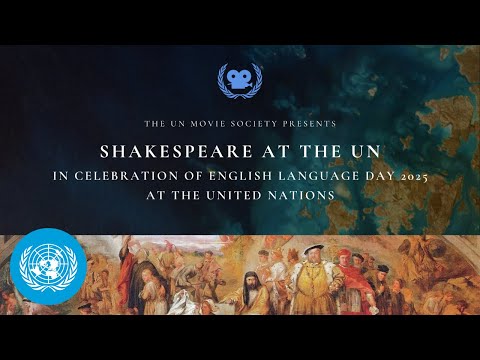
On April 23, 2025, the UN Movie Society presented the second annual "Shakespeare at the United Nations," a program of monologues, readings and a short film that framed Shakespearean texts around the climate crisis, peace and human-rights themes as part of the U.N.'s English Language Day observance. The event brought artists and institutions from the United Kingdom and beyond to the U.N. headquarters in New York.
The program's organizers said the event aimed to show how Shakespeare's exploration of the human condition resonates with the U.N.'s work. A UN Movie Society representative opened by asking attendees to “Imagine the hallowed halls of the United Nations echoing with the timeless words of Shakespeare,” and said the program would present excerpts in several languages and “ignite a conversation about how Shakespeare's profound exploration of the human condition speaks directly to the UN's core values.”
Michelle Terry, artistic director of Shakespeare's Globe, said the program included a short film that links Shakespeare's writing to environmental themes and urged global cooperation. “It feels like there's never been a more urgent time for nations to unite, not least in the face of the maybe the biggest existential threat to humanity that the world has ever seen,” Terry said. She described Shakespeare's work as offering observations on both “the climate crisis” and “the wonder that is mother nature.”
Josette Bushell-Mingo, principal and CEO of the Royal Central School of Speech and Drama, described the school's contributions of monologues focused on environment and sustainability. She thanked the UN Movie Society and named performers who would present pieces in multiple languages, saying the selections speak to “the delicate balance between strength and fragility, both in nature and in ourselves.” Bushell-Mingo named Robin Kaur (Mandarin), Reuben Carzberg (Swedish) and Tracy Ifachor (English) among performers taking part.
Professor Michael Dobson, director of the Shakespeare Institute in Stratford-upon-Avon, noted the program's timing in 2025, the United Nations' 80th anniversary, and said Shakespeare's plays “are extraordinarily good at articulating some of the founding pillars of the United Nations charter.” The program also acknowledged institutional partners including the Royal Shakespeare Company, Shakespeare's Globe, the Royal Central School of Speech and Drama, the Shakespeare Institute and the Royal Academy of Dance, and cited participating artists such as Stephen Fry.
Speakers repeatedly connected specific Shakespeare passages to nature and to collective responsibility. Excerpts and commentary cited the forest of Arden, the blasted heath of Macbeth and Sonnet 18 as literary touchpoints to discuss deforestation, human-driven environmental change and the moral obligations of states and societies. Event presenters noted multilingual performances, including pieces rendered in Mandarin, Swedish and Ukrainian, and said the program included monologues on peace and war as well as the climate-themed short film from Shakespeare's Globe.
Organizers framed the presentation as cultural diplomacy and public reflection rather than a policy forum. There were no formal decisions or votes at the event; the program was presented as a commemorative and artistic contribution to English Language Day and the U.N. anniversary.
The event concluded with calls for renewed reflection on shared humanity and stewardship of the natural world, and with organizers thanking participating artists, institutions and mentors. Professor Dobson closed by wishing “happy birthday to Shakespeare and happy birthday to the United Nations,” underscoring the program's dual focus on literary heritage and global civic themes.