Lifetime Citizen Portal Access — AI Briefings, Alerts & Unlimited Follows
Utah Court of Appeals hears arguments on whether Zions Bank can be liable to non‑account holders in Howells v. Zions Bank
Loading...
Summary
The Utah Court of Appeals heard oral argument in Howells v. Zions Bank, No. 20240118, on whether a bank can be liable to a non‑account holder for aiding and abetting fraud and what level of factual pleading is required to survive a Rule 12(b)(6) dismissal.
The Utah Court of Appeals heard oral argument in Howells v. Zions Bank, No. 20240118, on whether a bank can be liable to a non‑account holder for aiding and abetting fraud and what level of factual pleading is required to survive a Rule 12(b)(6) dismissal.
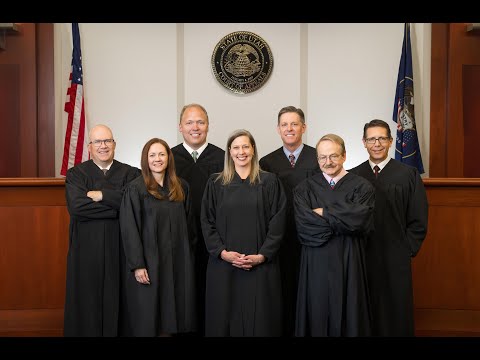
"Thank you and welcome to the Court of Appeals this morning. I'm Judge Luthy. I'm joined by Judge Orme and Judge Tenney," presiding Judge Luthy said at the start of the session. Counsel for both sides argued for and against permitting discovery and for the proper application of pleading standards to the case.
Why it matters: The parties dispute whether Zions Bank had the requisite knowledge and whether it provided substantial assistance to Galen Russ, whose operation plaintiffs allege moved roughly $200 million through accounts under his control. A ruling that requires more detailed factual pleading at the complaint stage or that limits discovery could narrow the circumstances in which banks face accessory liability to customers or other non‑account holders.
Appellants' argument
James Magleby, arguing for the Howells, said the complaint contains detailed factual allegations and cited prior Utah and federal banking cases to contend that knowledge can be pleaded generally while other fraud particulars may require greater specificity. "This case begs the question of whether or not a bank could ever be liable to a non account holder," Magleby told the court. He urged that courts have allowed aiding‑and‑abetting claims to proceed when the plaintiff lacks access to factual evidence that would show a defendant's state of mind before discovery.
Magleby pointed to several pleaded facts he said support an inference of knowledge or at least justify discovery: that roughly $200 million passed through accounts associated with Russ, that the account at issue was a demand (operating) account opened in 2015, that there are multiple paragraphs in the second amended complaint asserting knowledge and that outside investigations (including an SEC and a CFTC probe and other lawsuits) produced factual material plaintiffs could rely on in pleadings. He also invoked case law he said supports permitting discovery (citing Chang v. Wells Fargo, Nielsen v. Union Bank, Adelphia Recovery Trust v. Bank of America, and a line of authority summarized in Health v. Chevron). Magleby argued that under Utah notice pleading, allegations of knowledge need not identify a specific bank employee by name at the pleading stage and that discovery is the appropriate means to test those allegations.
Defense argument
Beth Boland, appearing for Zions Bank, countered that the complaint lacks the necessary factual allegations to show actual knowledge that Russ defrauded the Howells specifically. "Plaintiff's claims here against Zions Bank must fail for 2 fundamental reasons that can't be solved by discovery," Boland told the court. She emphasized that the Howells never told bank employees that Russ had defrauded them, that Michael Hansen (a bank employee referenced in the complaint) was not at the branch during the period when the Howells' investments were made, and that the bank's actions were ordinary banking functions performed pursuant to customer instructions.
Boland argued plaintiffs alleged only ordinary deposits and routine handling of checks and that the complaint does not plausibly show the bank substantially assisted a fraud rather than merely processing customer transactions. She told the court there are no pleaded facts showing loans were extended to Russ or that the bank deviated from its policies — facts other cases had used to support accessory liability claims. Boland also urged the court to accept as judicially noticeable certain publicly available materials about the timeline and to affirm the lower court's dismissal.
Judges' focus and procedural issues
The panel pressed both sides on several recurring issues: whether the aiding‑and‑abetting claim is subject to the heightened pleading standard for fraud, whether knowledge may be pleaded generally, whether the complaint identifies any bank employee who knew the Howells were investors in the specific fraud scheme, and whether discovery could meaningfully illuminate the bank's state of mind. Judge Tenney asked whether the complaint specifically alleges that Zions knew the Howells were participants in the alleged "silver pool" rather than ordinary coin customers. Magleby pointed to pleaded exhibits — including account opening documents and a CFTC expert report attached as exhibits to the second amended complaint — that he said support inferences that both legitimate coin transactions and Ponzi‑type silver pool transactions flowed through the same accounts.
Counsel and other factual references
The parties and the court discussed specific factual allegations in the second amended complaint asserted to show knowledge or substantial assistance: multiple deposits (the transcript references roughly seven checks deposited by the Howells), an account opened in 2015 described in exhibits as a demand deposit account (not a trust account), the volume of funds flowing through a small coin shop's accounts, and regulatory and investigative materials (SEC and CFTC investigations and the Strong report appended to the complaint). Magleby argued those allegations and external records create plausible inferences that would justify discovery; Boland argued the same records and the complaint, taken as a whole, fail to show actual knowledge or deviation from bank policies.
Rebuttal and final remarks
In rebuttal, appellants' counsel reiterated the point that the scale of money flowing through a small coin dealer's accounts "doesn't pass the smell test" and argued that federal anti‑money‑laundering or KYC (know‑your‑customer) considerations and the timing of personnel changes at the branch create factual issues for discovery.
The court's next steps
After questioning and argument, the panel took the matter under advisement and said it would issue a written opinion. "We'll take it under advisement and get you a written opinion as soon as we can," the court said before adjourning.
Context and immediate impact
The appeal raises two interrelated legal questions: (1) whether Utah law recognizes a cause of action for aiding and abetting that can reach a bank for conduct tied to a customer's fraud, and (2) to what extent plaintiffs must plead particular facts showing a bank employee's knowledge or substantial assistance before they are entitled to discovery. A ruling that requires more detailed, particularized factual allegations at the pleading stage could limit the ability of defrauded non‑account holders to pursue accessory claims against banks without pre‑discovery proof of an employee's state of mind. Conversely, a decision that permits general allegations of knowledge to proceed to discovery may allow plaintiffs broader access to bank records and internal communications in similar cases.
No decision was announced from the bench. The court took the arguments under advisement and will issue a written opinion.