Get Full Government Meeting Transcripts, Videos, & Alerts Forever!
Get email alerts on the Kosovo Elections And Stability topic
No spam. Unsubscribe anytime.
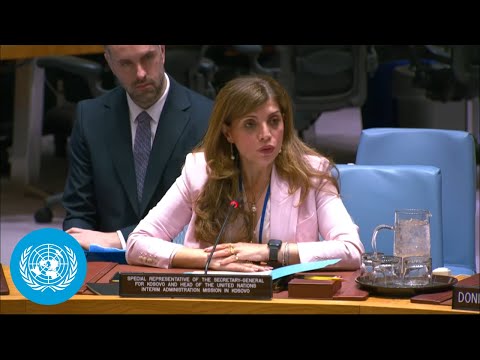
UN official praises peaceful Kosovo elections, urges progress on missing persons and trust-building
Summary
A UN official reporting to the Security Council said Kosovo's Feb. 9 parliamentary elections were "notably peaceful," despite technical problems and party appeals, and highlighted gains in women’s representation.
A UN official reporting to the Security Council said Kosovo's Feb. 9 parliamentary elections were "notably peaceful," despite technical problems and party appeals, and highlighted gains in women's representation that increased seats in the Kosovo Assembly beyond the 30% gender quota established in the law on general elections. "I congratulate the people of Kosovo on yet another peaceful and inclusive election," the official said, and noted that results certified on March 27 make it possible for coalition negotiations to proceed toward forming the next government.
The official urged prompt formation of a government and stressed that, once formed, it should prioritize the well-being of Kosovo residents and implement commitments from the EU-facilitated dialogue. The statement welcomed the January appointment of Peter Sørensen as the European Union Special Representative (EUSR) for the Belgrade–Pristina dialogue and said his early engagement offers an opportunity to support progress on issues agreed in December, including the terms of reference for a joint commission on missing persons.
"I urge all to make full use of this joint commission in tandem with the existing working group on missing persons to proceed without further delay and help families obtain clarity on the fate of their loved ones," the UN official said. The official commemorated the late Bairam Cherkhand, described as a long-time campaigner for the right to know the fate of missing persons, and said the UN mission remains committed to supporting families seeking answers.
The official reported that interlocutors in northern Kosovo described a trust deficit in institutions and expressed concern about unilateral steps taken by Pristina, including closures of Serbia‑run social‑welfare centers and the socioeconomic effects on vulnerable people. The official said those interlocutors called on the international community to support renewed good‑faith engagement in the EU‑facilitated dialogue and to help Kosovo Serbs reclaim local agency through self‑management mechanisms in Serb‑majority municipalities.
The statement urged authorities to refrain from unilateral actions and welcomed the Kosovo government's decision to allow residents holding documents issued by Serbia‑run institutions in Kosovo to register civil status documents with Kosovo authorities, while noting "key gaps remain related to the scope, interpretation, and implementation of the decision." The UN official encouraged enhanced outreach to affected communities and supported extending the current April 30 deadline for registration.
The official condemned several violent incidents and called for prompt, transparent investigations. The statement named an attack on the Ibar–Lepenac water canal on Nov. 29 and an explosive device thrown into a newly opened Kosovo post office on April 1, called such acts "unacceptable," and urged that perpetrators be identified and brought to justice. The official also called on the Kosovo Police Inspectorate to ensure independent investigations into allegations of excessive use of force and ill treatment by police in northern Kosovo, including alleged incidents involving minors, and recommended that findings be made public.
The speaker expressed deep concern about destruction of religious symbols, particularly against the Serbian Orthodox Church, and said such acts threaten religious freedom and risk heightening inter‑ethnic tensions. The statement noted the arrest of 16 individuals at a prison visit (described in the briefing), with most released and four remaining in custody for 30 days.
On language rights, the official said full implementation of the law on the use of languages is “essential,” noting that the language commissioner's mandate expired on Jan. 25, 2025, and reiterated a call for Kosovo authorities to appoint a successor promptly to protect the rights of non‑majority communities.
The UN official described programmatic trust‑building efforts by the UN mission and partners, including more than 100 events at a UN‑supported center for inter‑ethnic dialogue and projects that promote women's inclusion, legal aid, digitalization of court archives and property‑rights outreach. Specific initiatives cited included youth exchanges to visit cultural and religious heritage sites across communities and a mobile STEM education project for girls in rural schools using mobile labs and science clubs. The official thanked international partners, in particular KFOR and the UN Kosovo team, for ongoing cooperation and repeated an appeal for continued support for peace and principled cooperation in Kosovo.
Discussion vs. decision: the briefing contained recommendations and calls to action but recorded no formal Security Council decisions. The UN official repeatedly called for independent investigations, wider use of the joint missing‑persons commission, extension of the April 30 civil‑status registration deadline, appointment of a language commissioner, and sustained international support for trust‑building programs.
Votes at a glance: no votes or formal motions were recorded in the statement.