Get AI Briefings, Transcripts & Alerts on Local & National Government Meetings — Forever.
Oregon officials outline CHIPS Childcare Fund rollout; BOLI begins subsidies for apprentices
Summary
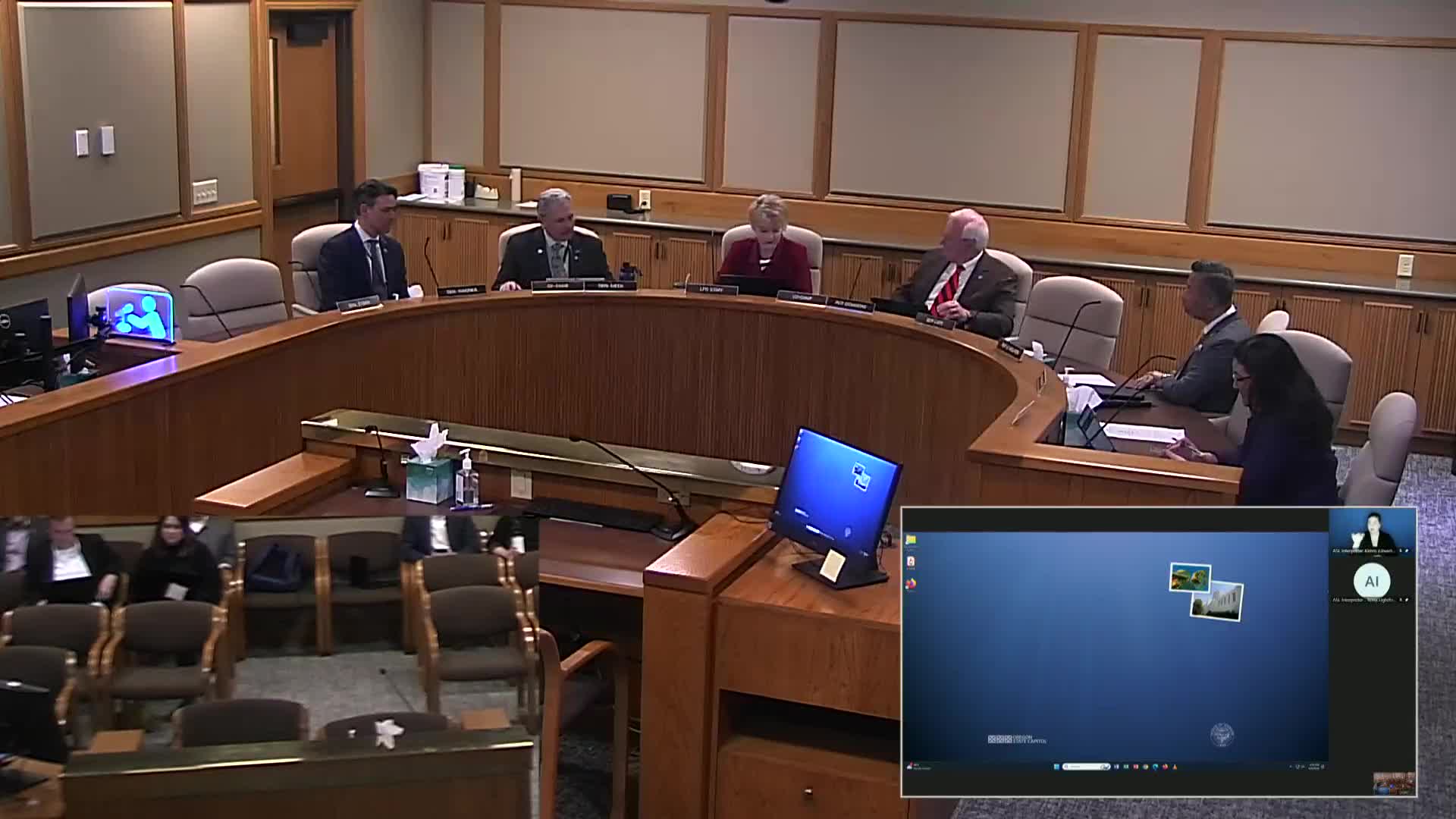
On April 3, 2025, the Transportation and Economic Development Subcommittee of the Ways and Means Committee held an informational meeting on the CHIPS Childcare Fund to review allocations and early program activity.
PORTLAND, Ore. — On April 3, 2025, the Transportation and Economic Development Subcommittee of the Ways and Means Committee held an informational meeting on the CHIPS Childcare Fund to review how money tied to the Oregon CHIPS Act and House Bill 4098 is being used to support childcare for construction and semiconductor apprentices and recent journey workers.
Business Oregon and the Bureau of Labor and Industries (BOLI) told the committee that state and federal CHIPS-related dollars have been routed to two main efforts: direct childcare subsidies administered to eligible apprentices and journey workers, and planning grants through the Childcare Infrastructure Fund aimed at expanding provider capacity in areas with semiconductor or advanced manufacturing activity.
The CHIPS-related childcare program stems from the Oregon CHIPS Act (Senate Bill 4, 2023) and the childcare provisions enacted in House Bill 4098. Sarah Means, semiconductor manager for Governor Tina Kotek, said the governor subsequently announced a $5,000,000 transfer from the CHIPS fund to the childcare program established by HB 4098. Means said, “This fund provides financial support and childcare subsidies to apprentices and journey workers who have completed an apprenticeship within 5 years.”
Business Oregon staff described how that appropriation sits alongside a separate $2,500,000 appropriation to the Childcare Infrastructure Fund. Lindsey Cochran, Childcare Infrastructure Fund coordinator at Business Oregon, told the committee round 1 of the infrastructure fund closed Sept. 30, 2024, and that the department awarded seven planning projects in that round. Cochran said the infrastructure fund’s usual revenue stream is lottery-backed bond proceeds and that the CHIPS-related dollars allowed the agency to fund planning awards — activities lottery bond rules otherwise preclude.
BOLI staff said they have used existing apprenticeship-support experience to stand up the subsidy program quickly. Josh Nausby of the Bureau of Labor and Industries said BOLI received a transfer from Business Oregon in December 2024 and began providing childcare subsidies in March 2025. He said, “we already have 4 apprentices approved and 8 in the process of completing applications.” BOLI staff described the program model: a supportive-services contractor helps an eligible apprentice or journey worker apply, the Department of Early Learning and Care (DELC) issues payments to childcare providers, and BOLI monitors fidelity to the law and evaluates outcomes.
BOLI staff emphasized that the agency’s work draws on a long-running apprenticeship-related childcare program run with the Oregon Department of Transportation (ODOT). Larry Williams, operations and policy analyst 3 in BOLI’s Apprenticeship and Training Division, summarized the program’s history and cited prior evaluations and recognition noting that childcare supports increase apprenticeship completion rates in construction trades. BOLI said the CHIPS program expands eligibility beyond the ODOT-funded heavy-highway trades covered previously.
On funding flows and balances, Business Oregon and BOLI gave the committee these figures from their presentations: a $5,000,000 transfer from the CHIPS fund tied to HB 4098; Business Oregon transferred $5,681,670 to BOLI for program operation in December 2024; the Childcare Infrastructure Fund received $2,500,000 in appropriation; BOLI transferred $366,000 to DELC as directed by the legislation; the combined account balance reported in March 2025 was $1,300,438; and about $155,000 was identified for Business Oregon administration in the 2023–25 biennium. Where transcript wording or slides were unclear about a specific line-item, the committee handouts were cited as the definitive source and some figures were presented by agency staff as approximations.
Committee members pressed for outcomes and speed of delivery. Representative Winn (member) and others asked how many new childcare providers and new childcare seats have been created from the infrastructure awards; Business Oregon said round 1 funded planning projects (not construction) and that prioritization in future rounds will favor projects that received planning awards. BOLI projected outreach and enrollment targets for apprentices but said data for journey workers and for new provider seats remain early or are not yet fully tracked. BOLI used its apprenticeship program experience to target recruitment and reported that about 22–25% of applicants are expected to be rural based on zip-code analysis; staff named Eagle Point, Molino, Lafayette and Roseburg among zip codes identified as rural in their slide materials.
Agencies also described next steps: Business Oregon has an open funding round for the Childcare Infrastructure Fund that closes April 30, and is prioritizing planning-award recipients for future infrastructure awards; BOLI is finalizing a longer-term procurement to replace its interim contractor for outreach and supportive-services delivery; DELC will issue payments to providers under contract with BOLI’s supportive-services vendor; and BOLI will evaluate and report on program outcomes at a later date.
Committee members closed the informational meeting after questions. No committee votes were taken at the April 3 session; the meeting was recorded as an informational briefing rather than a decision item.