Get Full Government Meeting Transcripts, Videos, & Alerts Forever!
Get email alerts on the Sports Mental Health topic
No spam. Unsubscribe anytime.
Committee weighs mandatory psychological assistance at youth sporting events
Summary
House Bill 408 would require an accredited psychologist to be available at sporting events involving minors. Testimony supported the goal but raised feasibility concerns — cost, workforce shortages and privacy — and offered alternatives such as crisis-action plans, telemedicine and mandatory training.
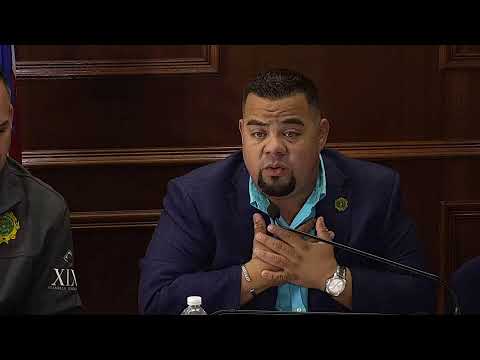
Lawmakers and witnesses at a House Commission on Recreation and Sport hearing examined House Bill 408, which would make psychological assistance mandatory at sporting events that include minors. Proponents and sports officials said mental-health support for young athletes is important but warned the requirement as drafted could be difficult to implement islandwide.
Sara Rosario, president of the Comité Olímpico de Puerto Rico (COPUR), summarized the bill’s intent: “La Ley de Asistencia Psicológica en Eventos Deportivo a Menores... tiene como objetivo asegurar la disponibilidad obligatoria de asistencia psicológica en eventos deportivos que involucren menores.” She said psychological support contributes to athletes’ development and called for early and ongoing access to mental-health tools.
Practical concerns and alternatives Department of Recreation and Sports representatives and event organizers supported services for athletes but raised three recurring concerns: - Workforce and capacity: DRD officials and organizers said certified sports psychologists are limited in number. “La capacidad económica de la mayoría de organizaciones deportivas... en adición a la escasez de psicólogos en el país, pudiera ser... oneroso y hasta cierto punto difícil de implementar,” one witness said. - Cost and access: Several witnesses cautioned mandatory in-person coverage at every event would shift costs to small clubs and parents, potentially discouraging participation. - Privacy and follow-up: Panelists noted that an on-site intervention is often the start of care, not the complete treatment; the bill does not specify who covers follow-up care or how continuity will be ensured.
Suggested approaches offered to the commission included requiring event organizers to have a documented crisis-action plan, establishing standby agreements with providers, using telemedicine for immediate consultations, and strengthening preventive education for coaches, parents and referees. Edwin Hernández of the DRD framed one practical compromise: “recomen[d]ar] que... los organismos deportivos al momento de organizar un torneo, liga o evento, presenten un acuerdo con el servicio disponible de psicología deportiva antes, durante y después de cada actividad.”
Existing programs and training DRD and other witnesses noted the department already requires four hours of sports-psychology content as part of some licensing and offers regular virtual workshops for parents and coaches. Event organizers said high-profile, centralized competitions (where many games occur at a single venue) make monitoring and documentation easier than the more dispersed calendar of local tournaments.
Committee action and next steps The commission asked DRD to provide licensing and training rosters and encouraged lawmakers to consider narrower, implementable language — for example, prioritizing crisis plans, telehealth options and agreements that ensure follow-up care rather than requiring a full-time on-site psychologist at every event. No vote was held during the hearing.