Get Full Government Meeting Transcripts, Videos, & Alerts Forever!
Get email alerts on the Yemen Conflict And Mediation topic
No spam. Unsubscribe anytime.
UN special envoy: Yemen at risk amid regional escalation, urges detainee releases and economic steps
Summary
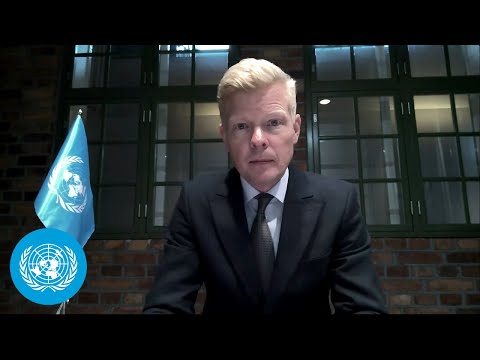
UN special envoy for Yemen Hans Grundberg told the Security Council that recent regional attacks, strikes on Yemeni infrastructure and a deteriorating economy threaten to deepen suffering in Yemen. He called for a nationwide ceasefire framework, the release of conflict-related detainees and practical economic measures to ease civilian hardship.
UN special envoy for Yemen Hans Grundberg told the United Nations Security Council at a briefing that Yemen faces heightened risk from regional escalation and a worsening domestic economic and humanitarian situation. He cited recent attacks on commercial vessels in the Red Sea, Israeli strikes on Yemeni infrastructure, continued fighting across several governorates and stalled releases of conflict-related detainees.
“It has been a deeply volatile and unpredictable period in the region, marked by shifting dynamics and fragile hopes for de-escalation,” Grundberg said. He noted that the reported attacks on two commercial ships earlier in the week “by Ansar Allah” resulted in civilian casualties and had the potential to cause environmental damage. “Freedom of navigation in the Red Sea must be safeguarded, and civilian infrastructure must never become targets of conflict,” he said.
Grundberg said Israeli air strikes during the reporting period hit sites in Sana'a and ports in Al Hudaydah, Ras Isa and Salif, as well as a power station. He warned that these developments risk drawing Yemen deeper into regional confrontation and called a purely military solution “a dangerous illusion” that would deepen Yemen’s suffering.
The envoy described fighting and troop movements continuing in Al Dhale, Al Jawf, Marib, Taiz and Saada, and urged the parties to avoid unilateral actions that would worsen divisions. “There is nothing strategic in prolonging the suffering of families that have already waited far too long for the return of their loved ones,” he said, reiterating a call for the parties to fulfill a previously agreed “all-for-all” detainee release.
On the economy, Grundberg said the country’s limited cash reserves are losing value and food insecurity and the threat of famine are increasing. He pointed to recent, localized improvements — noting the opening of the Al Dalih Road, which he said increased freedom of movement and avenues for economic activity — as examples of practical steps that could be scaled to ease hardship. He said his discussions in Aden with the newly appointed prime minister had included measures to resume oil and gas production and exports to bolster government revenues and restore services.
Grundberg spelled out three priorities for moving forward: supporting de-escalation along front lines and using the military coordination committee to build trust; establishing a path for talks that pairs a ceasefire with economic and humanitarian measures and a political process; and working with regional and international partners on broader security guarantees, including for freedom of navigation in the Red Sea. He also emphasized the role of civil society and called for preserving and expanding civic space.
“I end by reiterating my call for the unconditional and immediate release by Ansar Allah of all those arbitrarily detained from the United Nations, national and international NGOs, civil society organizations, and diplomatic missions,” Grundberg said, adding that cases requiring urgent medical attention are increasing and that detainees need access to medical assistance and to be reunited with their families.
Grundberg concluded by thanking the council for its support for his mediation work and urging a consistent, coordinated message from members to strengthen diplomatic tools for a negotiated settlement.