Lifetime Citizen Portal Access — AI Briefings, Alerts & Unlimited Follows
Council hearing: Returning‑citizen services get praise and calls for more housing, jobs and coordinated funding
Loading...
Summary
At a Feb. 6 oversight hearing, witnesses urged more housing vouchers, sustained funding for the Mayor’s Office on Returning Citizens Affairs (MORCA) and stronger employer and nonprofit partnerships to improve reentry outcomes. MORCA reported serving more than 5,400 returning residents in FY24 and outlined workforce, housing and legal assistance.
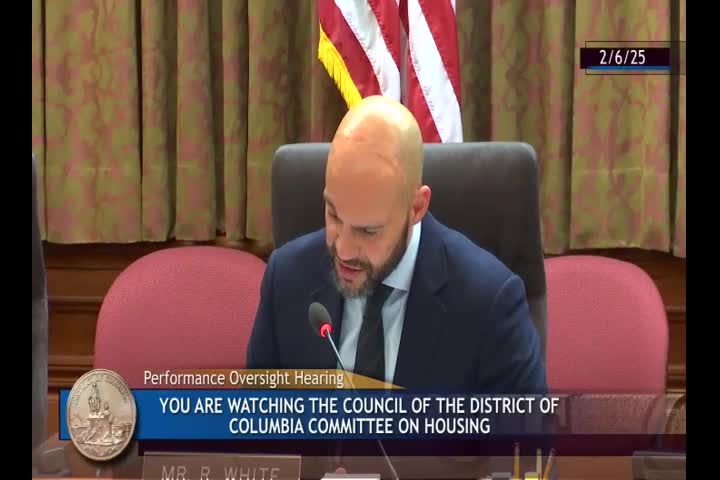
Council Member Robert White opened the Committee on Housing’s Feb. 6 oversight hearing by saying the Council’s performance oversight helps determine “what’s working, what’s not, and how we can do better.” A large portion of the hearing focused on reentry services and the Mayor’s Office on Returning Citizens Affairs (MORCA), the Commission on Reentry and Returning Citizens’ Affairs and community partners.
Multiple nonprofit leaders, reentry service providers and returning citizens testified that housing and employment are the two biggest barriers to successful reintegration. Witnesses urged the Council to preserve and expand targeted housing vouchers, expand employer partnerships, and sustain funding for MORCA and community organizations.
Agency numbers and partnerships
MORCA Executive Director Lamont Carey told the committee that the office served 5,453 returning citizens in FY 2024 and listed outcomes and program activity: clothing giveaways, record‑sealing events, workforce referrals and partnerships with community organizations that place returning citizens into work and training programs. Carey said MORCA identified 257 employment placements through agency efforts last year and that the office provides case management, IDs, referrals to mental health services and other supports.
National and local participants at the hearing described how partnerships have amplified results. Zachary Rigoni, research and policy associate for the National Reentry Network and a returned citizen, urged the Council to increase recurring funding for MORCA and to let MORCA distribute funds to community organizations that can scale reentry services. Community organizations — including Samaritan Ministry, Jubilee Housing and Career Shop DC — described targeted programs that provide IDs, short‑term training, soft‑skills coaching and “learn and earn” cohorts tied to immediate employment.
What returning citizens said
Several returning citizens and service providers described gaps that persist in the first weeks and months after release:
- Transportation and immediate small cash needs. Several speakers described the difficulty of covering transportation to interviews and the cost of everyday expenses in the first weeks after release.
- Clothing, documentation and technology. Groups and partners provide clothing distributions and assistance securing ID and social security records, but witnesses said availability varies and demand outstrips supply.
- Soft skills and employer expectations. Employers and providers stressed that soft‑skills training, punctuality and attitude adjustment are critical to retention once a job is secured. Employer Brian Cooper, who hires returning citizens, said: “As long as they had consistency and hope, they did good.”
Housing and vouchers
Witnesses described a shortage of transitional and permanent housing dedicated to returning residents and emphasized that existing vouchers and housing resources are insufficiently visible and accessible. Pam Bailey of More Than Our Crimes said the formal voucher waiting list (SPEDAT) is taking eight months to two years and recommended a task force including recently returned citizens to develop solutions.
Jubilee Housing reported that planned projects will create new deeply affordable units and can include dedicated slots for returning citizens, but said multiyear operating commitments and supportive service funding are required to make projects work at scale.
Commission and agency next steps
Rev. Ricardo Shepherd, newly sworn chairman of the Commission on Reentry and Returning Citizens’ Affairs, said the commission will finalize priorities in coming meetings and focus on women returning citizens, community input and actionable proposals to be presented to MORCA and the Council.
Carey acknowledged funding constraints and said MORCA has been expanding partnerships that connect returning citizens to housing, legal help, training and jobs. He said MORCA will continue to use partnerships to supplement internal capacity while urging the Council to consider more sustained local funding. “With your continued support,” he said, “MORCA will remain a beacon of hope and a harbor for those seeking a real second chance here in the District of Columbia.”
Ending note
Committee members asked MORCA and the commission to provide clearer outcome metrics and to propose prioritization for scarce funds (housing, employment training, mental health) as the Council undertakes FY26 budget planning. The committee left the record open for written testimony through Feb. 13, 2025.