Get Full Government Meeting Transcripts, Videos, & Alerts Forever!
Get email alerts on the Two State Solution topic
No spam. Unsubscribe anytime.
U.N. preparatory meeting urges concrete, time‑bound steps toward two‑state solution; working groups set submission deadlines
Summary
France and Saudi Arabia, co‑chairs of a high‑level international conference on Palestine, convened a U.N. preparatory meeting in New York to press member states for concrete, time‑bound measures to implement a two‑state solution. Co‑chairs and working‑group leads outlined timelines for written inputs and consultations ahead of the June conference.
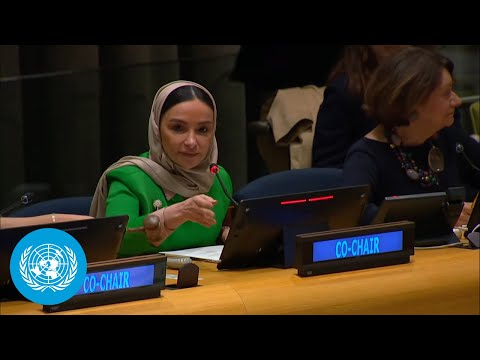
France and the Kingdom of Saudi Arabia, co‑chairs of a high‑level international conference on the peaceful settlement of the question of Palestine, convened a preparatory meeting in New York to press U.N. member states to move from pledges to concrete, time‑bound actions toward a two‑state solution. The co‑chairs reiterated that the conference, scheduled for June 17–20 in New York, must produce operational commitments that feed into an implementation roadmap.
The President of the General Assembly told participants that the conference "must therefore be concrete and action oriented, identifying steps needed to realize the two‑state solution." France's co‑chair, Miss Ligon, echoed that urgency: "The war in Gaza must end," she said, and added that "humanitarian assistance must enter Gaza immediately and at scale. This is an obligation under IHL." The Kingdom of Saudi Arabia's co‑chair said the preparatory meeting "must chart the course for action, not reflection."
Why it matters: organizers and multiple delegations said the June conference is a critical opportunity to convert decades of U.N. resolutions and diplomatic statements into measurable, irreversible steps — on security, governance, reconstruction, humanitarian access, and the political foundations for a viable Palestinian state.
Working groups and timelines: co‑chairs of the eight thematic working groups reported progress and invited written inputs. - Working Group 1 (a sovereign and unified Palestinian state living side by side in peace and security with Israel), co‑chaired by Spain and Jordan, circulated guiding questions and asked for written contributions by May 30 to inform informal consultations on June 2 and subsequent outreach through June. - Working Group 2 (security for Israelis and Palestinians), co‑chaired by Italy and Indonesia, said it is developing short, medium and long‑term proposals, including possible models for a temporary international force to provide protection and support Palestinian governance, and invited member‑state contributions for a draft recommendation to be circulated after a later submission deadline. - Working Group 3 (narratives for peace), co‑chaired by Canada, Qatar and Mexico, circulated a concept note and requested concise written inputs by May 30; co‑chairs plan to release a draft compilation by June 2 and convene an in‑person consultation on June 4. - Working Group 4 (economic viability), co‑chaired by Norway and Japan, said it will rely on technical expertise from bodies such as the World Bank and IMF, coordinate with the International Donor Group, and extended a written‑input deadline to May 30. - Working Group 8 (Peace Day effort / regional security and incentives), co‑chaired by the League of Arab States and the European Union, presented a plan to prepare a "peace‑supporting package" and recommended that the Global Alliance for the Implementation of the Two‑State Solution be used as the follow‑up mechanism.
Several other co‑chairs reported similar deadlines and planned consultations; all called for concise, action‑focused submissions from member states, U.N. agencies and civil society to inform round‑table deliberations at the high‑level conference.
Member statements and key themes: delegations echoed recurring priorities — an immediate ceasefire and protection of civilians, unimpeded humanitarian access (including support for UNRWA), reconstruction planning for Gaza, measures to preserve the territorial and institutional viability of a future Palestinian state, and concrete steps by states such as diplomatic recognition or strengthening Palestinian institutions. The Permanent Observer of the State of Palestine said the conference "is about implementation, about deeds, not words," and urged measures to halt displacement, protect civilians, and support Palestinian statehood and governance.
Numbers and attributions: in her remarks, Miss Ligon (France) cited casualty and aid‑worker figures as she urged action, stating that "since March Israeli bombing has resulted in over 3 and a half thousand deaths" and that "437 humanitarian workers were killed since October 2023, including over 300 UN personnel." Those figures were reported by the co‑chair in the meeting; the article attributes them to her remarks.
Follow‑up and next steps: meeting organizers asked delegations to submit written comments to contact points at the France and Saudi Arabia missions. The co‑chairs of several working groups set May 30 as a submission deadline and scheduled informal consultations on June 2 and June 4; the high‑level conference is planned for June 17–20 in New York. The preparatory meeting will resume its working‑group briefings in the afternoon session.
The preparatory session was largely procedural and focused on establishing an evidence‑based work plan for the June conference; no formal votes or U.N. decisions were taken at this meeting.