Get Full Government Meeting Transcripts, Videos, & Alerts Forever!
Get email alerts on the Property Title topic
No spam. Unsubscribe anytime.
Court of Appeals hears long-running title dispute in Cutting Edge Real Estate v. Russell over 1975 judgment, deeds and adverse possession
Summary
The Court of Appeals heard arguments in a protracted property dispute that turns on the legal effect of a 1975 judgment (and later 1994/2000 orders), whether multiple parcels were partnership property or individually held, whether Hunts' deeds conveyed full title, and whether Hunts adversely possessed parcels (with ouster for parcels 14 and 26).
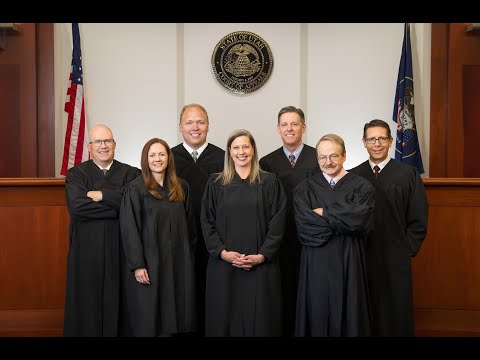
The Utah Court of Appeals heard oral argument in Cutting Edge Real Estate v. Russell, a complex and long‑running dispute over ownership of multiple ranch parcels. At issue on appeal are (1) the legal significance of a 1975 court order that directed sale of certain "partnership assets," (2) whether the trial court erred in applying adverse possession and ouster doctrines to parcels transferred from an estate to the Hunt parties, and (3) whether estoppel, laches or other equitable doctrines preclude relitigation of earlier rulings.
Why it matters: The appeal raises unsettled title questions that affect landowners’ ability to rely on deeds, the scope of judicial orders decades old, and how courts treat stale or dormant litigation when new purchasers acquire property. The panel’s decision could alter title‑search practice and the defense strategies for long‑running property disputes.
Facts and record highlights
- Historical orders: The record includes a 1975 judgment that described certain parcels as "partnership assets" and ordered them sold with proceeds divided. Later orders (1994 and 2000) addressed enforceability; the trial court below treated those later orders as limiting the remedial effect of the 1975 judgment and relied on laches, issue preclusion and title‑tracing consistent with the 2000 order.
- Deeds and recordings: The Hunts acquired many parcels from an estate (Georgia) by personal‑representative deeds recorded in the mid‑2000s. The trial court found that, with one exception, Georgia's deeds conveyed a full interest and concluded the Hunt parties were in possession of the parcels. Parcels 14 and 26 remained disputed on the record and were the focus of detailed adverse‑possession/ouster findings.
- Ouster and conduct: The trial court relied on a combination of factors — a preliminary injunction limiting co‑occupancy, recorded deeds, transfers to the Hunt, improvements and the Hunts' exclusionary conduct — to conclude an ouster had been "brought home" to co‑tenant Russell on the contested parcels.
- Credibility and missing documentary lines: The appellant argued the trial court improperly disregarded the factual force of the 1975 judgment; the appellees pointed to credibility findings (including that appellant's testimony was not credible) and to title tracing and adverse‑possession elements that the district court found satisfied.
Key legal arguments
- Appellant (Cutting Edge / Russell side): Contends the trial court improperly invalidated or ignored factual findings from the 1975 judgment about partnership ownership; urges that even if remedies tied to that 1975 order are time‑barred, the underlying factual determinations about ownership were not vacated and should be given effect for title tracing and cotenancy analysis.
- Appellees (Hunt parties): Argue alternative paths to title — either the partnership owned the parcels and the Hunts adversely possessed them, or, if the partnership conclusion is disregarded, the court should trace title per the 2000 order and find Hunts' recorded deeds and possession establish ownership of nearly all parcels. Appellees also contend laches and issue preclusion bar relitigation of some issues and that the district court's adverse‑possession and ouster findings are supported by the record.
- Standard of proof and preservation: Appellant requested application of a clear‑and‑convincing standard for adverse possession in briefing, which the panel noted had not been preserved at trial; judges pressed counsel on whether the trial court applied the correct burden and whether any different burden was argued below.
- Estoppel and pleading preservation: Appellant urged the court to apply estoppel (equitable or quasi‑estoppel) to bind parties to prior judicial statements; appellees responded that the district court found laches and issue preclusion and that the factual record contradicts the estoppel theory.
Quotes from the argument
Appellant counsel Steven Rogers: "This case really comes down to kind of a purview of some of the outer fringes of some of our property law and how that allows certain parties to divest legal owners of their property interests." (opening statement.)
Appellees' counsel Jeremy Reitzel: The trial court "found that laches, precludes them from arguing opposite of those orders" and that issue preclusion barred relitigation of some prior findings.
Outcome and next steps
The panel submitted the appeal after extended argument and questioning. The judges asked detailed questions about record preservation, the content and legal effect of the 1975, 1994 and 2000 orders, the timing and language of deeds (2005–2008), the preliminary injunction, and whether the district court's credibility findings were supported. The Court of Appeals will issue a written decision resolving the competing theories of title, adverse possession, ouster and estoppel.
Sources and limits
This account is based on oral argument transcript and reflects parties’ statements and the court’s questions; it does not resolve underlying factual disputes or the credibility determinations made by the trial court.