Lifetime Citizen Portal Access — AI Briefings, Alerts & Unlimited Follows
Metro officials report early progress, staffing and $104M in early spending for Choose How You Move
Loading...
Summary
City staff updated the Sustainability Advisory Committee on staffing, vendor contracts and an October $104 million cash drawdown to fund sidewalks, signals, service upgrades and safety projects under the Choose How You Move program; officials said Journey Pass has enrolled over 4,200 residents to date.
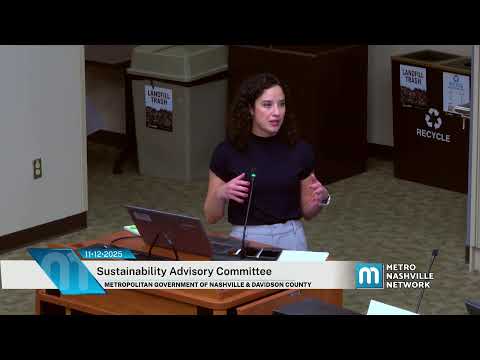
Kendra, acting program director for the mayor’s Choose How You Move implementation office, told the Sustainability Advisory Committee that the referendum-backed program has moved from planning into early delivery, with staffing, vendor contracts and a cash drawdown to accelerate construction.
"It is by far the largest capital project that we have implemented as a city," Kendra said, summarizing the program’s scale after reminding the group that the referendum included about $3,100,000,000 in capital projects and more than $100,000,000 in annual operating expenses.
Why it matters: City leaders said the supplemental budget and cash drawdown are intended to fund a mixture of shovel-ready projects to show early progress and to seed planning for larger corridor investments. Kendra said those early investments also aim to build internal capacity and coalesce departments around centralized program management in the mayor’s office.
What was announced: Kendra said the administration executed a contract with HNTB in September to serve as the program management partner and has hired or posted several key positions, including chief program officer Sabrina Sussman, deputy chief program officer Michael Briggs and operations coordinator Mattea Cannavino. She said three additional posts (a finance manager, project delivery and acceleration director, and communications director) are being recruited.
Budget and early projects: Kendra said a $59,300,000 supplemental budget passed in March provided initial capital and operating dollars. In October the administration announced a $104,000,000 all-cash capital drawdown for projects inside the Transportation Improvement Program. According to Kendra, that drawdown was allocated roughly as $31,000,000 for sidewalks, $32,000,000 for signal upgrades, about $24,000,000 for service upgrades, $13,000,000 for safety projects and $3,200,000 for planning and design of all-access corridors.
Priority corridors and pilots: Kendra said Nolensville Pike, Gallatin and Main Street are prioritized as early all-access corridors and described a West End pilot converting curb parking to bus-only lanes. She said Murfreesboro Pike was not prioritized immediately because overlapping state projects make work there more complex now.
Transit and rider access: Kendra described two rounds of WeGo service improvements (more frequent service on busy routes, expanded WeGo Link zones and on-demand weekend service) and said the administration is constrained by fleet size and maintenance-storage capacity. She said the city is also establishing a first transit safety division within MNPD and has added contract security at several stations.
Journey Pass update: On the low-income fare program, Kendra said Journey Pass provides no-cost transit to eligible Davidson County residents and is rolling out with categorical eligibility tied to participation in Metro social services. "To date, I think we've enrolled over 4,200 individuals in the program," she said, and noted one outreach event registered about 360 people in a single day. Kendra added the administration has distributed nearly $10 million in transit benefits so far and plans expanded eligibility and online enrollment in 2026.
Next steps: Kendra said the administration aims to scale program management capacity and to present progress publicly as part of a longer implementation timeline; the committee requested later briefings with quantification of emissions and other impacts.
The committee did not take formal votes on these items during the meeting.