Get AI Briefings, Transcripts & Alerts on Local & National Government Meetings — Forever.
Health Network unveils 60-day reform plan after patient-abuse findings at Laguna Honda Hospital
Summary
San Francisco Health Network presented a 60-day reform plan responding to June patient-abuse findings at Laguna Honda Hospital, citing a California Department of Public Health statement of deficiencies and promising leadership changes, retraining, monitoring and outside expert review.
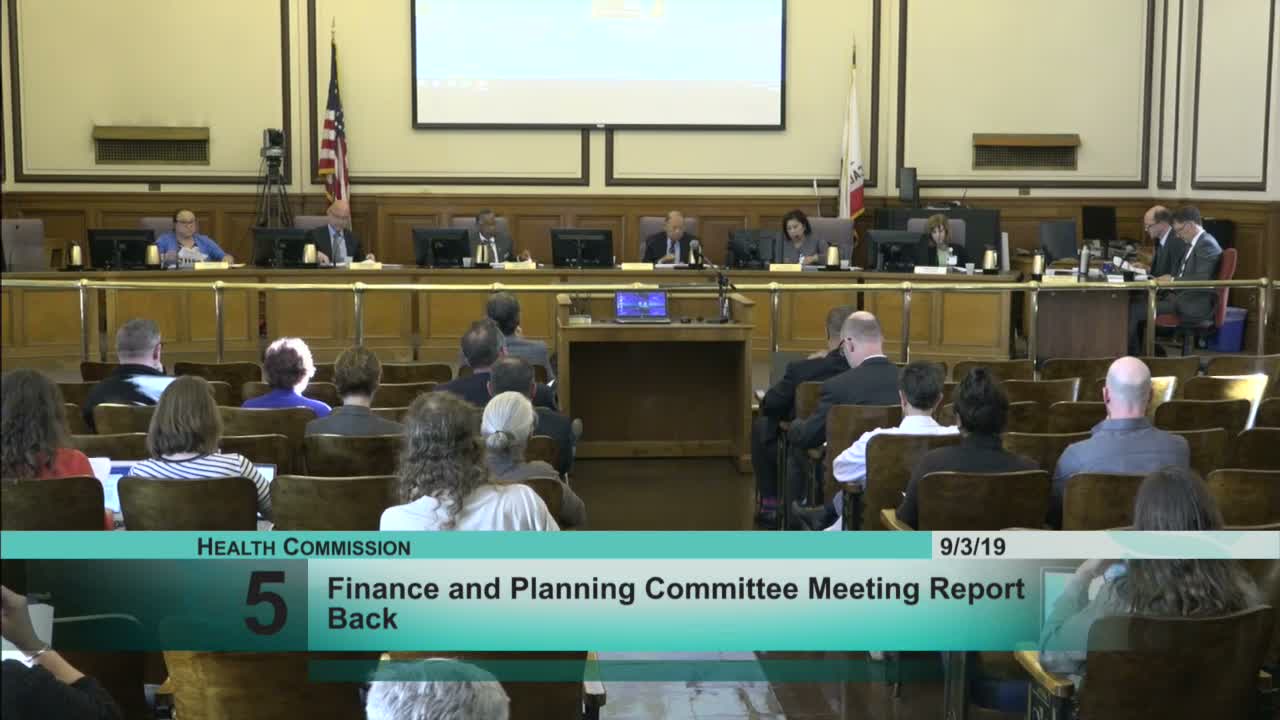
Roland Pickens, director of the San Francisco Health Network, presented a 60-day reform plan on behalf of the Department of Public Health to address patient-abuse findings at Laguna Honda Hospital that were discovered earlier in 2019. The plan, prepared after "thousands of person hours of investigation, interviews and problem solving," summarizes deficiencies and sets out short-, intermediate- and long-term remediation steps.
Pickens said the department has already initiated immediate actions that include patient well-being checks, removing staff implicated in incidents from the workplace, and focused staff retraining. He told commissioners the hospital redeployed compliance and quality staff from Zuckerberg San Francisco General to help Laguna Honda address gaps identified by the California Department of Public Health (described in the presentation as a statement of deficiencies) and to implement the departments plan of correction.
"This is our promise to San Francisco: to restore public faith and the ability of Laguna Honda to deliver high-quality, safe and abuse-free care," Pickens said. He described the primary areas of deficiency as organizational culture of safety, medication management, quality management, leadership, and human-resources/workplace experience functions, and said the reform plan and the CDPH corrective actions (the document referred to in the presentation) together list the actions to be taken.
Commissioners pressed for clearer timelines and more frequent reporting. Commissioner Chow recommended monthly or more frequent reporting to the Health Commission in addition to state-mandated filings, and asked that the reform plan include explicit timelines for each item so the commission could hold the department accountable. Pickens agreed to refine the plan to include short-, intermediate- and long-term milestones and to expedite an RFP process to secure outside expertise.
Pickens also described steps to support staff and patients: care teams have been dedicating time to meet with patients and surrogate decision-makers to discuss what happened, and the department arranged group and individual support services through city health services for staff affected by the events. "We recognize we are in a period of mourning and must rededicate ourselves to a culture that values safety, quality and transparency," Pickens said.
The commission did not take a formal vote on the reform plan document at the meeting; commissioners asked the department to return with a revised timeline and regular reporting metrics.
What happens next: the department said it will refine the reform plan to include clearer timelines and post-award milestones (including an RFP for external consultants) and will keep the Health Commission, the mayor and the Board of Supervisors apprised of progress.