Get Full Government Meeting Transcripts, Videos, & Alerts Forever!
Get email alerts on the Personnel Reform topic
No spam. Unsubscribe anytime.
ATRH defends classification and pay reform as committee probes 1,120 personnel dispensas during electoral veda
Summary
At a Transition 2024–2025 hearing, ATRH officials said they furnished data to the Fiscal Oversight Board and reported 1,120 personnel dispensas received (888 approved, 21 denied) related to 2024 appointments; committee members pressed on last‑minute appointments, morale and oversight gaps.
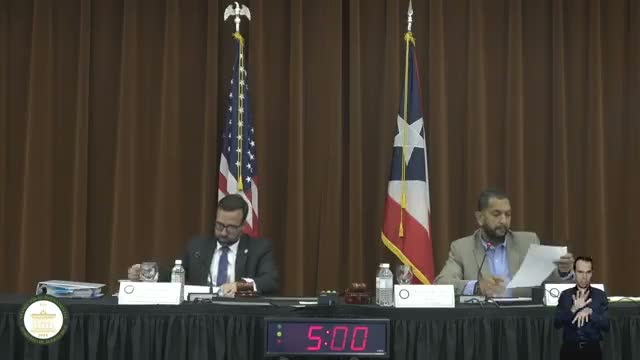
At a Transition 2024–2025 hearing, the Office of Administration and Transformation of Human Resources (OVATH/ATRH) reviewed implementation of a government‑wide classification and compensation reform and disclosed how many personnel dispensa petitions it had received and processed during the electoral veda.
The ATRH representative told the committee that "la carta lo que pide es eso, suplan esta información" and that, as of Nov. 30, "total de dispensas recibidas, mil ciento veinte." ATRH said of those, 888 had been approved (fully or conditionally), 21 denied and 73 returned/no‑effect; 982 dispensas had been fully worked and the remainder were pending.
Why it matters: the committee raised concerns that a surge of last‑minute appointments and designations during the pre/post‑election period could undermine the rigor of the new classification and retribution system and damage morale among long‑serving career employees. Committee members cited specific classes of positions — "coordinadores interagenciales" and "oficial ejecutivo gubernamental" — and pressed ATRH for counts and salary scales.
What ATRH said: the witness said the government implemented Ley Núm. 8 (approved Feb. 4, 2017) to re‑centralize human resources and reduce more than 24,000 prior job classes toward a uniform plan of roughly 1,500 classes. ATRH reported the reform moved initially around 22,221 employees in the first phase and that the second phase, completed by June, impacted about 70% of the targeted universe. The agency said the first implementation step raised the minimum hourly rate from $8.25 to $10.15 and later adjustments reached approximately $10.98 for affected employees.
Data and process limits: ATRH told the committee it compiled tables jointly with the Office of Management and Budget (OGP) to respond to the FOMB request and supplied the incoming committee with copies. ATRH cautioned it does not always hold the final occupancy records for every agency action — it processes dispensas and authorizations but occupancy and some contestation records stay with individual agencies. For example, ATRH said it can report how many agencies requested creation or occupation of a post, but cannot always certify whether a given post was ultimately filled.
Numbers and examples cited in testimony: ATRH gave a transaction‑type breakdown it had worked: human resources actions 160; convocatorias/certifications 88; compensation matters 41; create/occupy/reclassify 28; administrative designations 15; destacamentos 8; differentials 113; irregular personnel 65; recruitments 88; transitory moves 363; and general dispensas 13. On appeals and grievances, ATRH reported 1,294 appeals for non‑unionized employees and 5,016 arbitration cases for unionized employees (6,310 total), with 5,439 still active; ATRH recommended more resources for the Comisión Operativa del Servicio Público to manage the caseload.
On standards and exceptions: ATRH said the veda permits exceptions only for "necesidad extraordinaria, urgente e inaplazable" and that agency requests receive technical review; ATRH reported it had denied some requests that did not meet that standard and committed to provide the committee an itemized breakdown by agency.
On recruitment tools and evaluation: ATRH highlighted technological measures intended to modernize hiring, including empleos.pr.gov (launched summer 2022, more than 500 applications in 24 hours and over 70,000 registrations reported) and an AI pilot launched in March that processes resumes and matches candidate competencies. ATRH said evaluation of candidates is executed by each agency according to ATRH guidance and a rubric; tie‑breakers are typically resolved by application timestamp.
Concerns from committee members: Several members, including "la licenciada Janet Parra," raised morale concerns that long‑tenured employees saw only marginal increases while recent hires sometimes received substantial raises, which "hirió la sensibilidad" of experienced staff. Members questioned whether some positions labeled as trust (confianza) and filled near the end of an administration undermine the spirit of the veda, and one member suggested Congress‑style safeguards or a legislative amendment to include certain confianza nominations within the veda; others cautioned that restricting confianza nominations sharply could limit an incoming governor's flexibility to staff key roles.
What’s next: ATRH said it will provide the committee with the agency‑by‑agency breakdowns requested, the detailed list of probationary‑period appointments and the counts of dispensas by type and decision. The hearing recessed at 6:32 p.m.