Get Full Government Meeting Transcripts, Videos, & Alerts Forever!
Get email alerts on the Land Use Variance topic
No spam. Unsubscribe anytime.
Board of Appeals denies Dorchester County variance for Sachs porch in critical-area buffer
Summary
The Dorchester County Board of Appeals denied a variance request from Teresa and Jody Sachs to place a 16-by-16 screened porch partially inside the 100-foot tidewater buffer at 4214 Griffin/Griffith Neck Road, concluding the application failed to meet critical-area variance standards; applicants offered to remove two sheds and a buffer-planting plan but the board found the hardship claim insufficient.
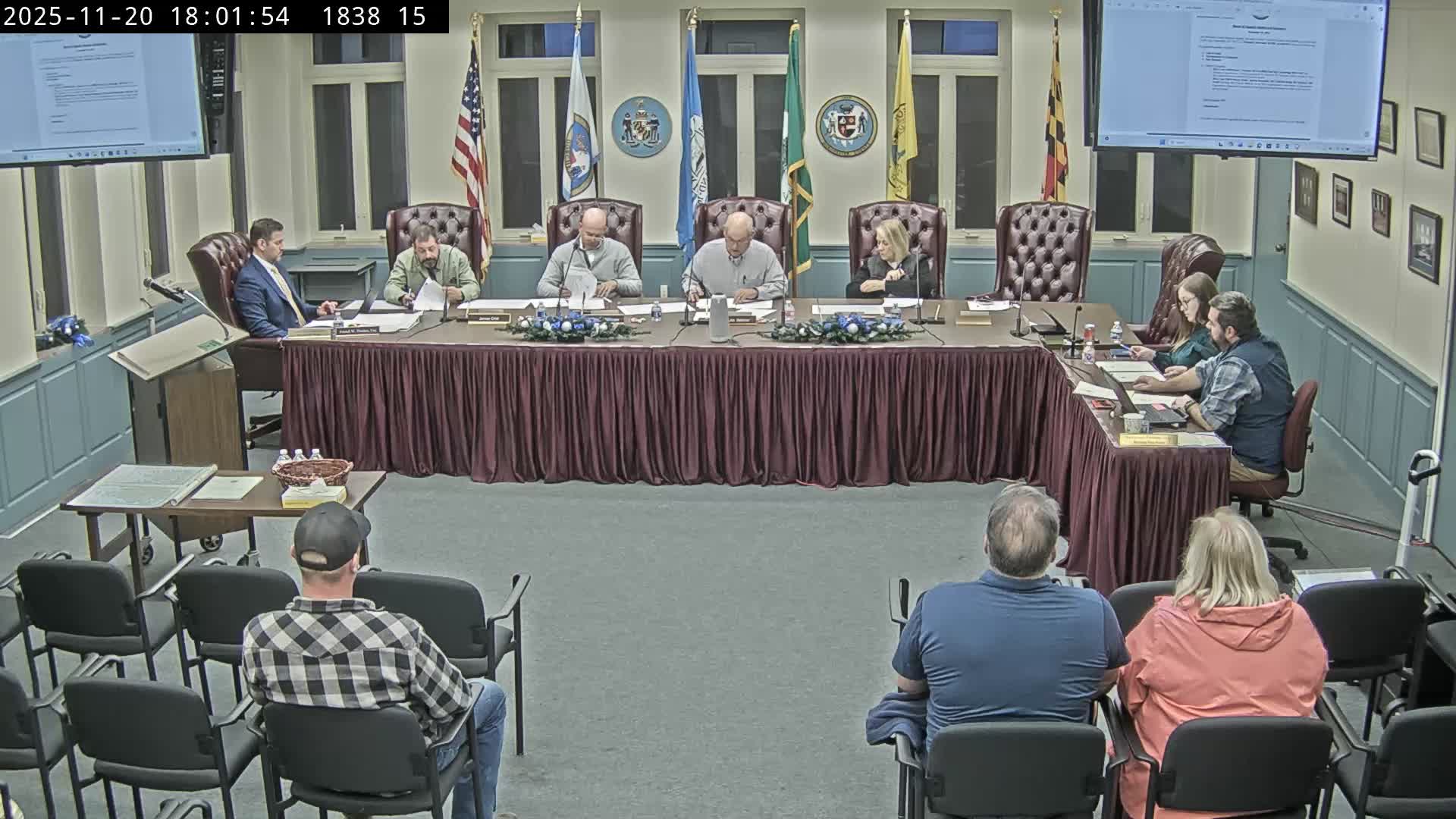
The Dorchester County Board of Appeals voted to deny a variance requested by Teresa and Jody Sachs for a 16-by-16 screened porch proposed at 4214 Griffin/Griffith Neck Road.
Staff told the board the application sought a 14-foot variance to produce an 86-foot setback from mean high water and would add an estimated 256 square feet of lot coverage overall, with roughly 128 square feet within the 100-foot tidewater buffer. Critical-area staff said the property sits in the resource-conservation area and that state law and county code (cited in the staff presentation as code '27 1 12') create a presumption that activities in the buffer do not conform to the critical-area program and that the applicant bears the burden to prove each variance standard.
Environmental planning staff and critical-area reviewers recommended denial. Jonathan Copeland of critical-area staff told the board the application “fails to meet the critical area variance standards such as unwarranted hardship” and that the property does not qualify for the county’s lot-coverage exchange language because it has ample lot-coverage capacity.
Teresa Sachs testified the rebuilt house followed a 2024 demolition and reconstruction; she said the porch location was discussed with the builder and that communication failures and unexpected septic and well upgrades delayed the porch until after the main build. Sachs said she only learned of the buffer issue when inspectors observed footers already dug where the porch had been planned. She told the board the family would move two existing outbuildings — described in testimony as roughly 286 square feet and about 156 square feet — out of the buffer and had an approved buffer-planting plan intended to restore vegetation. "We knew nothing about the buffer," Sachs said during testimony.
Board members questioned whether the applicant’s situation amounted to an unwarranted hardship under the critical-area variance criteria and whether the circumstances were the result of the applicant’s actions or the agent (contractor) who filed the permit. Several members characterized the situation as an inconvenience created during construction rather than the kind of legal hardship the variance standard requires.
After reviewing the statutory and local criteria, a board member moved to deny the request "due to not meeting all of the criteria that were needed." The motion was seconded and the chair announced, "Motion carries." The board informed the applicants of the right to appeal the decision.
The board recorded that applicants may pursue administrative appeal options; staff advised that any further relief would need to address the statutory variance factors (unwarranted hardship, minimum relief, and lack of special privilege).