Lifetime Citizen Portal Access — AI Briefings, Alerts & Unlimited Follows
LPRO explains differences among Oregon poverty measures used for accountability and funding
Loading...
Summary
Legislative Policy and Research Office analyst Monica Cox told the committee that Oregon uses multiple poverty measures—student‑level SEP (Students Experiencing Poverty) and modeled SAIPE estimates—with differing data sources, thresholds and lags; SEP counts program participation and uses up to a 200% federal poverty threshold while SAIPE is a district‑level census-based estimate at 100% FPL used in school‑fund distribution.
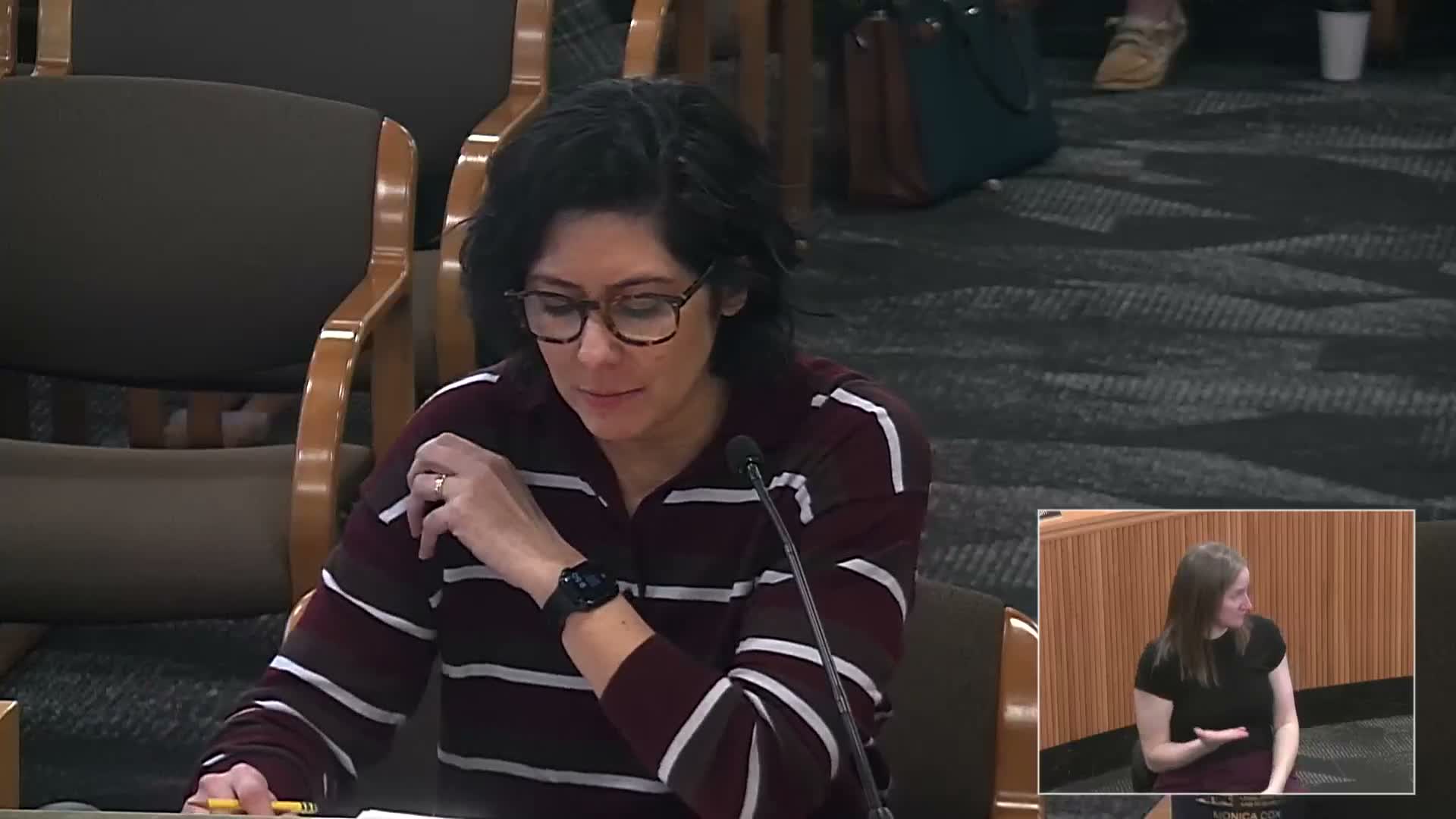
Monica Cox of the Legislative Policy and Research Office briefed the committee on Jan. 13 about the technical distinctions among poverty measures Oregon uses. She described the legacy FRPL (free and reduced‑price lunch) measure and direct certification, then contrasted the Students Experiencing Poverty (SEP) student‑level measure with the Small Area Income and Poverty Estimates (SAIPE) used for state school‑fund distribution.
Cox said SEP is constructed from individual student administrative records (including SNAP, TANF, foster care, homelessness and migrant education flags) and, because state SNAP eligibility can extend to higher incomes, effectively uses a roughly 200% federal poverty threshold for inclusion. By contrast, SAIPE is a modeled district‑level estimate maintained by federal statistical programs with a 100% federal poverty level threshold; ODE makes adjustments for local use. Cox noted the measures serve different purposes: SEP supports accountability and is student‑level; SAIPE informs certain funding distributions but does not directly distinguish public‑school enrollment from non‑public students within district boundaries without adjustments.
Cox also highlighted that the measures have lag times (typically one to two years), different measurement levels (student vs. district), and different data sources and thresholds. Committee members asked whether the two measures could be compared year‑to‑year; Cox said the data exist to compare them but differences in timing, thresholds and methods mean they will often differ.
No legislative action was taken; Cox offered to follow up with additional detail if the committee requests it.