Get AI Briefings, Transcripts & Alerts on Local & National Government Meetings — Forever.
KRAA warns Board of Fish proposals would cut pink/chum production and asks borough to oppose them
Loading...
Summary
Kodiak Regional Aquaculture Association told the assembly that three pending Board of Fish proposals (including a proposed 20—/25% cut to pink and chum production) would significantly reduce KRAA production, threaten cost-recovery funding for hatchery operations and rehabilitation projects, and requested a borough letter/resolution opposing the proposals with written public comments due March 2.
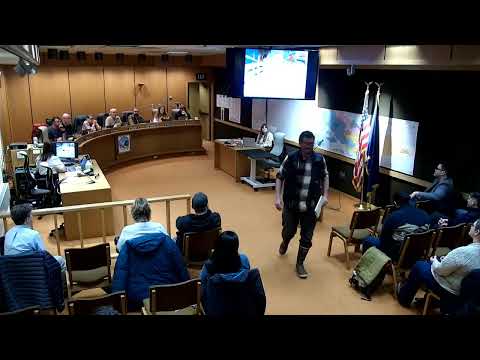
The Kodiak Regional Aquaculture Association (KRAA) briefed the Kodiak Island Borough assembly on Jan. 29 about three pending Board of Fish proposals that KRAA said would reduce pink and chum hatchery production statewide and harm local fisheries and rehabilitation capacity.
Tina Fairbanks, KRAA—executive director, told the assembly that KRAA operates two state-owned hatchery facilities under contract and contributes substantial ex-vessel value to Kodiak salmon fisheries (KRAA—provided roughly 28% of ex-vessel value to Kodiak salmon fisheries, and about 2,500,000 pink and 68,000 chum fish associated with KRAA production were cited for 2025). She said the association—relies on cost-recovery revenue from pink salmon to fund other programs, including conservation and small-systems subsistence projects. KRAA also pays borough severance tax and property taxes on some holdings.
Fairbanks described three proposals (listed in KRAA materials as Proposal 170, Proposal 171 and Proposal 172) that would, in aggregate, reduce pink and chum production by an arbitrary percentage in some regions (she cited a 20—/25% cut in Proposal 170 as an example) or otherwise limit permitting and production increases. She argued those changes are not grounded in a clear, measurable objective and could damage KRAA's ability to meet cost-recovery goals, support rehabilitation work (including a proposed rehabilitation effort for Carluk Chinook), and maintain programs for subsistence and sport users.
Assembly members asked what kind of formal action KRAA sought. Fairbanks requested the assembly consider a letter or resolution opposing the proposals and noted written public comments to the FinFish meeting are due March 2. "If the assembly felt comfortable opposing all three proposals, KRAA plans to do so in our statements and testimony," Fairbanks said; she offered to help draft a resolution or letter for the mayor and assembly.
Several assembly members expressed support for preparing a letter for the Board of Fish process; no formal vote was taken at the work session, but the mayor and staff were asked to pursue drafting a letter and coordinating testimony with KRAA.
KRAA also reviewed monitoring and research, including the Alaska Hatchery Research Project and otolith marking techniques used to track hatchery-origin fish, and said ongoing studies are producing data relevant to claims about straying, relative reproductive success, and ocean-competition hypotheses.
The assembly paused for a ten-minute break after the presentation and then resumed the agenda.