Get AI Briefings, Transcripts & Alerts on Local & National Government Meetings — Forever.
Md. House rejects floor amendment that would itemize charges on electric bills
Loading...
Summary
The Maryland House of Delegates debated an amendment to House Bill 1 that would require utilities to itemize and explain charges on electric bills. Supporters said it would give consumers clarity on surcharges and taxes; opponents called for a full committee hearing and raised implementation concerns. The amendment failed and a motion to recommit also failed.
ANNAPOLIS — The Maryland House of Delegates on Feb. 4 debated a floor amendment to House Bill 1 that would require electric bills to list and explain individual charges, but members voted the amendment down after extended debate about scope, cost and process.
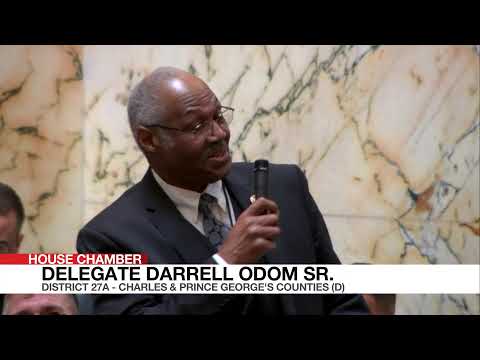
The amendment’s sponsor (Delegate 10), who identified the change as a consumer-transparency measure, said the proposal would force bills to show “an itemization and an explanation of all charges on your bill,” including surcharges and fees such as the Empower surcharge, an environmental per-kilowatt-hour fee and costs tied to grid infrastructure and regional programs. “That is really important,” the sponsor said on the floor, arguing that many charges are effectively taxes passed to ratepayers and that itemization would let constituents “have an intelligent conversation with their elected officials about whether it’s something that they truly support.”
Supporters described the change as a truth-in-billing reform similar to Federal Communications Commission rules for phone bills. Several delegates compared the idea to a cell-phone billing summary that separates taxes, fees and surcharges so consumers can see what they pay and why.
Opponents, including the floor leader (Delegate 13), objected to attaching a broad transparency requirement to HB1 as a floor amendment without a dedicated bill hearing. “The amendment deserves a bill hearing,” the floor leader said, calling the proposal a complex policy change that would require counsel review and stakeholder input. He warned the amendment could have unknown cost repercussions for utilities and for bill production and argued the proposal is not germane to the specific subject of the underlying measure.
Lawmakers also disputed several factual points raised in debate. One delegate disputed the assertion that the General Assembly “closed power plants,” noting closures are driven by market decisions and private operators; supporters countered that past policy choices have increased reliance on out-of-state power and driven up ratepayer costs. On the scope of compensation limits included elsewhere in HB1, a member of leadership noted the bill, as amended, would limit ratepayer-sourced compensation to about $250,000 but would not restrict what executives receive from shareholders.
After floor debate and a roll-call, the clerk reported, “There being a 100 votes in the negative, the amendment fails.” Later in the day the House rejected a motion to recommit House Bill 1 to committee by the same margin; the bill was ordered printed for third reading and will go to the Senate as amended.
The session produced several procedural reminders and calls for fuller vetting. Multiple delegates urged a committee hearing to examine technical questions — for example, how distribution-system planning costs and projected savings would be represented on a bill, and whether required disclosures would force utilities to produce multi-page statements or use hyperlinks for supporting analyses. Members also flagged existing regulatory authority: some said the Public Service Commission already exercises oversight over certain compensation and rate matters; others pointed to the need to consult utilities and counsel about implementation burdens.
What’s next: House Bill 1 was ordered printed for third reading and will be transmitted to the Senate where sponsors said the amendment and related transparency questions can receive further review and a formal hearing.