Get Full Government Meeting Transcripts, Videos, & Alerts Forever!
Get email alerts on the Fire Protection Districts topic
No spam. Unsubscribe anytime.
Committee hears bill to ease formation of single‑city fire protection districts
Summary
Committee staff and multiple witnesses described substitute Senate Bill 6,037 as a tool to let cities form single‑city fire protection districts without the existing dollar‑for‑dollar levy reduction, while hospital districts and taxpayer groups warned of impacts to existing levy space and tax burdens.
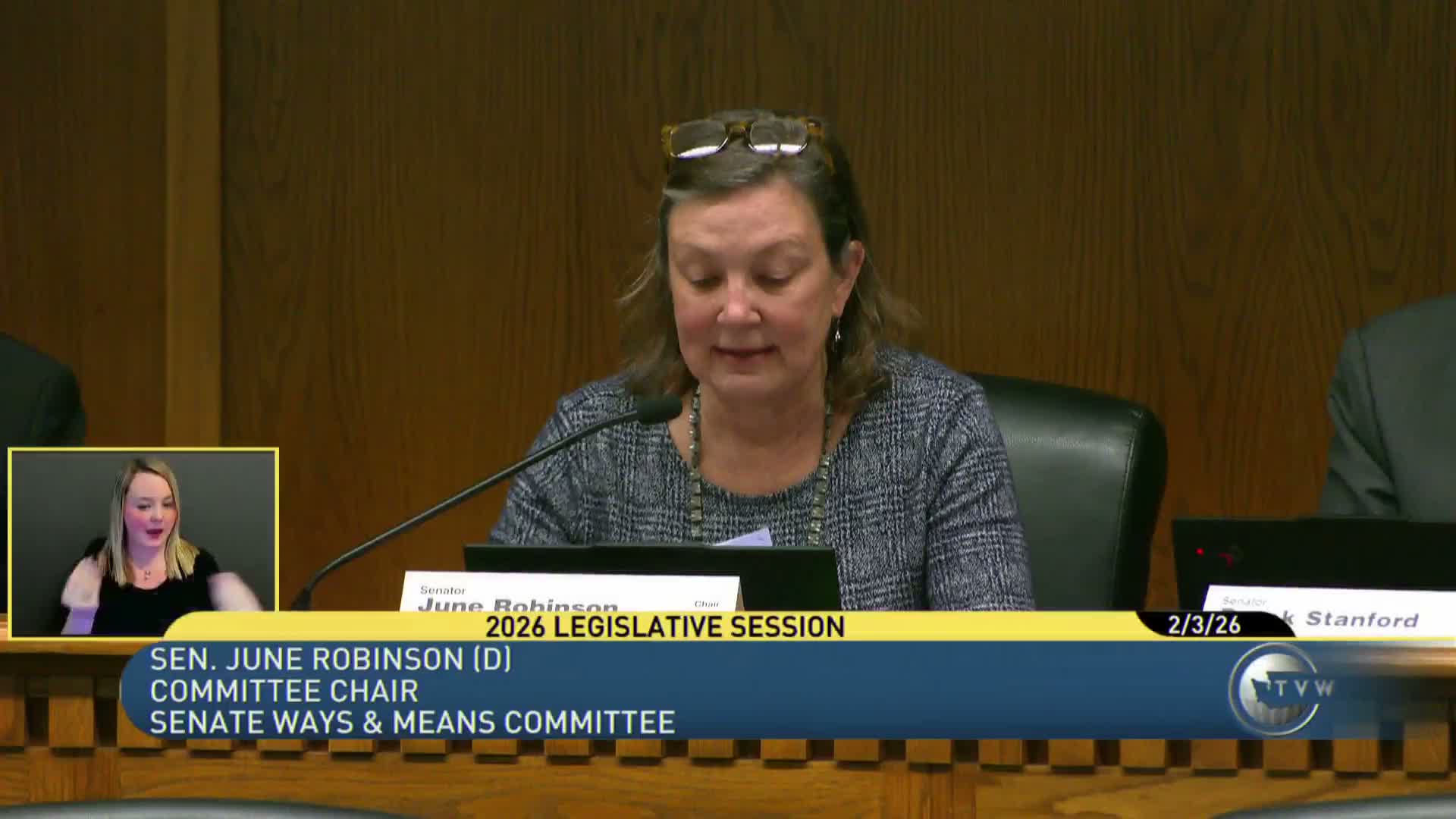
Senate Ways and Means staff briefed the committee on substitute Senate Bill 6,037, which would change how a city’s property tax treatment functions when the city forms a fire protection district.
Jeff Mitchell, staff to the committee, told senators the bill would remove the current requirement that a city reduce its general‑fund property tax levy dollar‑for‑dollar by the amount of a new single‑city fire district levy and would instead reduce the city’s maximum statutory tax rate by the fire protection district’s aggregate rate for districts formed after July 1, 2026. “So for example, if the maximum statutory rate of a city is $3.60 and the fire district imposes a new $1 property tax, the city’s statutory maximum rate would be lowered from $3.60 to $2.60,” Mitchell said.
Mitchell also explained the bill in the context of Washington’s existing rate‑cap framework, noting a $10 aggregate property tax cap (which includes state and local levies) and a $5.90 local cap that triggers proration for some local levies.
Supporters said the change offers cities another option to stabilize funding for fire and emergency medical services. Candace Bach of the Association of Washington Cities told the committee the bill “makes the single‑city fire district authority equivalent to regional fire authority” and provides an alternative where regionalization is impractical. Harold Scoggins, fire chief for the Seattle Fire Department, said the bill would provide a “practical, transparent, and voter‑driven option to form a single city fire protection district” and emphasized that personnel, equipment and contracts could transfer seamlessly to a new district.
Opponents urged more caution. Matthew Ellsworth, executive director of the Association of Washington Public Hospital Districts, said hospital districts could be among the first entities to face prorationing under the state caps and opposed moving levy space from hospital districts to fire protection without further stakeholder work. Jeff Pack, representing Washington Citizens Against Unfair Taxes, argued broadly against new levies and called for improvements in public notice methods.
Several local leaders, including Don Schwab, Everett city council president, said the bill would level the playing field between cities that want to retain their own fire departments and regional authorities. AJ Johnson of the Washington State Council of Fire Fighters supported the bill but asked the committee to amend it to require newly formed single‑city fire districts to be governed by an independently elected board of fire commissioners within two years.
The chair closed the public hearing and moved on to the next bill. No committee vote on SB 6,037 occurred during this session.
The hearing record includes technical questions from senators about the Seattle exemption and the distribution of levy space across different local taxing jurisdictions; staff deferred some technical policy defenses to testifiers and indicated the state Department of Revenue had calculated minimal direct state fiscal impact.