Get AI Briefings, Transcripts & Alerts on Local & National Government Meetings — Forever.
Senate subcommittee hears wide-ranging testimony on S.867, the Data Center Development Act
Loading...
Summary
A Senate subcommittee heard technical and public testimony on S.867, a bill to create a Data Center Development Office, tighten siting and reporting for data centers, and clarify the Public Service Commission’s role on rates. Witnesses debated water metering, tier thresholds, on-site generation, tax incentives and protections for ratepayers; no vote was taken.
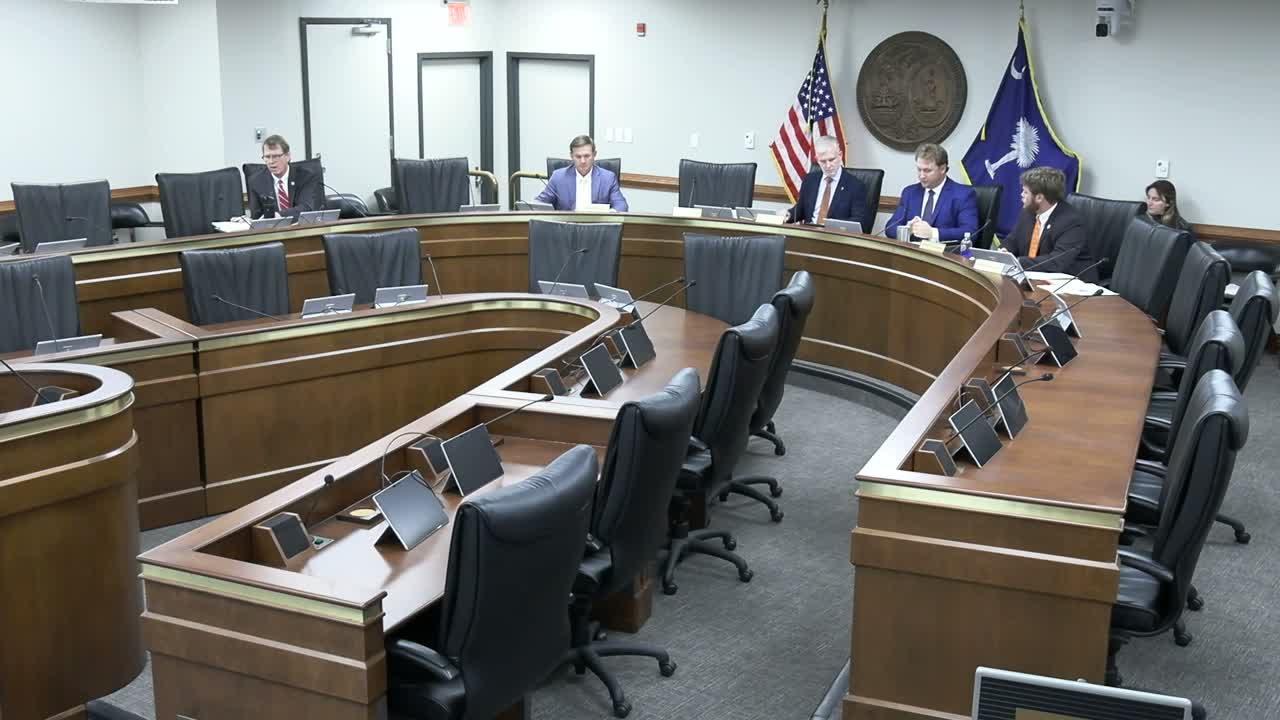
The Senate subcommittee on S.867 met to take introductory testimony on the Data Center Development Act, hearing from state agency officials, trade groups, local economic developers and advocacy organizations about water use, electrical impacts, permitting and incentives.
Senate staff read a bill summary that would create a Data Center Development Office within the Department of Environmental Services (DES), require permits for data-center sites, impose water- and energy‑reporting requirements, set site‑efficiency standards and require decommissioning plans and financial assurances. The summary also assigns a role to the Public Service Commission (PSC) for rates, utility agreements and cost allocation.
A Commerce office representative told the committee that the Department of Commerce does not actively recruit hyperscale data centers for the state and that definitional clarity matters: "we do not recruit those," the official said when questioned about companies such as Amazon. The official estimated roughly "20 to 30" data centers currently in South Carolina and contrasted that with far larger counts in neighboring states.
Rob Devlin, assistant bureau chief for DES’s Bureau of Water, framed the bill around managing resource and infrastructure strain. He said data centers require "extraordinary amounts of electricity" and can demand significant water; the bill’s infrastructure‑adequacy assessments should evaluate water supply, wastewater treatment, fiber connectivity and road access before permitting. Devlin described proposed tiering and timelines in the legislation and confirmed the bill would require annual reports to DES on total electricity and water consumption.
Committee members repeatedly pressed DES on current knowledge and verification: Devlin said DES does not currently track individual data‑center water use unless a center holds an individual water permit; many centers purchase water from public utilities, so DES sees intake volumes at the utility level but not the centers’ end use. He said regulations will be needed to specify metering and reporting standards for the proposed liters‑per‑kilowatt water efficiency metrics and to verify compliance.
Public testimony highlighted competing priorities. Lynn Teague of the League of Women Voters urged stronger statutory protections for ratepayers, wider expert and public input and skepticism about short statutory timelines for review. Dennis Fasiliotis of the South Carolina Emerging Technology Association and George Crouch (a private citizen) recommended allowing on‑site or third‑party generation ("bring your own power") to avoid burdening the local grid. Will Williams, a regional economic development official, described local projects under construction in Aiken County, including a Meta site he said had purchased 550 acres and expects the facility to use "less than 30,000 gallons per day" and to be "water neutral" by 2030.
Energy advocates urged transparency and statutory guardrails. Zakiyah Mickle of the South Carolina Energy Justice Coalition recommended mandatory annual reporting of grid impacts, prohibitions against shifting infrastructure costs to residential ratepayers, limits on tax abatements without ROI disclosure, and explicit emergency curtailment authority for utilities.
Electric cooperatives warned that whether data centers are a net benefit depends on contract terms: John Frick of the Electric Cooperatives of South Carolina said large, steady industrial loads can lower per-customer costs when the user pays for needed infrastructure upgrades, but added that protections such as deposits, bonds or minimum demand charges are important.
Senator Davis, the bill’s author, said the legislation aims for a middle path: not a ban on data centers but a framework to address water, environmental and rate impacts while remaining competitively attractive to investment. He said PSC matters (rate setting, cost allocation) should remain with the PSC while DES should focus on siting, water, buffers and reporting. The subcommittee took testimony to inform drafting and did not vote; the chair adjourned the meeting.
What’s next: The chair outlined planned subsequent hearings to focus in turn on siting and permitting; operating standards, environmental impacts and reporting; and utilities, costs and local government interaction. The committee invited additional written information on incentives and existing utility contracts and flagged the need for refined metering and reporting language in regulations.