Get Full Government Meeting Transcripts, Videos, & Alerts Forever!
Get email alerts on the Military Department Modernization topic
No spam. Unsubscribe anytime.
Military Department seeks modernization of antiquated militia language in HB 5294
Summary
Brig. Gen. Mike Sippels told the Veterans and Military Affairs Committee HB 5294 would modernize Title 27, remove gender-differentiated language in the unorganized militia, permit gubernatorial appointment flexibility for a military staff and standardize an on-base facility name.
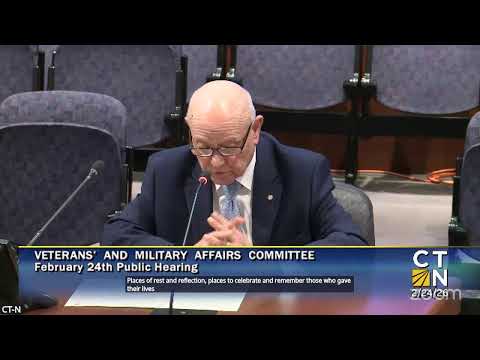
Brigadier General Mike Sippels, assistant adjutant general of the Connecticut Military Department, told the Veterans and Military Affairs Committee he supports House Bill 5,294 to modernize Title 27 of the Connecticut General Statutes and remove outdated statutory language.
Sippels said HB 5294 changes how the “unorganized militia” is described in state law. Current statute mandates males aged 18–45 as members while making female membership voluntary; the bill would remove that differentiation to align state law with federal policy and contemporary practice. "HB 5,294 updates statutory language concerning the unorganized militia," Sippels said, arguing the language should not reflect bias based on sex.
The bill would also make the governor’s military staff appointments discretionary rather than mandatory, reducing an administrative burden Sippels described as a remnant of earlier eras. He said the only required appointees would remain the Adjutant General and the Assistant Adjutant General, while allowing the governor to add other appointments as needed. Sippels additionally noted a technical facility rename (CampNet at Niantic to CampNet) to align with Army facility naming conventions.
During questions, Representative Anderson and others pressed whether changes to militia language could be interpreted as creating a draft-like obligation for women. Sippels and members of the committee emphasized the unorganized militia is a state-level pool for extraordinary circumstances (he cited the last practical use as decades prior), not a federal draft or selective service registration. He said the change is intended to standardize gender-neutral statutory language and to reflect recent federal shifts that open more military roles to women.
The hearing produced no formal vote. Committee members indicated they will review substitute language and the department offered to provide further details to the committee record.
The committee closed the session after hearing additional testimony on cemetery, memorial and other veterans-related bills.