Lifetime Citizen Portal Access — AI Briefings, Alerts & Unlimited Follows
Treasury Secretary Bessent urges relief for community banks, backs digital-asset 'sandboxes' and higher thresholds
Loading...
Summary
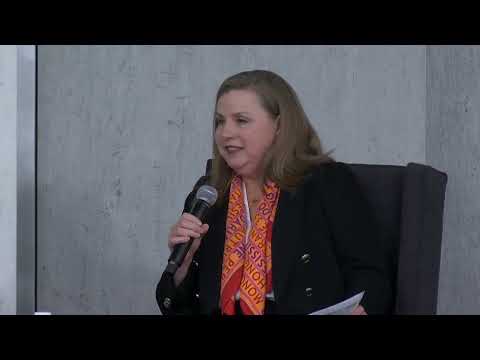
At a bankers' fireside chat, Treasury Secretary Bessent emphasized community banks' role in local lending, said Treasury is working with Sen. Tim Scott on expanding noninterest-bearing transaction-account coverage, warned of private-credit arbitrage around post-Dodd-Frank rules, and endorsed regulatory sandboxes for digital assets so community banks can compete.
Treasury Secretary Bessent told a banking audience that community banks are a foundation of the U.S. economy and that Treasury is pursuing multiple steps to support them, including encouraging de novo charters and legislative work to expand coverage for noninterest-bearing transaction accounts. "We wanna get back to de novo banks," he said, and reported that Treasury is working with Senator Tim Scott on legislation to increase noninterest-bearing transaction-account protections.
Bessent warned that regulatory complexity and tight post‑Dodd‑Frank rules have pushed credit activity outside the regulated banking system and created arbitrage opportunities for private‑credit funds. "The regulatory framework that was developed post Dodd Frank is too tight and that there is a substantial arbitrage to be done," he said, urging that capital be more risk‑based and that regulators consider the mix of a bank's business when setting thresholds.
On compliance burdens, Bessent cited a small community bank with substantial compliance staffing and suggested targeted approaches such as geographic SAR (suspicious-activity report) prioritization to reduce costs while focusing enforcement on higher-risk areas. He said Treasury's FinCEN work aims to add "a common sense layer," and asked whether regulators can target resources where illicit finance is concentrated rather than imposing uniform national burdens.
Turning to technology, Bessent said his administration favors experimentation in digital assets and AI, supporting "sandboxes" so community banks and fintechs can innovate without being locked into a few dominant service providers. "We're creating ... a sandbox where there's a lot of experimentation ... and for community banks not to be locked in that they have to use, like, 1 of 3 dominant service providers," he said, suggesting community banks could use private‑label payment rails or cooperative arrangements to offer digital services locally.
Bessent illustrated the community‑banking opportunity with local economic examples, citing Charleston and Boeing: when a large manufacturer locates in a region, an ecosystem of suppliers and local banks often follows. He closed by urging community banks to embrace technology to bring younger customers into the financial system while regulators work on calibrating capital, liquidity and thresholds to allow prudent growth.