Get AI Briefings, Transcripts & Alerts on Local & National Government Meetings — Forever.
Task force hears warnings about ratepayer risk as data‑center demand drives multibillion‑dollar utility plans
Loading...
Summary
Consultants and utility officials told the Task Force on Energy Infrastructure Modernization that rapid data‑center growth is pushing large utility capital plans that could raise rates unless guardrails are adopted; Entergy officials said recent PSC guidance and developer contributions are designed to protect customers.
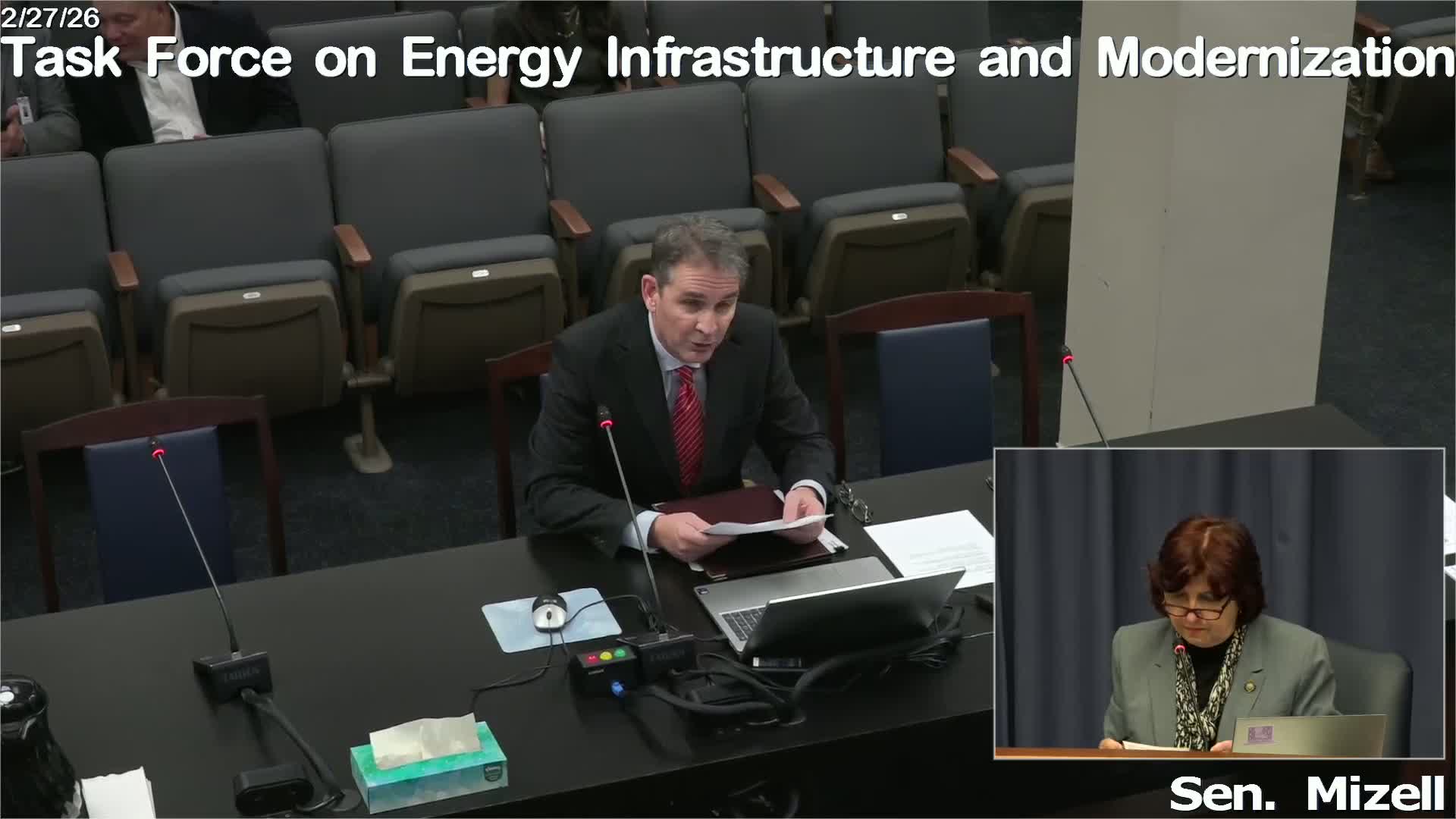
Consultants, utility executives and state policy analysts told a legislative task force Feb. 27 that explosive data‑center growth is creating unprecedented pressure on Louisiana’s electric system—and that careful regulatory guardrails will be needed to prevent costs from being shifted to existing ratepayers.
"Rates for Entergy residential ratepayers in Louisiana have already increased by about 30 to 40% since 2019, roughly 10¢ per kilowatt hour to 14¢ per kilowatt hour," consultant Sean McLaughlin told the Task Force, citing company filings and capital plans. McLaughlin said Entergy Louisiana’s four‑year capital investment plan has reached roughly $20,000,000,000 and described a particular risk he called "tail‑end" risk: when a utility signs a 15‑year electrical service agreement but the new generation has a longer depreciation life, the remaining undepreciated cost can fall to ratepayers after the contract ends.
McLaughlin urged the panel to consider customer‑centric alternatives—retail power purchase agreements, private microgrids and tariffs that allow large customers or third‑party generators to contract directly for capacity—so that the financial risk of build‑out does not rest solely with regulated utility customers. "So the larger bucket of cost will have to be paid by somebody," he said, "and that will become known and certain over time as commitments are made."
Entergy Louisiana’s vice president of regulatory affairs, Larry Hand, told the task force that the company also recognizes the need to protect customers and pointed to steps the Public Service Commission took this week. Hand said the commission adopted guidelines for serving very large loads that require utilities to explain how they will protect existing customers from "tail‑end" exposure.
"For Entergy Louisiana, our target return on equity is 9.7%," Hand said while explaining how authorized returns and capital structures affect the annual revenue requirement that flows into rates. He added that when large new customers ramp up, they can raise the system’s sales denominator and help offset costs: using Meta as an example, Hand said the project will increase Entergy’s sales and that "Meta will not only pay their fair share but they will also benefit existing customers by at least $650,000,000 over that 15‑year term." He also emphasized that Meta and other large projects have made substantial up‑front contributions and parent guarantees intended to shield ratepayers.
Members pressed both witnesses on implementation details. Questions included whether third‑party generation can sell into the regional grid operator (Mr. McLaughlin: "Yes,"), how backup or "as‑available" tariffs are structured, and how the PSC’s prior customer‑centered options docket had addressed similar ideas. Randy Young of the Louisiana Energy Users Group described prior pilot proposals that would have expanded options for cogeneration and renewable access and said those proposals included explicit "no‑harm" analyses to protect existing customers.
The National Conference of State Legislatures’ senior policy specialist, Alex Mcgord, briefed members on state legislative trends and said many states are experimenting with targeted tariffs, surcharges or reporting requirements for large loads. "Data centers currently account for about 4% of energy consumption in the U.S.," Mcgord said, and lawmakers in some states have moved to create new customer classes or require that large loads pay for interconnection or participate in demand‑management programs.
No formal actions or votes were taken by the task force. Members concluded by asking staff to circulate a draft microgrid bill for feedback and agreed to reconvene to pursue legislative options aimed at balancing economic development with customer protections.
The task force is expected to continue the discussion; members asked staff to gather additional data on pending utility filings, the PSC’s recently adopted guidance and examples from other states before the next meeting.