Lifetime Citizen Portal Access — AI Briefings, Alerts & Unlimited Follows
Denton City economic development workshop narrows priorities to six goals, pushes 'white‑glove' service and workforce action
Loading...
Summary
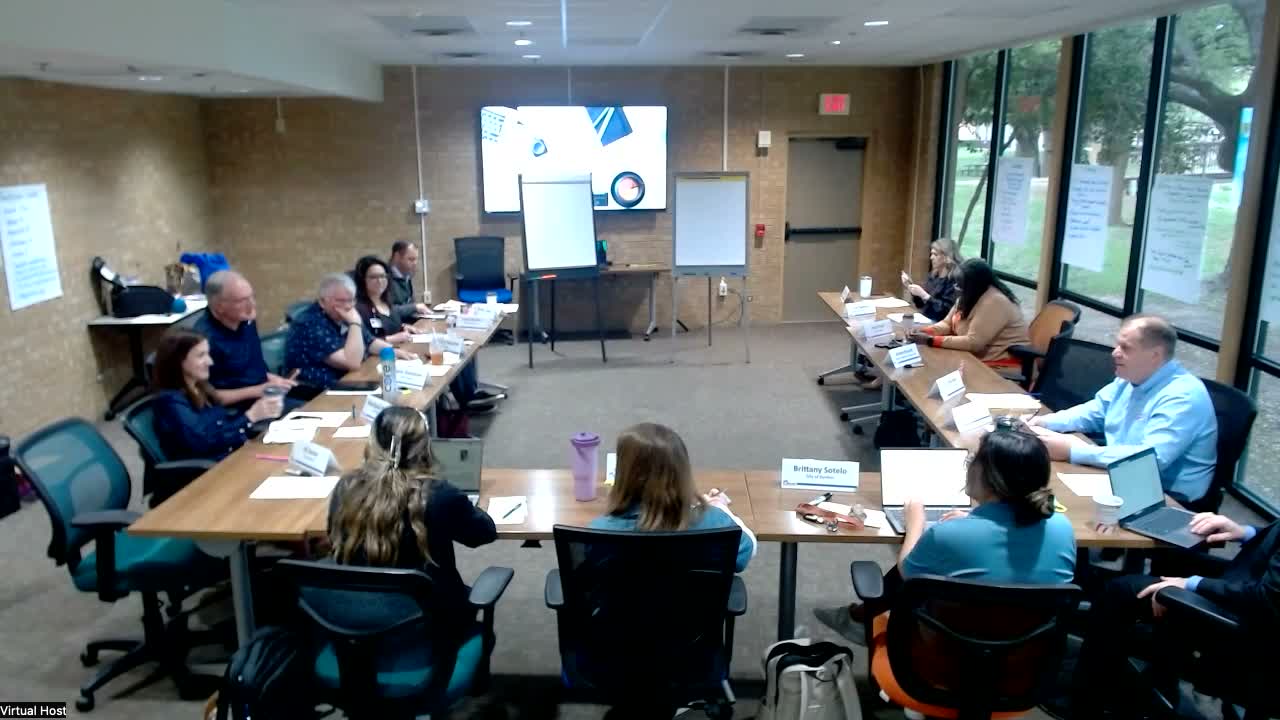
At a workshop facilitated by Opportunity Strategies LLC, Denton City’s economic development partners agreed on six priority goal areas — including storytelling, partnerships, customer‑service improvements, business recruitment/retention, certified sites, and a new workforce development focus — and organized small groups to draft goals, strategies and KPIs.
A facilitator from Opportunity Strategies LLC led a Denton City economic development retreat that asked participants to identify 3–7 priority goals to guide EDP work over the next 18 months and produced six agreed goal categories.
The facilitator, Alicia, told the group they would “get down to the 3, 4, 5, 6, no more than 7 things” to focus on and walked through themes from the prior day, including development services, funding opportunities, site readiness and storytelling. She also shared brief research on homelessness responses in other cities to underscore reputation and quality‑of‑life impacts that can affect economic development.
Participants converged around six headline priorities: storytelling and messaging to better explain incentives and impacts; partnership building across city departments and external organizations; customer‑service excellence in development services (described throughout the meeting as a “white‑glove” approach); business recruitment and business retention/expansion (BRE); product and site development (including certified site work); and workforce development.
Speakers described concrete issues that informed the priorities. Jeremy, a small‑business participant, recounted recent problems with late permit and utility notices that left tenants without power and argued the city must set a clear standard for timeliness and responsiveness. Alicia recommended using short, shareable materials — “one slide, 30‑second video” — and using impact modeling (Impact Data Source) both to justify incentives and to tell the city’s story to residents and prospects.
On site readiness, Britney explained certified‑site approaches that fund environmental reports and utility work up front so properties can be marketed as shovel‑ready. Board members and developers warned certified sites require substantial initial investment and suggested options such as industrial districts or targeted master‑plan infrastructure to reduce per‑project costs.
Workforce development emerged as a distinct objective after repeated comments that companies’ top needs are a reliable workforce and predictable permitting timelines. Participants proposed task forces or partnerships with UNT, NCTC and ISD to coordinate internships, upskilling, and employer‑driven credential programs.
The group worked in small teams to draft goal language, strategies and measurable KPIs (counts, dollar amounts or binary checkboxes) and the facilitator said she would compile the notes and deliver a draft plan within 30 business days for review and edits before the EDP’s next meeting.