Lifetime Citizen Portal Access — AI Briefings, Alerts & Unlimited Follows
Pickerington Local explains how IEPs and 504 plans use accommodations and modifications
Loading...
Summary
At a Pickerington Local School District information session, special-education staff explained the difference between accommodations (which change how students access curriculum) and modifications (which change what students are expected to learn), where those supports appear on IEPs and 504 plans, and how families and IEP teams monitor effectiveness.
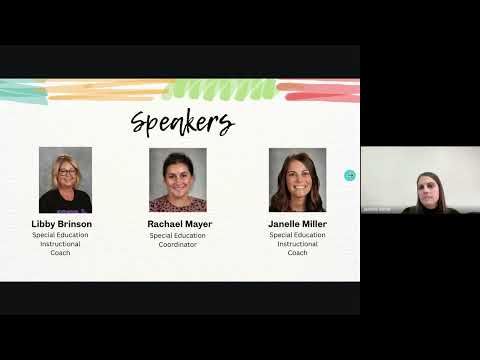
Libby Brinson, special education instructional coach for the Pickerington Local School District, opened a public information session on supports for students with disabilities and said the goal was to make “accommodations and modifications” clear and practical for families.
"Every student deserves the opportunity to learn in a safe, inclusive and supportive environment," Brinson said, and she framed IEPs and 504 plans as tools to remove barriers so students can participate meaningfully without lowering expectations.
Brinson and colleagues defined an Individualized Education Program, or IEP, as a plan under the Individuals with Disabilities Education Act that provides specially designed instruction, goals, accommodations and sometimes modifications. They distinguished that from a 504 plan under Section 504 of the Rehabilitation Act, which typically documents accommodations that allow a student to access the general education curriculum without necessarily providing specialized instruction.
Rachel Mayer, a district special education coordinator, told families that accommodations fall into four types—presentation, setting, response and timing—and gave concrete classroom examples. "Presentation" accommodations can include read-alouds or braille; "setting" examples include preferential seating or small groups; and "response" supports can include a scribe or speech-to-text tools. Mayer noted timing supports range from a few extra minutes up to, in some cases, one full school day for assessment completion.
Mayer described common classroom supports—visual schedules, movement breaks, guided notes, assistive technology and adult check-ins—and said some accommodations used in class do not automatically apply to every test. She pointed families to the state accessibility manual for rules that apply to district and state assessments.
Janelle Miller, an instructional coach, explained where supports appear in school documents: classroom accommodations and modifications are typically listed in section 7 of an IEP, with testing accommodations in section 12; for 504 plans Miller said classroom items are often in section 2 and testing items in section 3, with a named staff member responsible for implementation.
The presenters emphasized how teams decide supports. Miller said the IEP team—parents, teachers, specialists and administrators—reviews academic data, observational data, student voice and progress-monitoring measures to determine whether an accommodation is improving access and independence without lowering standards. "I want it to really benefit the student," she said, describing short trials of accommodations and subsequent adjustments or IEP amendments when a tool is not effective.
Brinson closed by urging ongoing family collaboration and listing resources, including OCALI (Ohio Center for Autism and Low Incidence Disabilities), the Ohio Department of Education accessibility guidance, and understood.org for additional family-facing materials. She invited attendees to submit questions in chat or follow up with their child’s IEP team.
The session concluded without any formal board action; presenters said they would remain to answer questions and recommended families complete an online post-session survey.