Get Full Government Meeting Transcripts, Videos, & Alerts Forever!
Get email alerts on the Land Use topic
No spam. Unsubscribe anytime.
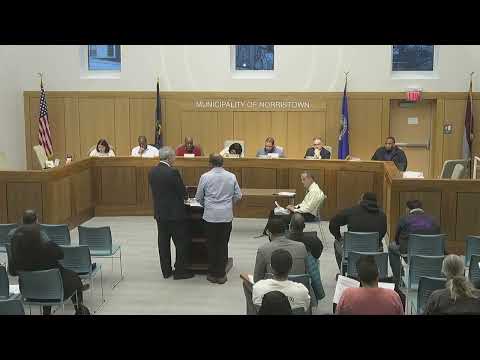
Norristown zoning board continues variance request for 705 Chain Street, asks for code‑enforcement records
Summary
The Norristown Zoning Hearing Board continued a variance hearing for 705 Chain Street after questions about historic tax and permit records. The applicant said separate meters and entrances support a duplex designation; the municipality will be asked to provide code‑enforcement files at the April meeting.
The Norristown Zoning Hearing Board continued a variance request for 705 Chain Street after municipal records and parcel treatment raised unresolved questions about whether the property is a single building or a configuration of separate dwellings.
Charles Campbell, representing the applicant, said the parcel contains two physically separate addresses — 701 and 705 Chain Street — that share a brick wall but have separate entrances and utilities. “A variance would be required to achieve the proposed use,” Campbell told the board, explaining the owner seeks to permit a duplex configuration for the larger building at 705 because it is currently configured with multiple kitchens and meters.
Property owner Vijay Pithambaram testified that 701 is a corner studio and 705 is a three‑story building with a separate water heater, gas meters and electric panels, arguing that converting 705 to single‑family occupancy would be impractical and costly. Pithambaram cited MLS and county assessment pages among submitted exhibits to show prior multi‑unit use.
Municipal staff told the board county assessment and older zoning records have at various times identified the parcel as multi‑unit (a quadruplex) and said a 2020 borough approval treated the property as single‑family; municipal files did not contain a clear record for some historic entries referenced by the applicant. The board concluded that access to municipal code‑enforcement and permit records is necessary to resolve whether the multiunit use was legally established or later abandoned.
The board voted to continue Application 53‑25 to the April hearing and requested that a representative from code enforcement appear with relevant files. No public testimony was offered for this application at the March hearing.
The continuance preserves the applicant’s right to present additional evidence and allows the board to consider municipal documentation about rental licensing, permit history and prior zoning decisions when it resumes the matter next month.