Lifetime Citizen Portal Access — AI Briefings, Alerts & Unlimited Follows
DEED: Minnesota unemployment 4.1% as labor force reaches about 3.17 million
Loading...
Summary
DEED briefing shows Minnesota had about 3,170,000 people in the labor force as of December 2025, 3,039,000 employed and 131,000 unemployed (4.1%); the state has high labor‑force participation but saw a larger year‑over‑year rise in unemployed workers than neighboring states, with demographic differences across age and race.
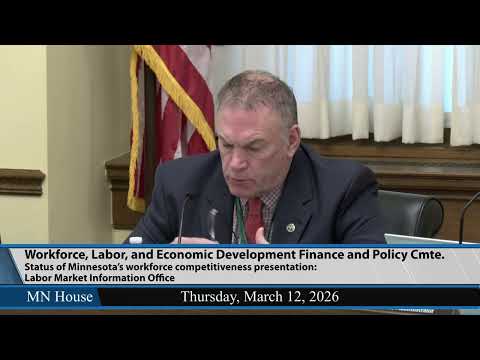
Angelina Nguyen, director of the DEED Labor Market Information Office, told the House Workforce, Labor, Economic Development Finance and Policy Committee that Minnesota’s labor force was about 3,170,000 as of December 2025 and that roughly 3,039,000 were employed, leaving about 131,000 people unemployed and a statewide unemployment rate of 4.1%.
“We have a labor force participation rate around 68% and an unemployment rate that sits within what economists often call a natural range,” Nguyen said, adding that the state had about 3,068,000 jobs and had added nearly 200,000 jobs since 2021 — roughly a 7% increase since the pandemic period.
Nguyen highlighted sectoral differences: 14 of 20 industries added jobs from 2021 to 2025, and she said health care and social assistance remained among the highest‑demand sectors, driven by an aging population and strong need for nursing‑home staff, nurses and related occupations.
The presentation flagged an outsized year‑over‑year jump in the number of unemployed people: DEED’s household‑survey measure added about 38,000 unemployed Minnesotans compared with the prior December, a near 41% increase in the state’s unemployed count, a larger proportional rise than many neighboring states experienced. Nguyen said part of the rise reflects more people entering the labor force — including larger numbers of Black workers and teenagers — while hiring over the year was lower than in prior recovery years and employers report more applicants who lack needed skills.
During committee Q&A, Chair Baker asked whether a 2023 change in unemployment insurance for people under 18 affected DEED’s statistics. Nguyen responded that it did not: labor‑force measures are derived from a household survey of civilians age 16 and older and the statistical definition has not changed, so UI eligibility changes do not alter those series.
Why it matters: the data position Minnesota as a state with strong participation but with a slowdown in job‑growth pace and signs of labor‑market friction — more people seeking work while some vacancies remain hard to fill because of skill mismatches. Nguyen closed by offering to provide updated data next month when newer figures are released.
The committee did not take formal action on the presentation; members used the briefing to probe data definitions and demographic patterns and then moved to the next panel.