Lifetime Citizen Portal Access — AI Briefings, Alerts & Unlimited Follows
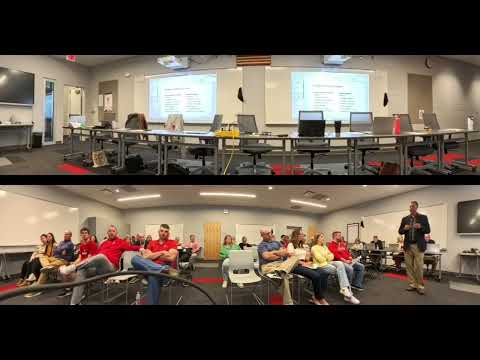
David City school officials outline $1.75M HVAC work and multi‑million expansion options, drawing community questions on cost and schedule
Loading...
Summary
At a special David City Public Schools board meeting, district presenters detailed needed HVAC replacements, a proposed larger family and consumer sciences (FCS) classroom, and a new competition gym with locker‑room upgrades; cost estimates ranged from $1.75M for elementary HVAC to about $16M for a new gym, and residents pressed the board on financing and schedules.
Presenter (Speaker 4) told the David City Public Schools special board meeting that facility work identified in the district’s strategic plan includes urgent HVAC and lighting replacements, a larger family and consumer sciences (FCS) classroom and a new competition gym with expanded locker rooms and officials’ space.
The presentation said facility advocates estimated about $1,750,000 for HVAC and LED lighting needs at David City Elementary and roughly $2,200,000 (plus additional LED costs) at the high school, totaling nearly $4.9 million for HVAC and lighting work districtwide. "We have some exhaust fans ... as old as 43 years," Presenter said, explaining the equipment is past life expectancy and the elementary HVAC and lighting project already approved for Bellwood is underway.
Why it matters: district officials said the HVAC work is the most urgent item because of equipment age and building comfort for staff and students. The district also presented proposals to expand the FCS classroom from about 1,000 square feet (roughly 12‑student capacity and one commercial stove) to a proposed ~2,400 square foot space serving 18–20 students and usable as a hospitality space for events.
Paul Martinez, the district’s family and food planning teacher, told the board the current FCS facilities are constraining program growth and safety. "Culinary arts, we cap it out at 12 students," Martinez said, describing split labs and an inability to supervise both areas simultaneously. Martinez said growth in culinary and foods classes has led to turning students away and to equipment that cannot fit through existing doors.
Presenter also described a proposed new competition gym to solve scheduling conflicts, provide separate officials’ facilities, and create more practice space — including a dedicated mezzanine area (approximately 42 by 75 feet) for girls wrestling. The presenter said a new competition gym would allow the district to host events — such as multi‑mat wrestling tournaments — without repeatedly ceding the auditorium when it is rented by others.
Costs and financing: district estimates varied. Presenter said the elementary HVAC could be paid from the depreciation fund to avoid a loan, but described the competition gym as the largest cost driver. Presenter offered an estimate near $12.6 million in one calculation but later stated a working estimate of about $16,000,000 for a competition gym project, noting that the figure depends on final square footage and market fluctuations. Presenter outlined lease‑purchase options (20– to 25‑year terms) and gave an illustrative annual payment near $1.3 million at about a 5.5% interest rate.
A community attendee raised long‑term cost concerns, calculating interest on a $16 million, 25‑year loan at 5.5% would add roughly $10.58 million in interest over the life of the loan. "For the total life of that loan, that's gonna be $10,580,000 worth of interest," the commenter said during Q&A. Presenter acknowledged that interest and term choices affect the district’s operating flexibility.
Public questions and concerns: residents, coaches and staff asked where junior high girls wrestling would practice, how ADA access and bleacher clearances would be handled, and how construction would affect current facilities and scheduling. Concerns included security when classrooms are repurposed as team spaces, late practice times for youth, and how additional projects such as preschool relocation or sensory rooms for special education students might be prioritized.
Next steps and timing: Presenter said the board will need to decide on project scope and begin work with architects and engineers likely by June if the district aims to approve designs in November–December and break ground the following spring. Presenter noted the board has not yet made decisions beyond the Bellwood HVAC/lighting project and emphasized further design, cost refinement and fire marshal input would be required.
Board action: at the meeting’s close the chair asked for a motion; a motion was made and seconded and a roll‑call recorded affirmative votes from those present. The meeting record shows the motion carried by voice/roll call as recorded by the chair.