Get Full Government Meeting Transcripts, Videos, & Alerts Forever!
Get email alerts on the Youth Employment topic
No spam. Unsubscribe anytime.
Boston councilors press city offices to protect youth summer jobs amid state funding uncertainty
Summary
Boston City Councilors and the Office of Youth Employment and Opportunity outlined plans for the 2026 youth summer jobs program — including a March 16 application launch, an April 18 Reggie Lewis job fair and expanded onboarding — while questioning how potential state cuts could affect school‑year but not immediately the summer program.
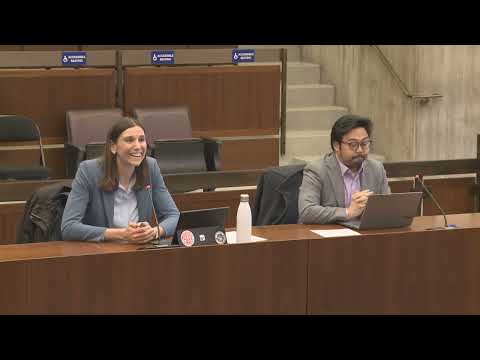
Boston City Council Committee on Human Services Chair Erin Murphy convened a March 13 hearing to review the city’s youth summer jobs operations ahead of the 2026 season and pressed city staff on how state and budgetary uncertainty might affect the program.
The Office of Youth Employment and Opportunity’s executive director, Lisonbee Vernery, told the committee that the centralized application portal Future Boss will open on Monday, March 16, and that the office aims to replicate last summer’s scale of about 10,500 placements. Vernery said the city allocated $18,500,000 in SuccessLink grants to 145 nonprofit partners and 83 city agencies to support roughly 6,115 city‑funded jobs, and that the city’s broader investment in youth jobs totals about $23,300,000. “Applications are gonna launch this Monday, March 16,” Vernery said, and the office is pushing outreach through school pop‑up fairs, translations and a major April 18 job and resource fair at the Reggie Lewis Center.
Why it matters: Councilors stressed that summer work is a public‑safety and youth‑development tool — linking employment to higher graduation rates and reduced criminal‑justice involvement — and sought clarity about what budget cuts at the state or city level would mean for summer placements versus school‑year programs.
What the office described: Vernery outlined several operational improvements meant to reduce access barriers. The office will continue mobile onboarding events, operate an expanded youth welcome center at the Tobin Community Center (May 1–July 17) to provide live application help, issue work permits and retrieve birth certificates, and roll out an early BPS data‑sharing pilot so some student documentation can be accessed administratively rather than supplied in paper form. Vernery also described a two‑wave strategy for the Reggie Lewis fair (morning and afternoon) with translated materials, maps for attendees and a sensory safe space; noninvasive metal detectors and increased trusted‑adult supervision will be used to reduce safety risks.
Numbers and uncertainty: Vernery and staff gave several figures during questioning. They said the city helped provide roughly 10,511 placements last year across public and private partners, that SuccessLink funded approximately 5,964 city jobs last year, and that for 2026 they allocated about 6,115 SuccessLink jobs supported by $18.5 million. Vernery reported a more than 98% fill rate for city jobs last summer. She also told the committee that state grant funding the city receives through Commonwealth‑administered YouthWorks/Commonwealth Corps is not yet final; one line item was described as likely to fall from about $1,000,000 to approximately $800,000, and staff later referenced an early illustrative projection of a larger Commonwealth‑level reduction (discussed as a possible ~46% drop or roughly $2.4 million). Vernery and Joseph Lee emphasized those figures are preliminary and not confirmed by the state.
Private sector and education pathways: Jimmy Wyman of the Boston Private Industry Council and YEO staff described efforts to place technical‑school students (Madison Park) in summer roles that could lead to co‑op or year‑round opportunities with employers, including partnerships with hospitals and continuum programs. Vernery said the office is trying to be more intentional about linking school pathways to summer placements with the private sector and PIC’s career navigators in high schools.
Immigrant and older youth: The office said it will run about 500 paid leadership opportunities this summer in partnership with the Immigrant Advancement Office for youth who cannot complete standard I‑9 paperwork; those opportunities are structured differently to comply with legal requirements but provide pay and program experience. YEO also confirmed that 19‑ to 24‑year‑old 'leader' roles are available but that the primary focus is 14‑ to 18‑year‑olds.
Council response and next steps: Council members welcomed the operational changes but pressed staff to report back with finalized state allocation numbers and to return to committee if cuts force program changes. Chair Murphy said the docket will remain in committee for follow up and advocacy.
Sources and limits: All figures and quotations come from the March 13 City Council Committee hearing. Where program funding or state allocations were described as ‘expected’ or ‘projected,’ the office characterized those numbers as preliminary and subject to state confirmation.
The committee adjourned without a vote; the office plans additional outreach events and will share final figures when state allocations are confirmed.