Lifetime Citizen Portal Access — AI Briefings, Alerts & Unlimited Follows
Senator raises commingling concerns as Arizona Senate narrowly approves HB 20-26 on groundwater policy
Loading...
Summary
HB 20-26, a House bill addressing groundwater provisions, drew floor debate over whether commingling of water sources was already handled by the Department of Water Resources' ADOS program; a lawmaker urged a no vote, but the Senate approved the bill 16-13 and transmitted it to the House.
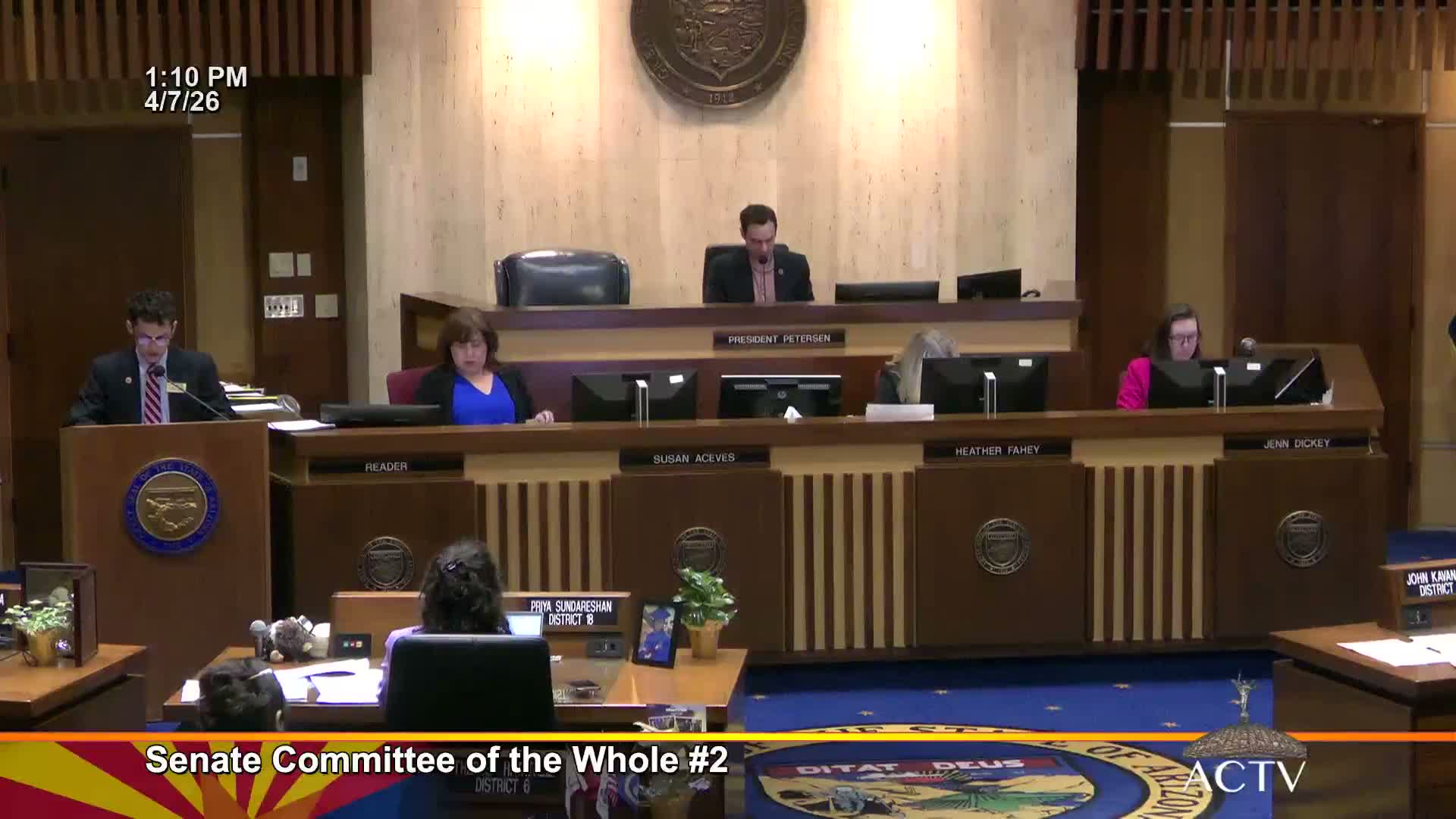
A contentious exchange over groundwater policy preceded a close final vote as the Arizona Senate approved House Bill 20-26 on April 7, 2026.
A lawmaker who spoke in opposition argued on the floor that the commingling issue — combining different groundwater sources in technical or legal treatments — had already been addressed through the Department of Water Resources’ ADOS (alternative designation of assured water supply) program following recommendations from the 2023 Governor’s Water Policy Council. The lawmaker described the new legislative proposal as “dangerous,” saying it failed to treat the water sources appropriately and risked removing safeguards put in place through earlier administrative rulemaking.
"This legislative proposal on commingling is actually dangerous... It would not treat the water sources appropriately and I do urge a no vote," the lawmaker said on the floor during third reading.
Supporters of moving the bill forward, including members who shepherded the measure out of committee, argued the bill merited consideration and that its statutory fixes were warranted; their remarks were recorded on the floor prior to the final tally. The bill’s supporters emphasized committee review and recommended passage to the Committee of the Whole.
After floor debate and explanation of positions, the Senate recorded the final vote as 16 ayes, 13 nays and 1 not voting; the chair instructed the secretary to record the action and transmit the bill to the House. The transcript records the objections and the explanation of vote but does not include a floor-level technical rebuttal that fully resolved the commingling concern; the claim and counterarguments remained part of the record at the time of passage.
What’s next: HB 20-26 was transmitted to the House for the next procedural step. Because the transcript records competing assertions about whether administrative processes already addressed the commingling issue, stakeholders and affected water-rights entities may seek clarification or legislative/regulatory follow-up as the bill proceeds.
The Senate’s deliberations on HB 20-26 illustrate how technical water-policy matters can produce close, partisan-leaning votes on the floor; the recorded vote and floor explanations are part of the public record.